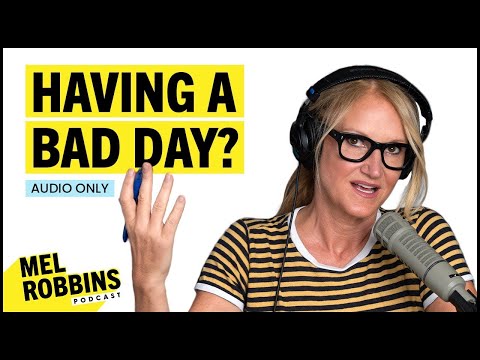
What To Do If You’re Having a BAD DAY And Don’t Feel Like YOURSELF | The Mel Robbins Podcast
Mel Robbins (host), Amy (guest), Therapist (Mel’s therapist, name not given) (guest), Kendall Robbins (guest)
In this episode of The Mel Robbins Podcast, featuring Mel Robbins and Amy, What To Do If You’re Having a BAD DAY And Don’t Feel Like YOURSELF | The Mel Robbins Podcast explores mel Robbins Shares Tools To Navigate Bad Moods And Old Wounds Mel Robbins and her friend/colleague Amy unpack what to do when you wake up in a bad mood and don’t feel like yourself, even when nothing is ‘wrong’ on the surface.
Mel Robbins Shares Tools To Navigate Bad Moods And Old Wounds
Mel Robbins and her friend/colleague Amy unpack what to do when you wake up in a bad mood and don’t feel like yourself, even when nothing is ‘wrong’ on the surface.
Mel shares a recent therapy breakthrough about the ‘divine self’ versus the ‘injured self’ and how seasons, old trauma, and life transitions can trigger sudden anxiety or sadness.
They walk through concrete somatic and visualization exercises to locate difficult feelings in the body, connect them to younger parts of ourselves, and then rewire the brain by activating memories of peak, loving, ‘flow’ moments.
The episode reframes bad days as signals from the injured self, offering tools to stay curious, self-compassionate, and to deliberately strengthen neural pathways for connection, joy, and presence.
Key Takeaways
Recognize bad moods as messages from your ‘injured self,’ not proof something is wrong with you today.
When you suddenly feel off, anxious, or sad, it often reflects old, stored emotional patterns being triggered (by seasons, transitions, or sensory cues), not a current-life catastrophe. ...
Get the full analysis with uListen AI
Use your body as a map: locate where the feeling lives physically.
Close your eyes and identify where the heaviness, tightness, or ‘oil slick’ of emotion sits (chest, ribs, neck, etc. ...
Get the full analysis with uListen AI
Personify the feeling as a younger you and offer compassion.
Mel’s therapist has her imagine the sensation floating out in front of her, then taking the shape of her younger self at a specific age linked to pain. ...
Get the full analysis with uListen AI
Interrupt dissociation and spiraling thoughts with self-reassurance and safe connection.
When you notice yourself ‘leaving your body’ and going into your head to scan for what’s wrong, put a hand on your heart, remind yourself out loud that you are safe and loved, and, if possible, ask for a grounding hug or presence from someone you trust; this calms the alarm before it becomes a story.
Get the full analysis with uListen AI
Actively ‘fire up’ memories of peak connection or flow to rewire your brain.
Recall a vivid moment when you felt awe, love, or effortless connection (with a child, partner, nature, creativity), locate where that good feeling lives in your body, and really let yourself feel it. ...
Get the full analysis with uListen AI
Expect a ‘shaky’ period after big highs; it doesn’t mean the other shoe is dropping.
Mel’s therapist likens it to getting off a great roller coaster: you feel wobbly while your system rebalances. ...
Get the full analysis with uListen AI
Train your attention toward signs of magic and connection in daily life.
Practices like looking for naturally occurring hearts or noticing ‘coincidences’ (e. ...
Get the full analysis with uListen AI
Notable Quotes
“When you say, ‘I don’t feel like myself,’ it’s often the injured you showing up, not the real you disappearing.”
— Mel Robbins
“Most of us live in the injured self all day long and call it a personality.”
— Mel Robbins (paraphrasing her therapist’s insight)
“I don’t know how to be in a bad mood and just let it go. How do I manage myself through this bad mood?”
— Amy
“If you want to keep yourself in that divine state, you’ve got to love yourself a little harder.”
— Mel Robbins
“Sometimes when you’re at that low, you’re looking around like, ‘Did this thing stop? Am I ever going back up again?’”
— Amy
Questions Answered in This Episode
How can I tell the difference between a normal, passing bad mood and a sign that my ‘injured self’ really needs deeper attention or support?
Mel Robbins and her friend/colleague Amy unpack what to do when you wake up in a bad mood and don’t feel like yourself, even when nothing is ‘wrong’ on the surface.
Get the full analysis with uListen AI
What specific sensations or metaphors come up in my body when I feel anxious, sad, or ‘below the line,’ and what younger version of me might they belong to?
Mel shares a recent therapy breakthrough about the ‘divine self’ versus the ‘injured self’ and how seasons, old trauma, and life transitions can trigger sudden anxiety or sadness.
Get the full analysis with uListen AI
Which peak experiences or small ‘flow’ moments from my own life could I intentionally revisit to help rewire my brain toward safety, love, and connection?
They walk through concrete somatic and visualization exercises to locate difficult feelings in the body, connect them to younger parts of ourselves, and then rewire the brain by activating memories of peak, loving, ‘flow’ moments.
Get the full analysis with uListen AI
What coping habits do I automatically reach for when discomfort arises (numbing, overthinking, humor, busyness), and what would it look like instead to pause and offer myself reassurance?
The episode reframes bad days as signals from the injured self, offering tools to stay curious, self-compassionate, and to deliberately strengthen neural pathways for connection, joy, and presence.
Get the full analysis with uListen AI
How might my environment—seasons, smells, places, or family dynamics—be quietly triggering old emotional patterns, and what boundaries or rituals could help me navigate those times more gently?
Get the full analysis with uListen AI
Transcript Preview
(ticking sound) I said to Amy, "How you doing?" And she looked at me and she said...
"Everything's great, and I'm just in a bad mood today."
You said something about like you need to take responsibility for how you're feeling or whatever. W- why can't you just be in a bad mood?
I think there are two parts to it. Number one, I don't like the feeling of being in a bad mood. Let's unpack that. (instrumental music plays)
Hey, it's Mel, and welcome to the Mel Robbins podcast. I'm excited to see what happens here because I was just sitting here talking to my friend Amy.
Hey, everyone.
And, uh, Amy's always in a good mood and she looked a little off today and so I said, "Are you okay? How you doing?"
Yeah. And I said, "No. I don't feel like myself today."
I'm like, you, you literally s- l- I mean, can you hear? It sounds like she's gonna start crying. And so I said, "I think that we should talk about this."
Yeah. I, I, yeah, let's talk about it. But let's, maybe we don't do it with the video.
Oh, that's totally cool.
We don't need to.
You're cool with it, us recording this conversation?
Absolutely.
Okay, great.
Let's just not do video.
Okay. Go ahead.
Okay. All right.
All righty. (instrumental music plays) I am so excited because I was just sitting here talking with my friend Amy and we also work together. I said to Amy, "How you doing?" And she looked at me and she said...
Like, "Everything's great, and I'm just in a bad mood today. I feel like below the line. Not so great."
Well, what does below the line mean? What does that mean?
Below the line is like, (sighs) it just means that you're, you're in a state of mind where you basically like can't really take responsibility for how you feel almost. Like you're... Yeah, like it's like a weird thing, like it's... I wish I could explain it better and, and maybe I will but it's kind of like you're just in kind of like blame mode where you're not taking responsibility for your own stuff and you're just kinda like, "Oh, God." You know? My husband, like, it's so annoying.
Oh!
Like that sorta thing.
Got it.
So you feel like, it's like a victim mode.
So is that- so when you say that you're... 'Cause, 'cause here's what I want you guys to know, 'cause you're gonna get to know Amy-
(laughs) .
... as you begin (laughs) listen to more and more podcast episodes.
'Cause she's really screwed up and-
No you are not.
(laughs) .
Well, I only have friends-
That are-
... that are screwed up-
Install uListen to search the full transcript and get AI-powered insights
Get Full TranscriptGet more from every podcast
AI summaries, searchable transcripts, and fact-checking. Free forever.
Add to Chrome