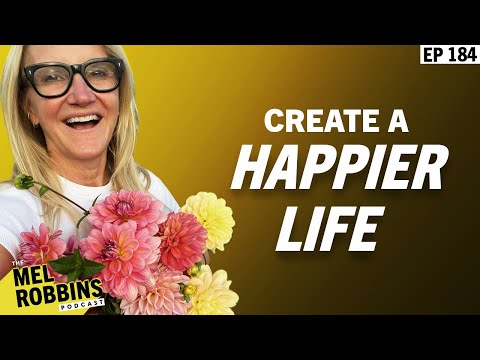
This One Hack Will Unlock Your Happier Life
Mel Robbins (host), Guest (guest)
In this episode of The Mel Robbins Podcast, featuring Mel Robbins and Guest, This One Hack Will Unlock Your Happier Life explores how Flowers And Plants Scientifically Boost Happiness, Connection, And Focus Mel Robbins explores the surprising body of research showing how flowers, plants, and gardening measurably improve mood, reduce anxiety, and strengthen feelings of compassion and connection. Drawing on studies from Harvard, Rutgers, and UK researchers, she explains that simply having flowers at home, giving them as gifts, or keeping plants nearby can increase happiness, energy, and even concentration by up to 20%.
How Flowers And Plants Scientifically Boost Happiness, Connection, And Focus
Mel Robbins explores the surprising body of research showing how flowers, plants, and gardening measurably improve mood, reduce anxiety, and strengthen feelings of compassion and connection. Drawing on studies from Harvard, Rutgers, and UK researchers, she explains that simply having flowers at home, giving them as gifts, or keeping plants nearby can increase happiness, energy, and even concentration by up to 20%.
She describes how flowers act as a living symbol of love and presence, often deepening relationships because recipients feel seen, appreciated, and more inclined to reach out. Mel also highlights how contact with soil and gardening releases serotonin and dopamine, linking modern joy in gardening and picking fruit to ancient hunter‑gatherer reward systems.
The episode ends with practical encouragement to integrate flowers, plants, and dirt‑under‑the‑fingernails moments into daily life as small, accessible habits that collectively create a happier, more meaningful life.
Key Takeaways
Keep fresh flowers where you can see them daily.
Harvard research shows that living with cut flowers increases compassion, reduces anxiety, and boosts energy and mood; putting a small bouquet on your table, desk, or nightstand reliably lifts your spirits.
Get the full analysis with uListen AI
Give flowers to deepen emotional connection and be remembered.
Rutgers studies found that recipients of flowers show genuine ("true") smiles, feel happier for days, and tend to reach out to the sender, which strengthens bonds and makes the giver appear more caring, successful, and emotionally intelligent.
Get the full analysis with uListen AI
Buy simple, single-variety bouquets from grocery stores to save money.
Skipping pre-made mixed arrangements and choosing one type of flower lets you get more stems for less, split them into multiple small vases around your home, and even have them rewrapped nicely at the store for free if they're a gift.
Get the full analysis with uListen AI
Use flowers as a daily mindfulness and awe practice.
Intentionally pausing to really look at a bloom—the colors, petals, and details—forces your attention into the present moment, interrupting rumination about the past or future and functioning like a brief moving meditation.
Get the full analysis with uListen AI
Place plants near your workspace to improve focus and productivity.
UK research shows that simply having plants near where you work can increase concentration by up to 20%, partly by improving air quality and lowering CO₂ levels, which otherwise impair cognitive speed and attention.
Get the full analysis with uListen AI
Get your hands in the dirt to naturally boost serotonin and dopamine.
Gardening and contact with soil bacteria like Mycobacterium vaccae trigger serotonin (linked to happiness) and harvesting what you’ve grown releases dopamine (linked to reward), explaining why planting, weeding, and picking feel deeply satisfying.
Get the full analysis with uListen AI
Treat buying yourself flowers as an act of self-respect.
Regularly getting yourself a small bouquet signals to your brain that you’re worthy of beauty and care, reinforcing self-kindness and self-worth through repeated, visible evidence rather than abstract positive thinking.
Get the full analysis with uListen AI
Notable Quotes
“Flowers are almost like a surrogate for you. Flowers are a representation of your love.”
— Mel Robbins
“Simply putting one little flower in a little glass next to your computer while you work somehow makes you feel better—and now you know the research.”
— Mel Robbins
“Being in a natural environment is one of the best forms of medicine we have.”
— Dr. Adam Alter (via Mel Robbins Podcast)
“That little flower in the vase that you gave to you is evidence that you matter.”
— Mel Robbins
“Blooms erase the gloom that you may feel.”
— Mel Robbins
Questions Answered in This Episode
How might your day-to-day mood change if you committed to always having at least one fresh flower or plant visible in your main living space?
Mel Robbins explores the surprising body of research showing how flowers, plants, and gardening measurably improve mood, reduce anxiety, and strengthen feelings of compassion and connection. ...
Get the full analysis with uListen AI
In what relationships could an unexpected bouquet or small plant meaningfully signal, “I see you” or “I’m with you,” and what’s stopped you from doing that so far?
She describes how flowers act as a living symbol of love and presence, often deepening relationships because recipients feel seen, appreciated, and more inclined to reach out. ...
Get the full analysis with uListen AI
If gardening or getting your hands in the dirt reliably boosts serotonin and dopamine, how could you build even a small, regular “dirt ritual” into your week?
The episode ends with practical encouragement to integrate flowers, plants, and dirt‑under‑the‑fingernails moments into daily life as small, accessible habits that collectively create a happier, more meaningful life.
Get the full analysis with uListen AI
What inexpensive, creative ways could you use flowers or plants to turn routine chores (like washing dishes or working at your desk) into brief mindfulness moments?
Get the full analysis with uListen AI
How does knowing the science behind flowers, plants, and nature change the way you think about self-care compared to more expensive or time-consuming options?
Get the full analysis with uListen AI
Transcript Preview
I am kind of a flower freak. (upbeat music) I love growing them, I love cutting them, I love arranging them, I love sending them to people. Ah. Can you tell I love flowers? And there's one thing that I love almost as much as I love flowers, and I guarantee you this simple thing is right in front of your nose. Are you curious about what it is? Good. (clock ticking) Ooh, I'm so excited. Today, you and I are talking about one of the most beautiful, awe-inspiring, and simple things that you can do to make yourself happier, to make life a little bit better. And not only is it gonna make you happier, but it also spreads the love and joy and happiness to other people. Now, this one thing that we're gonna talk about today is not only beautiful, it is awesome, and it literally also inspires awe, but it's also really cheap. I mean, in fact, it might even be free if you know what you're doing, and I'm gonna teach you today how to know exactly what you're doing because we're talking about flowers. Yep, not just flowers and how beautiful they are, but the science and research about the impact that flowers have on your life, on your health, on your relationships, like it's astonishing how much research there is. Now, I love flowers and I always have them in my house. I have them growing outside. I buy them at the grocery store. I love fresh cut flowers. You may be the kinda person that loves vegetable gardens. That's not me. You may be the kinda person that loves growing tomatoes on your deck or on your balcony. That's not me. I have a cutting garden for flowers, not a vegetable garden. That's how much I love flowers. Why? Why do I love flowers? Well, probably the same reason you love flowers. I mean, if you stop and think about it, doesn't a flower just kinda lift your mood every single time you look at 'em? And now after our conversation today, I-I just have so much science and research to share with you, it's kinda jaw dropping. According to research at Harvard Medical School, fresh flowers in your home has such a positive impact on your mood, on your mental wellbeing. Let me tell you about this research. Dr. Nancy Etcoff of Mass General Hospital here in Boston, she's at Harvard Medical School, did a study that proves that living with cut flowers in your apartment, in your home strengthens feelings of compassion, cut flowers decrease anxiety and worry. I know that if you're not a flower person like me, you're probably like, "What? Flowers? An- the, anxi- Come on, Mel." It's kinda easy to be skeptical, right? And so you may be thinking, "Well, okay, how exactly did Dr. Etcoff and her team at Harvard measure how flowers make you feel?" I dug into the research for you, and here's what I found. They had people in the study live with fresh cut flowers in their homes for less than a week, and then they measured them before and after. And the study showed that people who had fresh cut flowers in their house felt an increase in feelings of compassion and kindness for others. Why? Well, I want you to stop and think about a moment when you really did stop and smell the roses. Maybe you're listening to me right now as you're on a walk, or you're sitting at a stoplight in your car. Look around. Is there something blooming? Just think about how insane it is, like for real. How the heck did this living work of art unfold in front of my eyes from the dirt that you take a tulip and it starts with this like dried up brown bulb and you stick it in the soil and it just bursts through the soil and it shoots up this green stem and then this beautiful flower forms? It's so beautiful, and you also know that it's fragile, that if you touch the petals too hard, it, you'd rip it off. Just staring at a beautiful bloom, it activates this sense of the beauty and the fragility of life within you, and I think that's what activates kindness and compassion as you look at it and you just go, "Isn't that beautiful?" And you feel yourself soften. That's what the researchers are talking about. You know, it's also why instinctively you send flowers to somebody when they lose a loved one, don't you? Or you send flowers to someone on their birthday, or when you wanna express this love that you have for someone who's in your life. You send flowers because they stand for something. Flowers represent joy. They represent beauty. They represent awe. They represent the fragility of life. So does it really surprise you that in this study from Harvard that people in the study said they felt less negative after being around flowers in their house for just a few days? It doesn't surprise me at all when I really stop and think about it. Of course it would have that impact on you. In fact, that's not all the research found. The researchers at Harvard found that the blooms brought people so much joy......that they started reporting in the study that they were looking forward to seeing the blooms first thing in the morning. And I'm going to ask you to stop and think about that finding for just a moment too. You know, when somebody sends you flowers, right? Or you take the time to cut flowers, you buy a beautiful bouquet for yourself at the farmer's market and you bring them home, and then you put them in a vase and you put them somewhere. You typically what? Put them in the dining room table, or you put them in the middle of the island of the kitchen, or you put them on your desk or next to your, uh, the, the dresser, you know, next to your bed so you can see them. Isn't it true that when you have beautiful flowers in your kitchen, that simply walking into the kitchen and seeing them on the table or on the counter or on your desk, it just kind of makes you feel better? In fact, this morning I was, um, out with the dogs, so you know, the dogs always wake me up, and then I let them out and I was walking around the yard and I cut a bunch of lilacs off the bush. And when I got into the house, I'm like arranging the lilacs into this glass vase, and I put them in the, the kitchen and I stand back and I smile at them and it's like having a friend greet you. I... In fact, before I jumped on the mic, I walked back down to the kitchen to fill my water up, there they were. And bonus with lilacs 'cause you can smell them and so you have this amazing like bonus. You see them, they're beautiful, like a work of art. They're there like a friend greeting you. They smell great. And look, it takes a lot to get me out of bed. I'm not the kind of person who will get out of bed for donuts or for, you know, like bacon being cooked in the kitchen. Even some days my two dogs, Homey and Yolo, they'll be sitting there like, "Come on, mom. Come on," and I- I'm not rolling out of bed. But I will roll out of bed to see the dahlias that I cut blooming in the kitchen because that is a beautiful, beautiful sight. And this plays right into the research because in this study at Harvard, it was proven that flowers also provide a boost of energy. And you've kind of felt it, haven't you? But I bet you didn't notice it. See, I believe that that energy that the researchers are talking about comes from that tiny feeling of awe, that when you really look at a flower and you marvel at it for a second, there's this just feeling of being awestruck and that's where this energy comes from. It's like a life force energy. It's almost like sunshine in a vase. They make you smile and feel better, and now you know why. Because the research says it's true, and you want to know something that's also cool? There's even more science about flowers. There was another study done by researchers at Rutgers University that was all about what happens when you give flowers as a gift. Wait till you hear this. This is like mind-blowing. When you give flowers as a gift, it activates something inside you that makes you feel more emotionally connected to the person that you're giving flowers to. How cool is that? And let's go back to that research from Harvard because I think I know why the gift of flowers makes you feel more connected to the person that you're giving flowers to. Flowers are almost like a surrogate for you. Flowers are a... just like a, a, a representation of your love. The flowers are a reminder to the person that you send them to to smile. They're a thing of beauty, and because they're alive, it's like sending them life force in a vase. And then, and then you get to put something on the card and when you write something on the card, guess what? The flowers even take on a bigger meaning because the flowers represent the full sentiment of what you just wrote on the card. "I love you." "I miss you." "Get better." "I believe in you." "Congratulations." I... Can you... Can you tell in my voice I'm just smiling (laughs) even talking about flowers? And I bet you are too. You want to know why? Because right now as I'm talking about flowers and the beauty of flowers and the awestruck feeling of really taking in a beautiful bloom, and I'm talking about how it makes you feel more connected to people and the moments in life where you send them to people, I guarantee you you're thinking of someone. You're either thinking of someone who sent you flowers recently or you're thinking of someone who you're like, "Oh, I should really send them some flowers." Like, "I love that person." And yeah, you should. You know, in fact, I got... I got a story to tell you. Just last week, I had had a really hard week at work. We are growing at hyper speed. There's a lot of changes going on. I'm working on my next book. Oakley is graduating. So, I am just feeling burnt out and tired and I've been up here in Vermont just cranking away and earlier this week, a friend of mine, Dr. Judith Joseph, who is this extraordinary MD-PhD researcher who has been on the Mel Robbins podcast, she is unbelievable, she sent me the most just insane arrangement of flowers. Like, I am talking jaw on the floor, two delivery people have to carry it in. It was the size of... You know when you... You- you know those exercise balls at a gym? They're usually that sort of like bluish color and p- you see people kind of sit on them and do sit-ups on them. They're probably three feet in diameter. You know what I'm talking about, right?This arrangement that Dr. Judith sent to me was that big. And I remember, this must have been a decade ago, I once saw Oprah Winfrey post a flower arrangement that either somebody had sent her or she had sent to somebody else, and it was an arrangement of either, like, bright red peonies or, like, 400 roses, and it was this massive mound of flowers. And I thought at the time, "I have never seen an arrangement like that. That is the most extraordinary thing. I will never receive anything that extraordinary, because I will never do anything that incredible that that would be done." Like literally, I remember seeing that over a decade ago. And the arrangement that Dr. Judith Joseph sent was an arrangement on that scale. And it was all my favorite colors, like it was all the jewel tones. It was like coral peonies and pink roses and oranges and apricots and just, just the, just... You know what I'm talking about. It was like a jewel box, three-foot globe of the most incredible flowers, and it went to our studios in Boston. I wasn't in our studios in Boston last week (laughs) . I was three and a half hours away in Vermont. And you want to know what? I literally felt sad that I missed them. Like it, it, it goes to show you that, that, that flowers represent the person who sent them. It's as if one of my most favorite people stopped by the office while they were in town and I wasn't there to see them, and so my heart sank, and I'm not going to be able to enjoy it. Like, oh my gosh, I'm seeing the pictures and I want to see them. And so you know what I did? I gave them to a person on our team, Charlotte, who has been burning the midnight oil. She has been killing it. And I just said, "You know what, Charlotte? I think you should take these home. You're going to need four of your colleagues to help you get them to your apartment, but you should take these home, and you should enjoy them all weekend." And you know what she did? She got them home and she kept sending me photos of the flowers all weekend and just talking about how much joy they gave her. And in every photo, you could see that the flowers were opening a little bit more and this, this arrangement was like a living thing. And this is what the researchers are talking about, this connection. The flowers that Dr. Judith Joseph gave to me connects me to Dr. Judith, and then I shared them with Charlotte, somebody that I love and somebody that I wanted to do something awesome for, and that connects me to Charlotte. And the story doesn't end there, because, you know, that was kind of midweek. And so I walk into my house here in Vermont on Friday, and we had been working all day, and I've got this little cabinet that was my great-grandmother's that sits in the entry of our house, and it's got this marble top. It's this antique cabinet that was, you know, in her house in Buffalo, New York. Normally, you know what's on top of that? Dog leashes and dog treats. Although we don't have the dog treats there anymore because Yolo has figured out he can jump up and eat the dog treats on the thing. I know, naughty. Normally, it's like dog leashes and people's keys. Sitting there on Friday at the end of a work week, there was an arrangement just like the one that Dr. Judith had sent to me at the studios in Boston. I nearly fell over, and I pulled the card out and I'm like, "Who the hell sent..." It was from my sister-in-law, Christine, who's also my business partner. She's the chief operating officer and she knows just how much I've been working. I burst into tears. I, I burst into tears. The thing was so freaking heavy I couldn't even carry it into the kitchen. I had to get Chris to help me. And she must have sent a photo of the arrangement that went to the studio in Boston to a florist here in Vermont and was like, "Just do this," because that's exactly what showed up. And I burst into tears because I just felt so connected to her. I felt so seen. Like it would, it would have been the same thing if she had hopped on a plane and flown here from Chicago and been standing in the entry waiting to give me a hug. And they've been sitting in the island in our kitchen for 10 days, and every time I walk into the kitchen, it's as if Christine is sitting in the middle of the island waiting to give me a hug. The research is right. They make me feel better, and the, the flowers make me feel connected to Dr. Judith and to Charlotte and to Christine. And I know you've felt this, haven't you? And I want you to know that when you send a beautiful arrangement to someone else, especially if it's out of the blue, they feel it too. They feel your love. They feel seen, and every time they see those flowers, they think of you. And by the way, this works for everybody. Flowers is not something limited to a gender, because flowers are about love and beauty and life and connection and magic and awe. That's why they're so powerful. And when you give yourself flowers, guess what? You honor your beauty. They are an act of love to you, and when you send them to someone else, you honor them. And get this, get... This is great. Like I've, I'm not... I've only scratched the surface on the research here.The research also reveals something crazy cool about giving somebody flowers. You ready? Flowers as a gift, in comparison to anything else that you could give to somebody, okay? You know what flowers reveal? They reveal that you're likely to be viewed as successful, caring, and emotionally intelligent by the person who you send them to, because people who receive the gift of flowers, in a research study, responds with what science call a true smile, not a fake smile. You've gotten a present where you're like, "Oh, thanks. Thanks. Yeah, thanks for the bottle of wine I don't drink. Uh, yeah. Oh, thanks. Thanks. Yeah, this framed picture that I think is hideous that I'm never gonna put in my house. Yeah, thank you for that." Um, a true smile is what people have. You can't help it. And here's more on the research. People who receive flowers as a gift, based on studies, report positive moods that last for days. Here's what the study found. The study found that, quote, "The presence of flowers also led to increased contact with family and friends." And so I want you to really think about this, right? 'Cause that could be a detail that you're like, "Meh, okay, whatever." Think about the last person who sent you flowers. Just think about that. What did you do? Well, you either called 'em, right? Or you sent them a text with a photo of the flowers. Why? Because the second you received them, it made you feel connected to them, which made you reach out, which then increased your connection with that family or that friend. Now, see, what I love about the research and this topic, right? Is that you kind of know this. I mean, that's why we send flowers, right? 'Cause you kind of know this. You know it's a good thing to send flowers, because you're thinking of this person, and you know it feels really good to receive flowers, and so you kind of know this. But what you didn't know is that simply putting one little flower in a little glass next to your computer while you work, it somehow makes you feel better, but now you know the research. You don't have an excuse anymore to not do it. Any time you want to do something uplifting for yourself, get yourself flowers. Any time that you want to do something uplifting for someone else, get them flowers, because Harvard and Rutgers are now telling you, they have spent time, they have researched this, they have studies that has a proven and lasting impact. And here's how I want you to apply all this research to your daily life. I'm gonna boil this down to you, okay? You ready? Number one. Always have fresh flowers in your house or on your desk or next to your bed, somewhere where you can see them. Why? Well, you know the research, okay? You know that it makes you happier. You know that it boosts your mood. You know that it gives you something to look forward to. And check this out, it makes you feel more connected to the person who gave them to you. When you give yourself flowers, you feel more connected to yourself. If you wanna have a better relationship with yourself, if you wanna be kinder to yourself, if you wanna feel like you're worthy, buy yourself flowers. Pick a flower from your garden. Stick it where you will see it, because that little flower in the vase that you gave to you is evidence that you matter. It's evidence that you're kind to yourself. It's evidence that you're connected to yourself. It's evidence that you believe that you deserve things of beauty. You believe that you deserve to feel good. And I... Look, I know it sounds silly. I'm asking you to do it, and I'm daring you to do it. And then I dare you to tell me it didn't make you feel a little better, because it's not silly. Treating yourself with kindness, making yourself feel like you're worthy, doing small things that prove to you that you want to take better care of yourself, that's not silly at all. That's how you live a better life. That's how you feel better about yourself, by proving it. And here, I'm gonna give you my tip. You're gonna love this, okay? Because you can go to a florist, and they could be very expensive, and you might not be near a farmer's market, or you don't have a garden, or you don't have a balcony or a deck where you can grow some flowers in a pot. No problem. Here is the best tip I can give you. When you go to the grocery store, I don't care where you live in the world, they always have a little flower area, right? Here's what I want you to do. I want you to skip all the mixed bouquets that they've made up. They're too expensive. They charge more for those. And I want you to head straight for the little buckets where there's a single group of a singular type of flowers. You know, there's the bucket with tulips. There's a bucket with lilies. There's a bucket maybe with peonies. There's a bucket with flowers that are in season no matter what time of year it is whose names I don't know that last forever in a vase. You get what I'm talking about. You wanna buy the single bouquet of the single type of flower. Here's why. Number one, they're cheaper. Okay? They're cheaper than a mixed bouquet. Number two, when you take 'em home and you cut the ends off so that they can suck up the water and they look like a lot, kind of crisper and cleaner, you can then separate them. Because in every bunch, there's usually somewhere between five to 12 stems of flowers in there. You can separate them and you can put them all over the house in just like little jars. And then you got fresh cut flowers everywhere for the cost of one bouquet that might have only been $5. And because you're getting it at a grocery store, you can do this year round.Your grocery store always has flowers. Got it? Good. So do it for yourself. Now, here's a second way that you can leverage this research. Today, when you're out and about and you're taking your walk, or you're running to the farmer's market, or you're heading to the grocery store, or you pass a flowering tree, or you walk by your neighbor's garden, stop. Stop. Even just stop. You know how a lot of restaurants have taken the time to, uh, plant, uh, planters with just beautiful flowers, whether it's in the entrance to the restaurant or maybe they have flowers out on the back patio? Stop. Take one minute and just marvel at how fricking unbelievable and complicated and insanely gorgeous a single flower bloom is. And if you follow me on social media, particularly Instagram, you've probably noticed I'm always posting flower photos, because I am always just in awe of how extraordinary they are. In fact, every Friday night on Instagram, I tend to do a roundup of the week of photos, and there's almost always a flower blooming. And almost every day on the stories on Instagram, you'll see a closeup of some kind of flower that I've grown or some sort of flower that I've seen in my travels, because it's almost like a form of meditation. If you stop and smell the roses, right? Or stop and just look at the intricate detail of the flower in front of you, you have to be in the moment. You can't be thinking about your work deadline and just admiring all the little speckles that are on the inside of the petal of that lily. You can't. You can't be worried about the past if you are admiring the hundreds of petals on a peony that is opening up in front of you. You can't be up in your head beating the hell out of yourself, telling yourself you're not good enough if you are looking at a daffodil and just taking in the fact that it's bright yellow on the end of one petal, and as it gets toward the center of the flower, it gets a little bit lighter, but then the center part has orange, and holy cow, I've never noticed the red. You're in the moment. I always have a flower cut and sitting in a little jar right by my sink. I always do this. Why? Because as I'm washing the dishes, which I do, it seems, 100 times a day... Do you feel like that? You're always at the fricking sink washing dishes. You see the flower, and all of a sudden you stop thinking about the future or the past. You stop griping about the dishes you need to do. And I just stare at the flower, and I take it in. And it is a form of moving meditation. It cues me to be in the moment. In fact, right now, you know, I know you're listening to me, but if you're on YouTube, you can see behind me, I've got all these flowers that I have grown. I cannot believe I grew those flowers. There's these huge red tulips, and there's these beautiful what's called variegated lilacs. It's the sensation lilac variety. It's purple with these white lines around the outside of the petal. And then there's this vase, uh, to my left of these pink, pink, pink tulips. And they're this beautiful kind of apricoty pink. And if you really, really stare at the tulip, it's got this white stripe that goes up on the inside, and then you look on the inside and you know the little things that the bees... See, I love flowers, but I don't even know the technical names. I probably wouldn't be able to pronounce 'em anyway. It doesn't matter. I still admire it. Like, you know, when the bees go in and then they get drunk on the pollen and there's those yellow things that are standing up in there that... Like, holy cow, it's just incredible. And it's all around you. And admiring it outside at restaurants and in the park and on the sidewalk and passing your neighbors. It's free. It's free. And now you know the research, that simply taking in the beauty of a single bloom helps you tap into the sense of awe. It lifts your mood. It boosts your energy. It, like, will make you smile. And here's the third thing you can do. You're gonna put flowers in your house. You're gonna stop when you see them. You're gonna send somebody that you care about flowers. Yep. Yep. Doesn't matter where you live in the world. You're either gonna stop by the grocery store and grab some and hand deliver them, or you're gonna look online. There's a bazillion amazing growers that you can find locally, places you can send from that, you know, are actually more affordable than you think. You know, when my friend Jodie... I've talked about Jodie a lot on the podcast. She is my best friend, if you're a new listener, my best friend from elementary school. And she recently moved back to Western Michigan, where we grew up, um, because her parents are getting older and she wanted to be closer to them, and she wants to be there to help take care of them. And it was a big emotional move. You know, you're 56 years old, you're single, you're moving from San Diego where you've lived for six years and you've had your big job, and now you're going back to live with your parents to the small town of Western Mich- I mean, that's a lot. And so, I knew that I was not able to be in Western Michigan, so I sent a surrogate. I sent her an orchid. And when she first got it, she reached out and she was just like... You know, you could tell her that... You know when somebody writes you a text and you're just like, they're kind of writing it like, "Aww." That when she first reached out, she's like, "Oh, Mel, this means so much. You're so sweet. Like, I just can't believe it." Well, it's now six weeks later.And just two days ago, she sent me another photo. This thing is still in full bloom. And she wrote to me just two days ago, "I'm sitting here on this finally warm night as I look at this orchid. It is so lovely and it reminds me of you." Isn't that awesome? You know, it's my way to be there with her and support her. And, you know, I- I was really trying to think about, okay, why exactly, why do flowers boost your connection to someone else? Why is that? Because the truth is, like, I could have easily sent her a book. I could have sent her a gift certificate for a massage. Lord knows when you move home to take care of your parents, you need one. But when you send those kind of gifts, they're great gifts, don't get me wrong, but let's just kind of unpack this, right? The thing about flowers is that they're alive and they're beautiful. There's that energy and the awe factor. It's almost as if that living, breathing, beautiful, flowering orchid is a stand-in for you. It's true, isn't it? Like, think about it. You can't look at a bouquet that somebody sent you and not think first about the person who sent it to you. I challenge you. Try to look at a bouquet of flowers that somebody sent you for your graduation or your birthday or just because and not think about them. You know, I'll give you another example. Right now on my desk, there's a flower arrangement. No surprise there (laughs) . But this one is from a company called United Talent Agents. These are the agents who I work with who represent the Mel Robbins Podcast and our digital business, so I wanna give a huge shout out to Oren and the team over at UTA. But they sent me this really beautiful arrangement, and the card that came with it is sitting on my desk. And the arrangement is in honor of this huge milestone that you and I have reached 100 million downloads on the Mel Robbins Podcast. Like, 100 million. I mean, the fact that 100 million times you put earbuds in and you hit play or you jumped in your car and you turned this on or you went for a walk and you took me with you. 100 million times you've invited me into your life. If I could send you flowers right now to show you how much I love you, how much I appreciate you for inviting me into your life the way that you have, I would send you one of those three-foot huge globe arrangements like Dr. Judith sent me that requires two people to carry it up to your door. That's what I would do. And so I was reflecting on the phone with Oren like, "Holy cow, dude. 100 million downloads? 18 mon- That is no joke." And so the very next day, I'm sitting up here above the garage working away on the podcast, you know, like (singing) . There's a knock on the door and flowers arrive, and I open up the card and it says, "Mel, 100 million is no joke. You should be so proud. Here's to 100 million more. We love you. Your UTA team." Now, those flowers and the fact that they took a card and said what I said, those flowers aren't flowers. It's as if the whole team is sitting here with their arms around me as I'm just working away at my desk going, "We are so proud of you, Mel. Keep going. Keep going." And the card, the card I- I'm one of those people that I keep a good card, I keep a good flower card. I know you do too. And can you believe there's even more research and science on this topic? Like, I don't need any more reasons to want to be cutting flowers and looking at flowers and sending flowers. Um, but there's this research about the act of generosity. It is scientifically proven to make you happy when you do something generous for somebody else. I mean, how many more reasons do you need to get on the flower bandwagon with me? Whether you are being really generous with yourself, let's start with you. Start with you. Buy yourself those flowers. In fact, don't ever go grocery shopping ever again if it's in your budget without spending $5 on flowers for yourself. If you can grow flowers, and if you can't grow flowers, admire flowers. Go out of your way to give flowers to your friends. It will make you happy. It will make them happy. It's like a two-for-one happiness boost. And I want to give you another tip, okay? About the grocery store. Because, you know, again, we're gonna... Remember, walk past all the mixed bouquets. They're too expensive. I want you to go straight for the single variety that are wrapped up, right? The tulips, the peonies. Here's what I want you to do next. You're gonna grab them, but then you're gonna walk up to that counter at the grocery store, okay? And even if you are living in a city that has a lot of bodegas, so think about New York City. Tons of listeners in New York City, tons of listeners in Toronto, in London. You got those grocery stores that have flowers on the outside of the store, so you pick them up outside. Even, even there-...they, you take them inside and just ask either the person working at the counter at the flower place where they sell the balloons in a grocery store, or take them inside to the couple that's running the bodega, and just tell 'em, "This is a gift." You don't have to say it's a gift for you. You know what they're gonna do for free? They cut the stems, they cut the plastic off and take the price tag off, and they rewrap it in nice clear plastic or a nice clean piece of paper. They do it for free. It's like now a super nice gift and it's for you or it's for somebody you love. And by the way, you wanna know something super cool? You know the person that's working that counter at the grocery store? They're either bored out of their mind or they would be stocking vegetables. So when you walk up and say, "Hey, could you help me? Like, this is a gift, you know, would you..." They're like, "Oh." Everybody gets so excited. "Yeah, I'd love to." And oftentimes, you know what they do? They literally cut it. They cut the stems. You see 'em start fluffing up the flowers and arranging them to make it look nice because they get to do something beautiful too. They get to be around the flowers too. They get to be part of the gift too. So you're not putting anyone else out by asking somebody to wrap them for you. You're making someone else happier. So have I convinced you yet? You know, really start loving and living with fresh flowers. I hope so. Have I convinced you to start giving 'em? Because it's not just petals and blooms and flowers that make you happier. Like, all this research is even bigger than flowers, because check this out. When I started digging in, I found all kinds of amazing research on the impact that plants can have on your wellbeing and your mental health and your concentration, and also the impact of gardening itself. And I cannot wait to tell you about this crazy study that was done with plants, because this study connects to something that Dr. Adam Alter, professor from NYU, he was on the show recently, and we were talking all about the brain and happiness. And if you didn't hear that episode, no problem. Always linked in the show notes if you wanna go deeper. But he did this kind of bit about the research that's been done on the impact of getting out in nature and how it impacts your brain and can make you happier and help you lower your stress. And so I want you to listen to Professor Adam Alter on the Mel Robbins podcast talking about the research and how being in nature improves happiness and lowers stress.
Install uListen to search the full transcript and get AI-powered insights
Get Full TranscriptGet more from every podcast
AI summaries, searchable transcripts, and fact-checking. Free forever.
Add to Chrome