How to Build the Life You Want: Timeless Wisdom for More Happiness & Purpose
Mel Robbins (host), Tal Ben-Shahar (guest)
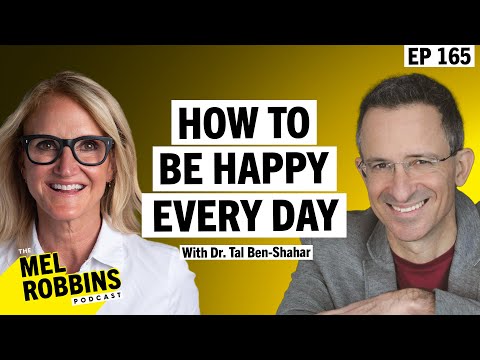
In this episode of The Mel Robbins Podcast, featuring Mel Robbins and Tal Ben-Shahar, How to Build the Life You Want: Timeless Wisdom for More Happiness & Purpose explores stop Chasing Happiness: Build Wholeness With Five Daily Micro-Shifts Mel Robbins interviews happiness expert and former Harvard professor Dr. Tal Ben-Shahar about what truly creates a happier life, based on 30 years of research.
Stop Chasing Happiness: Build Wholeness With Five Daily Micro-Shifts
Mel Robbins interviews happiness expert and former Harvard professor Dr. Tal Ben-Shahar about what truly creates a happier life, based on 30 years of research.
Tal explains why achievement and goal-attainment only produce temporary spikes of happiness and how directly chasing happiness can actually make us less happy.
Instead, he introduces the SPIRE model—spiritual, physical, intellectual, relational, and emotional wellbeing—as the “colors of the rainbow” we can nurture through small, consistent actions.
They also explore antifragility, post‑traumatic growth, and a practical three‑step framework (reminders, repetition, rituals) for creating lasting, happiness‑supporting habits.
Key Takeaways
Stop expecting achievements to make you lastingly happy.
Research and lived experience show major achievements (titles, degrees, money, medals) create only short-lived highs; believing they’re the path to lasting happiness leads to chronic dissatisfaction and feeling like you’re climbing the wrong mountain.
Get the full analysis with uListen AI
Pursue happiness indirectly through the SPIRE model.
Instead of waking up thinking, “I want to be happy”—which studies show backfires—focus on nurturing spiritual, physical, intellectual, relational, and emotional wellbeing through specific actions that make your life feel more whole.
Get the full analysis with uListen AI
Use “minimum viable interventions” to make change realistic.
Tal recommends tiny, repeatable behaviors—like one minute of breathing, 45 seconds of movement three times a day, a short text to a friend, or two minutes of journaling—that compound over time into meaningful increases in wellbeing.
Get the full analysis with uListen AI
Goals should guide your direction, not define your worth.
Goals are essential because they give life structure, direction, and meaning, but their value lies in their existence and pursuit, not in crossing the finish line; they should be a means to enjoy the present more, not a condition for happiness.
Get the full analysis with uListen AI
Lean into antifragility: you can grow from hardship.
The concept of post‑traumatic growth shows that, like muscles stressed by exercise, people often become stronger and wiser through adversity; simply knowing that growth after trauma is common increases hope and makes that growth more likely.
Get the full analysis with uListen AI
Combat loneliness with focused, undistracted connection.
The number one predictor of happiness is quality time with people who care about us; much modern loneliness stems not from being alone but from being distracted when we’re together, so single‑task your relationships—put devices away and be fully present.
Get the full analysis with uListen AI
Make happiness-supporting habits stick with the three Rs: reminders, repetition, rituals.
Because we naturally forget even what we value (like expressing appreciation), set up visible or digital reminders, repeat the behavior consistently, and allow it to solidify into an automatic ritual—reducing resistance and making wellbeing almost effortless.
Get the full analysis with uListen AI
Notable Quotes
“Success doesn’t lead to happiness. At best, it leads to a temporary spike.”
— Dr. Tal Ben-Shahar
“Pursuing happiness directly—waking up and saying, ‘I want to be happy’—actually makes us less happy.”
— Dr. Tal Ben-Shahar
“Happiness is not about being happy; it’s about becoming happier.”
— Dr. Tal Ben-Shahar
“Depression is sadness without hope.”
— Dr. Tal Ben-Shahar
“What is most important is what we do rather than what we feel.”
— Dr. Tal Ben-Shahar
Questions Answered in This Episode
If achievement alone can’t make me happy, how should I redefine success in my own life?
Mel Robbins interviews happiness expert and former Harvard professor Dr. ...
Get the full analysis with uListen AI
Which SPIRE element is currently my weakest, and what is one minimum viable intervention I could start today to strengthen it?
Tal explains why achievement and goal-attainment only produce temporary spikes of happiness and how directly chasing happiness can actually make us less happy.
Get the full analysis with uListen AI
How have past painful experiences actually led to post‑traumatic growth in my life, even if I didn’t recognize it at the time?
Instead, he introduces the SPIRE model—spiritual, physical, intellectual, relational, and emotional wellbeing—as the “colors of the rainbow” we can nurture through small, consistent actions.
Get the full analysis with uListen AI
Where is distraction undermining my relationships, and what specific boundaries with technology could help me feel less lonely?
They also explore antifragility, post‑traumatic growth, and a practical three‑step framework (reminders, repetition, rituals) for creating lasting, happiness‑supporting habits.
Get the full analysis with uListen AI
What reminders and rituals could I create so that gratitude, movement, and connection become automatic parts of my day instead of sporadic intentions?
Get the full analysis with uListen AI
Transcript Preview
(typing) (instrumental music) I'm Mel Robbins. I'm a New York Times bestselling author and one of the world's leading experts on confidence and motivation. Ooh. What was that? The camera just stopped. I think. What? It just went ber. Yeah, I heard that. Why? I don't know. I don't know either. (beep) He's also the New York Times bestselling author of eight, yep, you heard it, eight incredible books all about happiness, many of which are required reading in university course. (beep)
So that's the first thing that, that I learned. Now, things that I found-
(beep) What? (beep) Maybe we should put an iPhone right there just in case- (laughs)
... so we can keep going. (beep) Paradoxically, it actually leads to more happiness. (beep) (typing) (instrumental music) (clock ticking)
Hey, it's your friend, Mel, and thank you so much for spending some time with me today. And I also wanna thank you for making the decision to listen to something that could help you improve your life. I think that's pretty cool. Now, if you're new, I wanna welcome you to the Mel Robbins Podcast family. And by the way, thank you for making this one of the most popular podcasts in the entire world. My name's Mel Robbins. I'm a New York Times bestselling author and one of the world's leading experts on confidence and motivation. And I'm on a mission to inspire and empower you with the tools and expert resources that you need to create a better life. And you wanna know a very important component of creating a better life? That's happiness. And I know that this is a topic that you love hearing about. In fact, every single time that you and I talk about it together, you want more. And today, I'm gonna introduce you to somebody I deeply admire. He is one of the world's leading experts on happiness. His name, Dr. Tal Ben-Shahar. And that name, I bet you're like, "Wait a minute, I think I've heard that name before." Well, let me tell you where you may have heard it, because we did an episode just a little bit ago on the science of goals, and I'll link to that in the resources. I will link to everything we talk about in the resources. And at the very end of that episode, I shared some powerful research from none other than Dr. Tal Ben-Shahar. Remember that? It was the research about the Olympic medalists and how they felt happier as they were training for the Olympics, when they were pursuing that dream, way happier when they were pursuing it than when they actually won the medal. And that part of the episode about goals and how goals are critical to happiness, because your goals represent the pursuit of something that matters to you, you loved that. So you know what I did? I begged Tal to join us today, and he is here. He is here to unpack his research and share very specific takeaways with you. Now, Tal is very well-known for being Harvard University's most popular teacher, like, ever. He taught two of the most popular courses in Harvard's history, positive psychology and the psychology of leadership, and today, you are getting key takeaways. He's also the New York Times bestselling author of eight, yep, you heard it, eight incredible books all about happiness. And you know what I love about Tal? Even though I've only just met him in real life, I've been studying his work forever, but what I love about him is that he has this amazing ability to bridge the academic aspect of happiness with the insights that you need to apply it to your life, and today, Tal is sharing the five elements of happiness. So let's jump in. Tal, welcome to the Mel Robbins Podcast.
Install uListen to search the full transcript and get AI-powered insights
Get Full TranscriptGet more from every podcast
AI summaries, searchable transcripts, and fact-checking. Free forever.
Add to Chrome