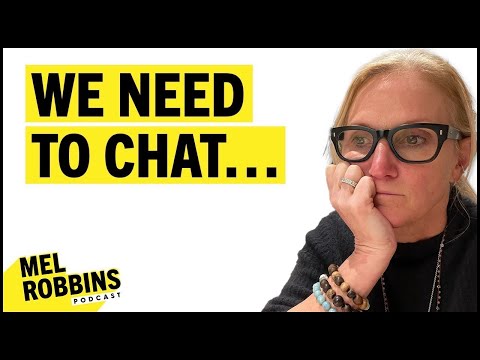
I Didn’t Expect to Record This: I Want to Talk to You About tWitch’s Death | The Mel Robbins Podcast
Mel Robbins (host)
In this episode of The Mel Robbins Podcast, featuring Mel Robbins, I Didn’t Expect to Record This: I Want to Talk to You About tWitch’s Death | The Mel Robbins Podcast explores mel Robbins Processes tWitch’s Death, Suicide, Grief, And Radical Compassion Mel Robbins records an unscripted, emotional episode responding to the news of Stephen “tWitch” Boss’s death by suicide and the 10th anniversary of Sandy Hook, using it as a moment to check in on listeners’ emotional wellbeing.
Mel Robbins Processes tWitch’s Death, Suicide, Grief, And Radical Compassion
Mel Robbins records an unscripted, emotional episode responding to the news of Stephen “tWitch” Boss’s death by suicide and the 10th anniversary of Sandy Hook, using it as a moment to check in on listeners’ emotional wellbeing.
She reframes suicide as “dying from” a mental health condition, comparing it to brain cancer to remove stigma, blame, and the idea that it’s a rational, selfish choice.
Robbins explores how public tragedies trigger personal grief, emphasizes that we never truly know others’ inner pain, and urges radical kindness toward others and ourselves.
She closes by speaking directly to listeners in dark places, insisting that pain is treatable, support is available, and their lives are worth fighting for.
Key Takeaways
Use compassionate, accurate language for suicide.
Saying someone “died from suicide” or “died from mental health struggles” frames it like a disease (e. ...
Get the full analysis with uListen AI
Assume everyone is silently battling something.
Outward markers—smiles, success, family, money—don’t reveal someone’s mental state; people live inside their heads, so don’t presume to know their pain and default to kindness instead.
Get the full analysis with uListen AI
Let yourself feel and process grief triggered by news events.
Public losses can reopen personal wounds; noticing this, remembering those you’ve lost, and talking with others about it are healthy ways to process rather than suppress the pain.
Get the full analysis with uListen AI
Be intentionally kind to yourself when the world feels heavy.
On emotionally loaded days, it’s important to rest, move your body, reach out to friends, and give yourself permission to do less—all as acts of self‑compassion, not weakness.
Get the full analysis with uListen AI
Drop moral judgment about those who die from suicide.
Calling suicide “selfish” ignores how far brain functioning has eroded; by the time someone can’t distinguish ending pain from ending life, they’re no longer thinking clearly or rationally.
Get the full analysis with uListen AI
Recognize that maintaining a cheerful front can mask serious illness.
A constant smile and positivity, like tWitch’s, can coexist with profound inner suffering; understanding this can make us more vigilant, gentle, and supportive with others.
Get the full analysis with uListen AI
If you’re in a dark place, seek help and hold on.
Robbins stresses that mental pain and brain health can improve with support and small steps; your life is worth fighting for, and trained people are ready to help right now.
Get the full analysis with uListen AI
Notable Quotes
“People don’t live at their house. You know where everybody lives? They live inside their heads.”
— Mel Robbins
“I think about a death from mental health struggles the same way I think about a death from cancer.”
— Mel Robbins
“When somebody gets to the point where they can’t think clearly, it means the physical structure of their brain has deteriorated from the mental health battle.”
— Mel Robbins
“You don’t need to know somebody personally to be affected personally by the news of their death.”
— Mel Robbins
“Please, please, please get support for the pain that you’re feeling and hold on to the life that you have, because your life is worth fighting for.”
— Mel Robbins
Questions Answered in This Episode
How would reframing suicide as a result of brain illness, rather than a selfish decision, change the way you respond to people who are struggling?
Mel Robbins records an unscripted, emotional episode responding to the news of Stephen “tWitch” Boss’s death by suicide and the 10th anniversary of Sandy Hook, using it as a moment to check in on listeners’ emotional wellbeing.
Get the full analysis with uListen AI
In what ways can you build a daily habit of assuming others are battling unseen pain and acting with extra kindness as a result?
She reframes suicide as “dying from” a mental health condition, comparing it to brain cancer to remove stigma, blame, and the idea that it’s a rational, selfish choice.
Get the full analysis with uListen AI
When news of public tragedies resurfaces your own losses, what specific practices help you process grief instead of numbing out?
Robbins explores how public tragedies trigger personal grief, emphasizes that we never truly know others’ inner pain, and urges radical kindness toward others and ourselves.
Get the full analysis with uListen AI
How can you differentiate between ordinary low moods and times when you or someone you love might need professional, urgent mental health support?
She closes by speaking directly to listeners in dark places, insisting that pain is treatable, support is available, and their lives are worth fighting for.
Get the full analysis with uListen AI
What would it look like, practically, to be as kind to yourself on hard days as Mel suggests—what would you start doing and what would you stop doing?
Get the full analysis with uListen AI
Transcript Preview
Hey, it's your friend, Mel, and welcome to the Mel Robbins Podcast. So, I just wanted to check in on you because there's a lot going on right now. I was sitting at my desk yesterday, and I got the news that Stephen tWitch Boss had died from suicide. And if you have not seen this news or you don't know who he is, let me just kind of share a little bit about him and why it impacted me. Um, so he was best known, and this is how I knew him, for being one of the executive producers of Ellen DeGeneres' talk show, and he was not only an executive producer. He was on that show every single day, five days a week. He was the DJ. He would do all the dance parties with Ellen. He has this huge, amazing, megawatt smile, and his energy, he's just one of those people that you didn't need to know him to know that, um, literally positivity, dancing, spreading, like, kindness, that's what this guy was all about. And you didn't need to know him to, to know that he was also all about his wife, Allison, and his three, like, gorgeous kids. And during the pandemic, not only was he there with Ellen, but he and his wife, who are both dancers, started doing all of these choreographed awesome videos that went viral online, and they spread so much joy for people doing these dances and teaching people with their kids all these dance moves, and they just were this positive, amazing force. And so, when I heard the news that he died from suicide yesterday at the age of 40, it just rocked me to my core, and I'm still processing it, like, 18 hours later. And when I woke up this morning, I also saw that I had missed the fact that yesterday was the 10th anniversary of Sandy Hook. And so, I just felt this need to grab my coffee and to run up here, I haven't even washed my face yet this morning, and talk to you. And I just wanted to share what I'm thinking and feeling because I think it's really important that in moments like this where the news feels overwhelming or the world feels overwhelming, and I know the holidays can just bring up a lot of stuff for a lot of us too, I want to check in on you, and I want to check in on myself. And so, that's why I decided I'm just gonna get on this mic, and I'm gonna just talk to you and that's it. That's what we're doing today. So, first things first, let's unpack, or I want to share with you what I'm thinking in the wake of learning that somebody that was so light and positive and amazing on the outside, how do you process that kind of news that they died from suicide? And notice the word I'm using. I'm saying died from suicide, and that's because I think about a death from mental health struggles the same way I think about a death from cancer. Like, if you have a friend that dies of brain cancer, you say they died from cancer. If you have a friend or a loved one, as every single one of us does, who has died from a struggle with addiction or depression or trauma or toxic stress or any other mental health issue, that mental health challenge deteriorated the physical structure of that person's brain. That's what happened. The same way that brain cancer physically deteriorates the brain until it kills somebody. And so, the word choice is really deliberate because it's a recognition of what actually happened. There's a couple other bigger things that I just have to say, and that is that you don't... You don't need to know somebody, like, you don't need to know tWitch personally to be affected personally by the news of his death. You don't have to have lived in the Sandy Hook community to be impacted by the news that it was the 10th anniversary yesterday, because these things that are happening out in the world trigger you to remember experiences of loss in your own life. And so, for me personally, I think one of the reasons why I have been so rocked by this news is because, you know, if you look at somebody like tWitch on the outside, this man exuded positivity. You never saw him without a smile on his face. You couldn't watch those dance videos without feeling the ripple of joy, and for me personally, it reminds me of a really dear friend of mine that died from suicide over 10 years ago. And the second that I heard this news about somebody who on the outside looked like they were just doing great, it reminded me of losing somebody that was the same way, and that may be happening to you. And the other thing that this is bringing up for me is that you just have no clue what's going on in somebody else's life.You focus on the beautiful smile that somebody has, or the great job, or the bank account, or the awesome spouse, or the wonderful kids, or the big house. But people don't live at their house. You know where everybody lives? They live inside their heads and you and I don't have a clue what it's like for somebody else to live with the pain inside their heads. And so, you know, one of the major takeaways here for me is one of tWitch's biggest messages, which is being kind. And the fact that being kind and being positive around other people, you have no clue, in fact, we underestimate the impact that it can have on somebody else's life to just be kind to them. And so, that's one takeaway, that you just don't have a clue. So please just don't assume that you know what's going on and assume that everybody is silently battling something. So it's on all of us to be kind to one another. Second thing that I want to say is, I need you to be kind to yourself today because there's a lot swirling around right now. And so, if you notice that you're thinking about people that you lost, which I am. I mean, yesterday what was happening for me as I heard the news, and I of course immediately thought about his family, is I was transported back to the day that I learned that our dear friend Fred had died from suicide. And it's like I started reliving that day again. As I thought about the pain that tWitch's wife Allison and his three kids were feeling, I thought about this particular moment on the day that Fred died, where I was with his daughter and we were walking up the front steps to his house and I knew that when we opened that door, I was going to be present when she learned that her father had died. It is a moment that changed me forever. And so, that's also what was happening for me yesterday, and I was thinking about, you know, how much I miss Fred. And I was thinking about how sad and heartbroken I am about all the other people in my life that had struggled with mental health issues and addiction or hopelessness or depression and how they all died from suicide and just how much pain there is out there. It can be really overwhelming. (sighs) If that's happening for you, just be kind to yourself. Like, you may need to sleep in. You may need to go for a walk today. You should probably reach out to a friend and talk to somebody about it. It would be good for you to remember the person and, and the things that you miss about them. Like, remembering somebody that is gone and, and thinking about the things that you really loved about them, that's a really healthy thing to do on a day like today. But simply being aware that news like this brings up stuff for you that's personal, that's step one. Step two is being kind to yourself. Step three is being proactive about taking care of yourself today and reaching out. And step four is understanding this issue in a larger context. And so now I want to kind of switch gears and address something that's pissing me off. As I see people processing tWitch's death in particular, because this hit me as hard as Robin Williams, as hard as Anthony Bourdain. And I think the reason why it hits people so hard is because you're trying to make sense of somebody who seems like they've got it all together on the outside. And it, in your rational mind, it just makes no sense. And that is where the learning is. See, your mind is rational right now. You're objective. You're not living with the pain the person was living with. So when you look at the situation from your lens, you remove the pain that the person was feeling. And so it makes no sense to your brain because your brain wasn't compromised from the mental health struggle that that person was really battling day in and day out. And so let me go back to the example of brain cancer. If you have a friend that's dying from brain cancer, you see them deteriorate on the outside. You see what's happening. You would never in a million years when somebody dies from brain cancer go, "Oh, that's so selfish. Why did they choose to do that? What about their family? But they had so many resources." But I see so many people writing this horseshit online and it's pissing me off because it shows that you don't have a freaking clue what it means to struggle with a mental health issue. You don't have a freaking clue. And it really pisses me off when I see people that write really arrogant, pretentious things like, "Well, I struggled. I was in a dark thing and I asked for help." Well, that's great. I'm happy that you didn't get so bad, that your brain wasn't so deteriorated that you could ask for help. When somebody gets to the point that their brain functioning is so eroded that they cannot cognitively rationally process the fact that there is a huge difference between ending the pain that you're dealing with and ending your life. When somebody gets to the point where they can't think clearly, it means the physical structure of their brain has deteriorated from the mental health battle. That's what that means.And that smile that people put on their faces the whole way through, that is so hard. Can you imagine to get to the point where you love your family so much that you think the only way to save them is to get rid of yourse- like, this is just, that's how compromised your brain is. And so when I think about this like brain cancer, that the physical brain functioning is deteriorating to the point where nobody can think rationally, that removes all judgment, and all I have is compassion and sadness. That's it. That is it, and that is all there is to have for the people that you've lost, for the folks that we continue to lose. And for anybody that's listening to this, if this is you and you're in a really dark place right now, I wanna speak directly to you right now, (sighs) because you're meant to hear this right now. You can address the pain that you're feeling in your mind and your body. You can. And there are people standing by right now that are trained that wanna help you, and with support and with small, tiny moves forward every single day, you can make this pain lessen, you can loosen the grip it has on you, and you can feel better. You can also improve the physical structure of your brain. You can improve the way that you think so that your brain starts to support you. You can face this with a little bit of support. You can. And you can do that, and I want you to do that because we want you here. You have a big, beautiful life, and I know that if you believe that you could somehow lessen the pain you're feeling, you would want to live that life. And so please, please, please get support for the pain that you're feeling and hold on to the life that you have, because your life is worth fighting for, and there are people that want to help you. We have resources in the show notes, not only for here in the United States but also for multiple languages, international resources. And so I just felt the need to talk to you, to check in with you. Um, be kind to yourself today. Stop assuming that you know what other people are thinking. Remember the people that you've lost and the things that you loved about 'em, and, um, together we'll get through this. We will. I promise. And of course, I wanna tell you that I love you, and I believe in you, and I believe in your ability to just keep going. And know that I'm gonna be here. I'm gonna be here, holding your hand, cheering you forward, and it means the world to me to know that you're here holding my hand too. I love you. I'll talk to you in a few days. (instrumental music) Hey, it's Mel. Thank you so much for being here. If you enjoyed that video, by God, please subscribe 'cause I don't want you to miss a thing. Thank you so much for being here. We've got so much amazing stuff coming. Thank you so much for sending this stuff to your friends and your family. I love you. We create these videos for you, so make sure you subscribe. Mwah.
Install uListen to search the full transcript and get AI-powered insights
Get Full TranscriptGet more from every podcast
AI summaries, searchable transcripts, and fact-checking. Free forever.
Add to Chrome