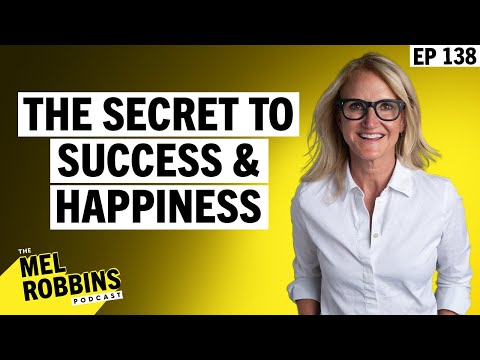
The Secret to Success & Happiness Nobody Talks About
Mel Robbins (host)
In this episode of The Mel Robbins Podcast, featuring Mel Robbins, The Secret to Success & Happiness Nobody Talks About explores mel Robbins Reveals How We Secretly Sabotage Our Own Happiness Daily Mel Robbins explains that the biggest barrier to her happiness was herself, and argues most people are unconsciously doing the same. She reframes happiness as a deep inner contentment and calm—the “eye of the hurricane”—rather than external achievements or constant positivity.
Mel Robbins Reveals How We Secretly Sabotage Our Own Happiness Daily
Mel Robbins explains that the biggest barrier to her happiness was herself, and argues most people are unconsciously doing the same. She reframes happiness as a deep inner contentment and calm—the “eye of the hurricane”—rather than external achievements or constant positivity.
Over three years of therapy, self-reflection, and research, she discovered three main ways she was running a “campaign of misery”: living trapped in her head and absent from the moment, moving through life braced for a fight, and obsessively focusing on what’s wrong instead of what’s right.
Her core message is that happiness is an inside job because you must actively let it in—by dropping your metaphorical sword, opening your inner “doors,” and changing the patterns and excuses that keep you stuck. She offers a concrete journaling exercise and small daily practices to start unblocking happiness.
Key Takeaways
Happiness is a calm inner baseline, not external success or constant positivity.
Robbins distinguishes between looking happy on the outside and actually feeling content and okay on the inside, regardless of circumstances; you can achieve goals, make money, or find relationships and still feel miserable if you don’t change your inner state.
Get the full analysis with uListen AI
You must consciously “let happiness in” instead of blocking it.
Many people are closed off like a bank vault—deflecting compliments, refusing help, dismissing wins—so they never actually receive the good that’s already in their lives; learning to say “thank you,” accept support, and acknowledge positives helps swing the door inward.
Get the full analysis with uListen AI
Being trapped in your head keeps you absent from your life.
Ruminating about the future, worrying, and spinning worst-case scenarios create an internal hurricane that prevents you from being present in joyful moments; catching yourself and returning attention to where your feet are is key to experiencing happiness in real time.
Get the full analysis with uListen AI
Living “braced for a fight” turns everyday life into a battle.
Moving through the world with a figurative sword—expecting conflict, assuming someone’s out to get you, constantly annoyed—creates chronic tension and blocks warmth, ease, and connection; intentionally “dropping the sword” softens your stance and opens space for peace.
Get the full analysis with uListen AI
A fixation on what’s wrong blinds you to what’s right.
Our negativity bias makes it easy to over-focus on the one criticism, the missed text, or the 50% we didn’t do, while ignoring genuine progress and support; shifting attention toward what is working allows more positive emotion to flow in without denying real problems.
Get the full analysis with uListen AI
Complaining and excuses are active participation in your own misery.
Robbins calls this the “campaign of misery”: repeatedly telling yourself why you can’t change your job, health, relationship, or habits uses your energy to defend stuckness instead of transformation; owning this pattern is the first step to reclaiming your power.
Get the full analysis with uListen AI
Mapping your ‘friction points’ reveals exactly where to change your life.
Her exercise—listing everything in a typical week that creates friction or agitation, then examining why—externalizes the internal hurricane so you can see patterns (e. ...
Get the full analysis with uListen AI
Notable Quotes
“The single biggest barrier to my happiness for Mel Robbins was me.”
— Mel Robbins
“When people say happiness is an inside job, what they mean is you have to let it in.”
— Mel Robbins
“I was the kind of person that moved through life with a smile on my face and a fight in my belly.”
— Mel Robbins
“If you’re able to write it down on that list, you can make a decision to change it.”
— Mel Robbins
“You are more committed to your excuses about why you can’t do these things than you are about fixing it.”
— Mel Robbins
Questions Answered in This Episode
In what specific situations do I notice myself picking up a ‘sword’ and bracing for a fight, and what would dropping it actually look like in those moments?
Mel Robbins explains that the biggest barrier to her happiness was herself, and argues most people are unconsciously doing the same. ...
Get the full analysis with uListen AI
Where in my weekly routine do I feel the most friction or agitation, and which one am I genuinely willing to change over the next year?
Over three years of therapy, self-reflection, and research, she discovered three main ways she was running a “campaign of misery”: living trapped in her head and absent from the moment, moving through life braced for a fight, and obsessively focusing on what’s wrong instead of what’s right.
Get the full analysis with uListen AI
How do my upbringing and early role models influence whether I show up like a bank vault or swinging doors when it comes to love and happiness?
Her core message is that happiness is an inside job because you must actively let it in—by dropping your metaphorical sword, opening your inner “doors,” and changing the patterns and excuses that keep you stuck. ...
Get the full analysis with uListen AI
What compliments, support, or good things do I regularly dismiss or downplay, and how might my life feel different if I started fully receiving them?
Get the full analysis with uListen AI
Am I more invested in maintaining my current narrative about why I’m stuck than I am in experimenting with uncomfortable changes that could make me happier?
Get the full analysis with uListen AI
Transcript Preview
Today, you and I are digging into the topic of happiness. The single biggest barrier to my happiness for Mel Robbins was me. You are actively blocking your happiness right now, and you don't even realize it. I guarantee you somewhere in your mind you're saying to yourself, "Oh, if I lose the weight, then I'll be happier." "If I find the love of my life, I'll be happier." "If I pay off my debt, then I'll be happier." That's not what happiness is. The secret to being happier is realizing... Hey, it's Mel, and I just wanna take a minute and thank you. Whether you have been here since the very beginning of the Mel Robbins podcast or you are one of the many new listeners that we have, I am so glad that you're here. My name is Mel Robbins. I'm a New York Times bestselling author, and I know that you tune into this podcast in particular for one reason, because you are committed to creating the best life that you can for yourself, and I think that is so cool. So thank you. Thank you for spending time listening to something that can help you do that. Thank you for spending time with me. And that brings me to today's topic. So today we're gonna talk about happiness, and the reason why I wanted to talk about happiness today is because... Hey, it's Mel. I'm so glad you're here with me on YouTube. Thank you for being here. I have a huge favor to ask before we jump into this episode on happiness. It'd make me really happy if you subscribe. It is my goal to have at least 50% of the people that watch this channel be subscribers. It really helps us bring you amazing content. Just take a second. Please, please, please? Thank you. Thank you. Thank you. All right, you ready? Let's go. You gave me so much feedback on an episode that I released two weeks ago. You might have listened to it. It's called The Four Important Life Lessons That I Learned the Hard Way So That You Don't Have To. And I'm gonna link to that episode in the show notes in case you wanna listen to it, but it doesn't matter if you heard it or not. I'm going to just dive right into one of the lessons that I shared on that episode, and the lesson was about my journey to become a happier me over the past three years. And you had so many questions about happiness. You wanted to know the details. What do you mean by happiness journey? What did you actually do? Can you explain how I can do it? And so today, you and I are digging into the topic of happiness, and I think it's important for me to start with the truth, which is, I have been working really hard at being a happier person in earnest for the last three years. And so this is not going to be an episode that is packed with all kinds of fast hacks. I mean, hacks work, they are great, there are a lot of hacks that you can use that will give you a big boost to happiness, but that's not what we're doing today. Today, I think it's time to have a deeper conversation, and I wanna share more about what it took for me to personally become a happier person. And one of the biggest insights that I've gained from the past three years, whether it's from all the therapy that I've done, or the research that I've done on, on this topic, or the experts that I've spoken to, or, more importantly, the painful process of having to look inward and observe my own behavior and my own bullshit, is this: the single biggest barrier to my happiness for Mel Robbins was me. And by the time that you are done listening to everything that I'm about to pour into you today, I think you're gonna have a million epiphanies. But the biggest epiphany that I am on a mission to have you have for yourself is how you are actively blocking your happiness right now, and you don't even realize it. And I can say that because that's exactly what I was doing. And when I read the things that you write to me, and when I bump into you in real life, when I even look at the things that people that I love struggle with, I can see the ways that you are also doing the same thing. And look, I was doing all the hacks. I was doing all the things that you're probably doing, the things that boost your happiness, like I had a gratitude practice. I was smiling at people. I was appreciating the little moments. I, I was really, really, really working on bringing happiness to the forefront, but if I'm being honest with you, if I take you back three years ago, the baseline experience for me in my day-to-day life was I basically went through life feeling agitated, frustrated, or disappointed. Like, that was my existence. I didn't wanna feel that way, but that's just what it was like inside my body, and I didn't know how to be happier. Like, for real. That may sound weird because you know me now, and I've been doing all this work on myself, and also even people that have known me for a long time, they're like, "But Mel, you're a positive person." "But Mel, you always laugh." "But Mel, you seem to have a good time." That's not what happiness is. Happiness is something else, and that's why I wanna get very real, and I wanna be honest with you about what I was struggling with, about the bullshit I was engaged in, and about what it took for me to understand what was in the way of me changing my day-to-day experience. And if you want to be a happier person, which of course you do. I mean, who doesn't want to be happier? Here's what I'm gonna tell you. If somebody as miserable on the inside and who felt like this grinding existence where I was constantly present to what was wrong, if I can learn how to be a happier person, you can learn to be a happier person. Not like the fake stuff, but like at a deep, profound level. And here's what it's gonna require. It's gonna require......that you call yourself out on your own bullshit, and we hate doing that, don't we? I mean, this is why none of us change, because it's easier to just keep doing what we're doing. And in order to change, at some point, yeah, you gotta change your behavior and change the way you think, but you also have to look in the mirror and you gotta confront what you're doing that is blocking you from having what you want in your life. And that's exactly what I've had to do over and over and over again in these past three years. And here's what I wanna do. I am going to boil this topic down for you by explaining three significant ways that I was blocking happiness in my life, and my hope in doing this is that I save you the headache, the heartache, and the misery that I created for myself internally. That's why I wanna share this with you. And after I share the three ways that I was actively engaged in blocking my own happiness, I will give you a very simple exercise that you can do that will make this even more personal. The exercise makes you look inward so that you can, in the privacy of your own home, call yourself out on your own bullshit and see where you are specifically blocking happiness. And so here's how we're gonna start. Let's get a definition of what happiness means in the context of this conversation, okay? 'Cause it's really not a feeling of positivity. For me, when I use the word happy, it is a feeling of being content, present, and okay with yourself in your life, that whatever is going on on the outside around you, that you have this ability to access a positive and supportive and optimistic baseline that is deep inside of you, and I think that's one of the mistakes that I made. I was always looking outside of me. "Oh, when I get my bills paid, when I fall in love, when I, you know, get into that school," and the truth is, if I'm being honest with you, I've been, like, kinda miserable for as long as I can remember. I was miserable in high school. I was miserable in college. I got into my dream school. I was at Dartmouth. I was miserable at Dartmouth. I then got into law school. I was miserable in law school. I then got a great job as a public defender. I liked the job, but I wasn't happy with myself. I got married to somebody that I love, but I wasn't really happy with myself. Again, chasing on the outside, chasing on the outside, and I bet you do too. I guarantee you somewhere in your mind, you're saying to yourself, "Oh, if I lose the weight, then I'll be happier. If I find the love of my life, I'll be happier. Oh, if I get into that graduate school, if I pay off my debt, then I'll be happier." That's not how it works. See, I'm sure you've heard people talk about the fact that happiness is an inside job. I didn't know what the hell that meant, and so we're gonna dig into what that means, and in fact, I wanna bring a metaphor into the conversation. I gotta credit my friend Hoda over at the Today Show because she gave me this metaphor literally a couple days ago. I was on the show on Friday, and right before we started taping, I was talking with Jenna and Hoda and we're sitting on the couches, and Hoda said this phrase, and I didn't know what the heck she was talking about. She said, "Pop up in the eye of a hurricane." I'm like, "What? What do you mean, pop up in the eye of a hurricane?" And I guess she had been covering a story where they were in a hurricane and she said, "Well, Mel, have you ever seen the eye of a storm?" And I'm like, "No, I-I never have. I've seen the swirling kind of tornado hurricane thing before when they see it on the news." Well, she said, "Well, my gosh, if you pop up in the middle of one, it's crazy quiet and still. Like, there's all this chaos on the outside that you see when you see a hurricane or you see a tornado or you see this huge storm, but in the eye of it, it's still." And when she described this, (snaps fingers) I immediately latched onto that visual. Now, I of course have never been in the middle of a storm like that, but I started to think about the fact that life, life can feel like this gigantic storm, right, of chaos and things that are spinning around you all the time, and there are times in your life where things can feel completely outta control. And in my life, if I'm being really raw and real with you, I was the hurricane. Like, I was constantly in a state of chaos internally. Yeah, I was smiling on the outside, but things were spinning around on the inside, and usually it was this negative feeling like something was wrong or something bad was gonna happen. I was always just spinning and spinning and spinning. And if you can't relate to that, I bet you can relate to the fact that often in life, it feels like you can get swept up by the things that are going on around you. And so, one of the things that I discovered in the past three years is that when I took a really hard look at myself, I'm the one that has been the hurricane of chaos, that my mood was often outta control because my mood was dependent on things that were outside of me. I was so easily turned into a bad mood or feeling disappointed or being stressed out or being sad or being all these things that I didn't wanna feel. And so when Hoda shared this with me on Friday, I thought, "You know what?" I knew that I was gonna talk to you about happiness today and I thought, "I gotta bring this in," because I do think that this connects to happiness, and here's how. The eye of the hurricane, that stillness in the midst of something chaotic going on outside of you, that is what I'm talking about when I talk about happiness, that no matter what is happening or who you're with-... that you can access this quietness inside of you, because learning how to be still and content, that is powerful. It doesn't matter who you're around or where you are. No matter what is happening, what's not happening, learning how to access that inside of you, to me, is the secret to happiness. So let me just ask you, can you do that? Like, when things are swirling around you, when you feel a bad mood get triggered, when life gets super stressful, are you able to come into yourself and tap into the centeredness, this okay-ness? Can you let positive energy flow in even when it feels like things around you are kinda chaotic? Well, if you're like Mel Robbins, the answer's, uh, "No," (laughs) but I want to be able to do that. You can, and that's the good news. You can find your strength. You can find your center. You can find the ability to be content even when there is a storm brewing, and I didn't know how to do this. My life felt like that hurricane. Your life might feel like that too. Uh, um, when I look back, my life was nothing but a relentless grind, seriously. Like, it was a grind to pay the bills. It was a grind to deal with the constant anxiety. It was a grind to be in a relationship where I felt always annoyed with the person that I was married to. My commute was a pain. Every single thing felt hard. It felt like a fight, and the only relief from that hurricane that I felt, which was my life for many years, was basically pouring a drink at night, or I would focus on the weekend that was coming. Okay, if I can just get to the weekend. I gotta get through this work week, get to the weekend. It's just two days from now. Then I can step outside of the stress of this. I can escape my life for a minute. I can drive the kids to all the things they need to do over the weekend. I'll blow off some steam at a barbecue with some friends. I'll sleep in and then I'll get right back to it, or Chris and I would be able to take a, a short vacation to go visit my parents or his parents and we'd escape our life for that. But my daily existence I would describe by two words. I was frustrated or I was disappointed. And like I said earlier, I thought that making money would make me happy. I thought that if I just pay off these bills, if I can just breathe a little bit, I will find happiness. And the truth is, there is a certain amount of money that will make you happier, because if you've ever been in the experience that I've been in my life where you can't pay your bills, there is a crushing level of stress that you feel because you're constantly worried about money. And so it is true, there is a certain level of money that will make you a little bit happier. But here's what's also true: once you can pay your bills, once you can make the ends meet, making more money doesn't solve the underlying problem, which is you don't know how to be happy. I think that's the bottom line. I didn't know how to be happy. That's why I was looking outside on myself. That's why I was thinking that something else would somehow make me a happier person. But here's what you will learn. You can listen to a bazillion podcasts. You can try to improve your life all day long. You can chip away at all the problems that you have on the outside. You can get your bills paid. You can get yourself out of debt. You can figure out how to make your marriage happier, but that's all outside of you. Once you handle all that stuff, you know what happens? It just magnifies the fact that you haven't dealt with what actually isn't working on the inside, and that's what happened to me. Once I worked my tail off to fix everything that wasn't working, from the issues in my marriage to the crushing debt that we used to face to helping my kids through the various issues that they had, uh, I had to face the person in the mirror. Once you solve all the things that are wrong around you, the hurricane's supposed to disappear, right? Wrong, because the hurricane when it comes to happiness is inside of you, and that's exactly what I came face to face with three years ago. I'm gonna tell you exactly what happened, and I'm gonna share the three things that I discovered, the three ways that I was actively fighting against my own happiness. You're probably doing them too. Stay with us. We're gonna hear a short word from our sponsors, and we're gonna dig right back into this after a short break. Hey, it's your friend Mel, and do not skip this because I have something to give you for free. No kidding. Say goodbye to 2023. Let's say hello to 2024 and make it the best year ever. I have a free 29-page workbook. I made this for you to thank you for being here on YouTube, watching all of our videos, supporting our work. I'm gonna help you answer what you want in 2024, and then more importantly, you're gonna create a plan to go get it. Then I'll be here on YouTube motivating you every step of the way. You and me, baby, let's create the best year ever. Just click the link. Boom, I'll take you to the page. You'll have this puppy in your hands in less than a minute and be right back here with YouTube for me to motivate you. (clicks tongue) I love you. Let's do this. Welcome back. It's your friend Mel. I'm so glad that you're still here because we are talking about probably one of the most important topics you and I could have a conversation about, and we haven't talked about this in depth on this podcast. And I gotta give credit to a dear friend of mine, Pete Sheahan, who I have mentioned on the podcast. About three years ago, I was complaining about something as I was often doing, and he looked at me and he said, "You know what, Mel? You know what I've noticed about you, is that the more successful you've become, the more miserable you are. Like, I know you. I... Y- you're a positive per- you're fun, you're smiley, you're this and that, but I can tell there is a storm inside of you."And he was right. He was absolutely right. And that brings me to this statement, that happiness is an inside job. It does not matter what you see on the outside of someone. It doesn't matter how smiley you are. It doesn't matter what your life looks like, how nice your car is, how long you've been in a relationship, how long you haven't been. All that stuff on the outside has nothing to do with how you feel on the inside. And that statement, that happiness is an inside job, it honestly used to piss me off 'cause I didn't know what it meant, but I do now, because I have spent the last three years asking the really hard questions. "Mel, what is all this frustration and agitation inside you about?" And here's what I realized. I realized in my day-to-day life, I personally was actively blocking happiness from flowing into my life. There was plenty of reasons for me to be happy, plenty of reasons for you to be happy. I was blocking it from getting into me. And so when people say happiness is an inside job, here's what they mean. They mean you have to let it in. I'm gonna say that again. The secret to being happier is realizing you have to let it in. And I want you to stop and just think about that. Do you allow happiness in? I didn't. I didn't even know how to let happiness in. You know, in the episode where I really dug into this, I referred to the lesson that I learned the hard way in 2023. It's something I call dropping the sword. Let me explain what that means, because it relates to letting happiness in. If you wanna be a happier person, and I really want that for you, you have to end your personal campaign of misery. What does that mean? What that means is, you're not only blocking happiness, I'm gonna prove to you today, you are actively fighting against it. And dropping the sword is the way that I started to cue myself to this new skill, which is, you got to let it flow in. And so I'm gonna explain and unpack for you three different ways that I realized over the last three years that I was engaged in this campaign of misery. I literally was fighting to stay miserable. I was blocking the happiness, and if you listen with a very critical ear, and if you are honest with yourself, and if you are willing to call yourself out on your own bullshit, I think you will realize, "Oh my gosh, I'm blocking happiness too." And my mission today is to inspire you to take on a project to become happier, to inspire you to drop the sword. Wherever it is that you are currently fighting against your own happiness, where you are currently engaged, you're campaigning for misery, I want you to stop it. And I'm gonna tell you something. This is very normal, and it's normal because life can be really hard. Maybe you're afraid to be happy. Maybe you don't know how to be happy, or perhaps you used to be really happy. You were really content. You were the person that was present in your life and content and okay, and then something horrible happened, or somebody that you love died, or there was some awful tragedy, and now you are so scared to drop the sword. You are so scared to allow yourself to feel good again, because what if you lose it again? There's so many reasons and ways that we fight against our own happiness, and you know that I love my metaphors. I've already brought in this idea of the hurricane and whether or not you're the one that's able to be okay, or whether or not you're able to stand in the center of chaos and connect to that power inside you. And so let me bring in a second one, because this visual really helps me understand that saying that happiness is an inside job. I want you to visualize a door, right? Because if you're going to go inside, you're gonna pass through a doorway, right? 'Cause there's only two different types of doors when we're talking about happiness, and the first one is the kind that I used to have, which is basically the massive steel impenetrable door that you see on a bank vault. You know those big, thick, they got a wheel on 'em, big code that you gotta do. If you finally crack it open, that door is literally like three feet wide. Nobody has the code. Nobody can get in. That was me. That is not the kind of door that you want, because that means you are blocking it. But there is a second kind of door, and this is what I want you to start to visualize. I want you to visualize swinging galley doors. If you've ever worked in a restaurant, I've worked in lots of different restaurants, if you go from the front of the house where all the tables are to the back of the house where the kitchen is, there's typically these swinging doors, right? And in the restaurant that I used to work in, The Red Rooster Tavern, there were these double doors that used to swing in and out to the kitchen. This is the kind of door that you need between yourself and the outside world, because when it comes to happiness...It has to flow both ways. Of course you have to give happiness out into the world. You have to send it out as a signal, you have to give it to other people. But the door has to swing in. And what I've discovered is that allowing the doors to swing in was nearly impossible for me, and I think that this has a lot to do with your experiences growing up and what the adults were like when you were growing up. Were they warm? Were they breezy and easy? Did they let the love flow in and out? Were they welcoming, or were they like a big, cold, steely, closed-off bank vault? That's where this probably comes from. And today, you and I are gonna talk about how you can allow more of it in, how you can go from being closed off to being breezier, to letting it flow in and flow out. So with that metaphor, I wanna talk about the first of the three ways that I was engaged in a campaign of misery, because it relates to this bank vault door. And the first way is, I was so trapped in my head, like behind the door in a vault called my mind, that I wasn't even present in my life. How can you possibly allow happiness in if you're not even there? And this is something I'm still working on. I can give you an example from just a couple days ago. So over the holidays, we were on a vacation celebrating my mom's 75th birthday, and so we were all together for four days and my brother's family was there and my parents were there, and Chris and I and our three kids were there, and it was the last full day of vacation, so we have all day together. We have a big dinner that night celebrating my mom, we're gonna play cards 'cause our family loves cards that evening, and then everybody's gonna leave the next morning. And this is the last time that Chris and I and our three kids are gonna be together until our son Oakley's graduation in June, which means this is the last time we're gonna be together for about six months. Now, do you think on that last day I was that breezy, easy, warm and present, eye of the storm, happiness person, allowing it to swing back and forth? That would've been wonderful. But not me. Old habits die hard, and on that last day of the vacation, boom, I shut the bank door. I closed myself off in my mind because all I could think about is, "Oh my God, the kids are leaving tomorrow and our daughter Kendall lives in Los Angeles and she lives so far away." And then I was like, "What if she marries somebody in Los Angeles and then all of a sudden she's gonna settle out there and they're gonna have kids out there and they're gonna be spending more time with that fam-" Talk about a hurricane. For crying out loud, I got myself so worked up, I was not only not present during the day, and I basically was closed off in my own mind that I not only didn't let the happiness in, the hurricane inside me started spinning so much that once I went to bed, I woke up every single hour on the hour until 5:45 AM when my alarm went off, which was the time that I needed to meet Kendall in the lobby to make sure that she had her passport and could get into the cab and get to the airport. I wasted the entire last 24 hours of the time that I had with the five of us. I made myself miserable. And you know what? I actively did that to myself, and I'm sharing this with you and I'm sure you can hear the intensity in my voice, doesn't sound like a happy Mel. Why am I intense? I'll tell you why I'm intense, because I can see how engaging in a campaign of misery, blocking happiness, not being present in my life robs me of those moments, and these are skills that you're gonna have to practice. And clearly, I'm still working on it. I'm giving you an example from just a couple days ago because you gotta watch this like a hawk. It is so easy to just slam the bank vault, go up in your head, start worrying about stuff, get trapped up there in your emotions. Next thing you know, you're spinning around like a hurricane that you have personally created for yourself. You're no longer present, you can't possibly let any love in, and you're no longer the centered, okay, happy eye of the storm. You yourself are the fricking hurricane. And I did it to myself, and I'm sure you do it to yourself time and time and time again, and that's just the first one. There are two more ways that I have been actively fighting my happiness. I guarantee you're gonna relate to them, so don't you dare go anywhere. You'll be happy you didn't because I'm gonna be back after a short break. Stay with us. Welcome back. It's your friend Mel Robbins, and today you and I are digging into the truth about happiness, the fact that it's an inside job and that you need to learn how to let it in, that there are things that you are doing just like there are lots of things I've been doing that block happiness. We've already covered the first one, which is when you yourself lock yourself in your head and you're no longer present. When you're up in your mind and you're worried and you're distracted, you're not in your life, so of course you're not allowing happiness in. The second way that I personally was blocking my own happiness is what I call picking up a sword. This is where you go through life and you feel like you're constantly bracing for a fight. Now, if you're the kinda person where you're constantly on the go, you're kinda hyper vigilant, you're on edge, you can see around corners, you're anticipating the next move, I want you to be honest with yourself. What does it feel like when your baseline day-to-day existence is that you gotta be ready for a fight?...that you literally wake up and it's like, boom, The Avengers, you've dropped into the day and you're bracing for the fight, and everything's gonna be a struggle. And when you walk into work, and what your boss says, and that text that you didn't get to. That was me. That was me. That there's this kinda way of moving through your life where you convince yourself that somebody's mad at you, or that something's gonna be hard, or that you're annoyed with something or disgruntled with it. And, you know, the first time that somebody really called me out on this, again, because I, on the outside, am a very positive person. I'm great with other people. It's how I relate to myself that is the real problem. It's the energy that I create internally that is robbing me of happiness. I had no problem spreading it. It's that, boom, I would shut the door and block it from me experiencing it. So here I am. This was a couple years ago. I was hosting a daytime talk show. I'm standing at CBS Broadcast Center here in New York, and my executive producer casually turns to me and she's like, "You know, why are you always so mad at Sony Pictures, your production company? It's like you, you have to have somebody that you're against. You have this energy, Mel, where you're like, it's like our team against Sony." And she was right. And when I look in the mirror and I see the human being looking back at me, that's been in my DNA for as long as I can remember, that there is someone out to get me, that there is someone that I'm against. And so if you're the kind of person who seems to always be mad at somebody, whether it's your boss, or you're annoyed with your spouse, or you're mad at the school 'cause the school is doing this thing, or you get all fired up about politics or the news, or you're in line at the airport, you're all agitated because the line next to you is moving faster than the line that you're in, and the agent is da-da-da-da-da. This is an example of having a sword in your hand. I was the same way. I want you to just stop and think about that. What does that feel like in your day-to-day life? You're walking into the grocery store. Are you breezy easy with the swinging doors? Or are you walking in there steely, bank vault, sword in your hand? I was the kinda person that moved through life with a smile on my face and a fight in my belly. And if you're nodding along going, "Yeah. Yeah. That's me. I, I, I brace a lot. I'm prepared for the worst. I'm waiting for the next shoe to drop. I'm kinda angry at people. I don't get it," drop the sword. There is no fight. And if you've been bracing for one your whole life, trust me, if there's a fight, you'll be ready. You, you, you got that handled. What you don't know how to do is to be at peace. What you don't know how to do is to not let the things outside of you create a storm inside of you. That is so unnecessary and unhealthy, and it is a learned behavior that you can unlearn. And what I love about this visual of, of, of the sword is you can feel it in your body, can't you? If you're not driving a car, I want you to take your two hands like you're gripping a sword, right? And your elbows automatically come up, and you kinda brace. And that is what it felt like for me. The bills would arrive in the mailbox. Bracing. I, I, I'm trying to pick a line in the grocery store. Bracing. "I'm gonna pick the wrong line. There's something that's gonna go..." Tell me, does that kind of internal energy, does that feel like a bank door that's closed off, or does that feel like this kinda swinging thing? You know the answer, because in some area of your life, you've picked up the sword. You've gotta fight. You're bracing for something, and that is a way in which you're blocking happiness. It's a way in which you are engaged in a campaign which is a fight for misery, and you have the power to stop that, to drop the sword. Now, the third thing that I was doing that was really blocking happiness, and this is a mindset thing. We have talked about this a lot on the podcast. I always thought about mindset more from the standpoint of success, and focus, and productivity, and training my mind to help me get what I want. I had never quite connected the dots between this and this deeper level of okayness, this breeziness that I want you to be able to create in your life where goodness flows in and flows out, that you allow it in. And it's this: being focused on what's wrong. Yup. This is a thing. This is a thing. And in fact, you know because you listen to this show that there is something called the negativity bias. Their minds are wired to magnify the negatives. You're fighting against some of your own wiring. But you can take this to a whole terrible level, okay? If you're the kinda person that is constantly hyper-focused on the one person who hasn't texted you back, that's a problem. If you're the person who is chasing somebody that is not interested in you, that's a problem. And when you are so focused on what's not working, you know what happens? You miss the fact that there are so many things that are working. You miss the fact that there are a lot of people that are saying amazing things behind your back. It's not all people who are gossiping. There are a lot of people that say great things about you, but you don't let that in, do you? There are a lot of people that show up for you in your life and that love you, but you don't let that in, do you? No. No. No. No. You're complaining about the people that aren't inviting you here. That is an example of how you actively engage in a campaign of misery.... you focus on that, you're intentional about that. You are so steely about it, you're right about it, you have shut off any other possibility in your life. The doors are not swinging in and out because you have got your sword, you are focused on what is wrong, and you are willing to fight to the death about this thing. Here's another example of how you focus on what's wrong. So when I was on the Today Show a couple of days ago, they had these questions that people had submitted on video, and there was this one awesome woman who said that, "You know, Mel, it's my goal to spend 15 minutes a day and exercise as a mom, do some yoga, do something for myself, put myself first, 15 minutes a day. I got a young toddler." And here's the question, "I've only been 50% effective. How can I be better at this?" Let me just say something here. (laughs) If you have a toddler and you're still able to find 15 minutes for yourself 50% of the time, that's amazing. Do not bash yourself for that. 50% positive is awesome, but when you are engaged in a campaign of misery, what do you do? You don't see the good. You don't see "50%, I'm doing it right. I'm gonna call that thing out." No, you focus on the fact that "I- I- I'm only doing 50%." That's a way that you're not letting the good flow in. How many times do you do that? How many times do you discount what you are doing? "Yeah, yeah, yeah. You know, I did great. I- I met my quota, but I didn't do this. Yeah, yeah, yeah. You know, I... We- we- we've done all this great, you know, stuff on our house, but we had to do it ourselves," that you don't allow the good in. So those are the three biggest ways that I was actively blocking happiness, and I wanna summarize them again. That number one, you're not present. You are so closed off, you're so locked up in your mind, you're so worried about everything else and everyone else and worrying about this that you're not even present. And if you're not even present, of course you can't let things in. Number two, that you pick up the sword. You are bracing for a fight. Everything is a fight, the customer service rep, the line that's moving too slowly. Everything has to have a sword to it. Just drop it. That energy blows, and you don't have to go through your life like that. And the third way that you block happiness, I'm sure, is you're not focused on what's working. You are so focused on what's wrong, what's not working that you're not allowing the good to flow in. Now that you're like, "Oh God, okay. Yeah, I'm a miserable you know what, and now I don't know what to do because I've just listened to a podcast on happiness and now I feel horrible. So thanks a lot, Mel Robbins, for making me realize that I am actively engaged in, uh, ruining my life and not allowing happiness in." Well, here's the good news. Now that you know that you're doing this, you can actually choose to do something different, and there are simple ways you can practice this. If I can go from being a miserable wench internally to a very happy, content person that is not hijacked by other people or the storms around me, you can too. So here are two things that I want you to do. First of all, visualize the swinging doors. This has helped me so much. I do this almost every day of my life. Notice your energy. Are you going through your day-to-day life and you are allowing the doors to swing in and out? Are you allowing the good to flow in? 'Cause that was the hardest part for me, and I'm sure it is the hardest part for you. When something good happens, acknowledge it. Let the good come in. Second thing, when somebody gives you a compliment, don't brush it off. Look the person in the eyes and say thank you. When somebody says, "Do you need some help with that? Can I help you?" Don't say no. That's your bank vault door shutting out happiness, not allowing it to flow into you. Let someone help you. I can give you an example. This is something I'm working on. I am so used to traveling that when I pull up to a hotel in my Uber and I jump out of the car and somebody as awesome outside of the hotel is like, "Hey, can I help you with your bag?" I'm like, "Uh, no, I've dragged it all the way from Boston. I can get it." No, let them help you. Let it in. That's a way that you can practice this. And here's a third simple way that you can practice this. Do you tell people that you love them? Like, I'm not talking about like, "Hey, love you, bro." That's not, that's not what I'm talking about. The fact is, most people do not tell people that they love them. I am constantly shocked and sad by how many of you write in and say that your parents never told you that they love you. I mean, this is a big deal. It's just three words, and this is a way that you can be the swinging doors. You know, I was having this conversation with Oakley and one of his really good buddies, and his friend shared something really cool with Oakley. He basically said to Oak, "You know, I wrote one of my college essays for the college applications about you." And Oakley was like, "Really? What was it about?" He said, "Well, I wrote about the fact that you always tell me that you love me. Like, every time we're hanging out as a group of friends, you just say, 'Hey you guys, I love you. I'll see you later.' And you just do it, and it's had a real impact on me, and now we all do it as friends, and it made me realize how closed off everyone in my family is, that nobody actually says it, and so I've started doing it." Now, that's a small example of somebody who didn't even know that this was possible. He was around somebody who was freely letting that flow in and out, lots of hugs, I love you all the time, when he's hanging up the phone, when he's saying goodbye at the end of school, and now guess what?This friend of his is now saying it to his family. And his brothers and sister and his parents are saying it back. It's an example of what I'm talking about and how much we all want it. And finally, the exercise. I want you to borrow this exercise that my friend Pete taught me. You know how I told you that he said, "You know, Mel, the more successful you become, the more miserable you are," and I'm like, "You're right, you're right, you're right." Well, this is what he told me to do, 'cause I was like... (whining) "I don't know how to change it, I don't, I am miserable. I just, I don't know what to do." So he said, "Luckily, I know what to do. Take out a piece of paper, and I want you to just go through a week in your life, and I want you to list out all of the things that happen during a typical week in your life where you feel friction. All of 'em." And by friction, I mean it's the energy of you're picking up the sword. You're bracing. You close off. You're just like, "Ugh." Whether it's your bills, or it's your health, or your commute, or feeling lonely that you don't have a lot of friends and it really just makes you frustrated. Whatever in your life is causing friction, that's what I want you to write down. Don't worry, it gets good. For me, when I did this three years ago, absolutely everything that I wrote down had to do with the fact that I was never home. I was working too much. I was always on a plane. I hated my life. I didn't have any friends. Why? Because I was always on a plane. I missed Chris. Why? 'Cause I was always on a plane. I didn't see, uh, Oakley as much or the daugh- my daughters as m- Why? 'Cause I was always traveling for work. And I'll tell you what else, I had a lot of excuses about it. "But I can't, but this, but that, but the other thing." Do-do, do-do, do-do. Again, the excuses and me, like, complaining about it is part of this campaign, and I'm gonna get into that in just a minute. Now, if I were to do this exercise right now with you, you know what would be on the list? Probably all of the things that I gripe about related to menopause. I actually did a whole episode about this, bitching about how bloated I was. Remember the red pants episode? And, and, and just kind of feeling frustrated and there's nothing that I can do, and these excuses about it, and feeling closed off about it, and feeling shut off about it, which what? Anything on that list that creates friction, what does that feel like? It feels like a fricking hurricane, doesn't it? It feels like you're, like, intense. It feels like you're out of control. It feels like every excuse in the book for why you can't change that thing. So list absolutely everything. It causes friction that you're the one that has to walk the dogs and you didn't even want the dogs. It was your family that wanted the dogs. Now you got the dogs. So list it all out, and now I want you to lean into it. Why is this creating this agita inside you? Why is this the hurricane that is spinning inside you? What is this list about? And let me tell you why it is so important to write this down. It's so important because you and I stay so trapped up here in our heads. We are behind that bank vault door, closed off, thinking about all these things that are making us miserable, and here's the thing. You are not stuck with this list. When you write this list down, when you get this out of the bank vault, out of the hurricane of your mind and into the physical space, the real world, on a piece of paper, staring you in your face, now you can work on it. Let me tell you what's gonna happen when you do this exercise. First of all, there's gonna be a lot of stuff on it, 'cause there's a lot of stuff that you're complaining about that you don't even realize you're complaining about it. You just live with it. You sit with it in your head. But when you complain about something, you are actively engaged in your own campaign for misery, period. You are fighting for it. When you sit there and go, "Oh, but I can't do this, but I'm stuck with this job, but my this will never change, but..." Da-da-da-da-da-da-da. And why do we do this? I'll tell you why. 'Cause it's easier to complain about something than to change it. It is easier to feel frustrated and disappointed and stay stuck in the cycle of misery 'cause you're used to it. And here's the thing that you're gonna realize when you get all of this down on paper and you say, "This is the hurricane. This is the stuff that's stirring up stuff inside me. This is where I'm putting my energy. I put so much energy into keeping this alive and in place because I'm constantly explaining all the reasons why I can't do anything about it. I'm constantly talking to myself about it." This is what the campaign of misery is, and that's why I want it on paper. Because I'm here to tell you, you have way more power than you think you do. You can change absolutely anything on that list. Anything that you are willing to identify, that you are able to write down. If you are able to look in the mirror and go, "You know what? I see that I have a sword in my hand. I see that I feel the friction in this area of my life and I fight with it. I have excuses around it." And here's what I want you to do. I want you to realize that anything that you put down on that list, you can make a decision to change it over the course of the next year. You are not stuck in a relationship or a marriage that does not work. You are not stuck in a job that makes you miserable. For my entrepreneurs and small business owners out there, you're not stuck with a business model or a business that is making you unhappy or that's not working. Here is the harsh truth, and this is what I had to say to myself. "Mel, you are more committed to your excuses about why you can't do these things than you are about fixing it." And so if you're somebody that has on that list your weight or your health, I guarantee you, you have spent years telling yourself why it's never gonna work for you, why you can't go to graduate school, why you can't get back out into the dating world, why you can't change your career now that you're in your 50s. It is complete and utter bullshit.And you have to start to own your participation in your own unhappiness, just like I did. Because the fact is this, you can change your life by making a choice to change it. Instead of staying locked in that bank vault of your mind, spinning yourself into a hurricane, do something different. Instead of waking up every single morning and complaining to yourself and making yourself feel wrong, "Oh, I drank too much again last night," choose to stop drinking. Like enough. Enough. Instead of complaining about how your friends are annoying you, choose to stop hanging out with people who are insecure, or petty, or small-minded. Instead of complaining about your w- Do something about it. Instead of constantly focusing on what's wrong, start focusing on what's right. Instead of being up in your head, catch yourself. Come back down to where your feet are. Open up the vault and let your presence flow. Be here so you can start to let the good in because you're missing out on your life. And the more time you spend up in your head complaining about it, or fighting against it, or arguing for your excuses, the more miserable you're gonna be. That is what the campaign of misery is. And whenever you feel that closedness rising up in you, drop the sword. Drop the sword. You don't need it right now. What you need to do is you need to visualize those swinging doors. You need to start spending your energy seeing what's going right, the 50% of it that's going in your direction, and then allow it to flow in. And in case no one else tells you, let me tell you that I believe in you and I love you, and I believe in your ability to be a happier you. So put down the damn sword and start letting the good in. I'll talk to you in a few days. And for you on YouTube, I love you, love you, love you. Thank you for being here. And please subscribe. It really is a way that you can show some love back to me. Make me very happy. And by the way, this is what you wanna watch next. This is Why You're Not Happy and How To Fix It, where I'm gonna give you three research-backed secrets, science, and strategies to help you be happier.
Install uListen to search the full transcript and get AI-powered insights
Get Full TranscriptGet more from every podcast
AI summaries, searchable transcripts, and fact-checking. Free forever.
Add to Chrome