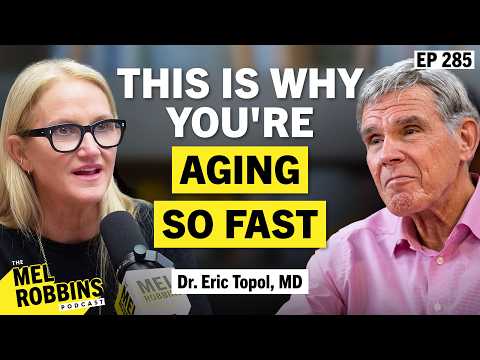
Advice From the #1 Longevity Doctor: Add 10 Years to Your Life With 3 Simple Habits
Mel Robbins (host), Dr. Eric Topol (guest), Narrator
In this episode of The Mel Robbins Podcast, featuring Mel Robbins and Dr. Eric Topol, Advice From the #1 Longevity Doctor: Add 10 Years to Your Life With 3 Simple Habits explores top Longevity Doctor Destroys Anti-Aging Myths, Prescribes Proven Lifestyle Fixes Mel Robbins interviews world-renowned cardiologist and researcher Dr. Eric Topol about the real science of aging versus the booming, largely unproven anti‑aging industry. Topol explains that the real goal is extending healthspan—years of healthy, functional life—by preventing the ‘big three’ age-related diseases: cancer, cardiovascular disease, and neurodegenerative disorders like Alzheimer’s. Drawing from his book *SuperAgers*, he outlines evidence-based lifestyle ‘plus’ factors—diet, exercise, sleep, social connection, environment, and mental health—that can add 7–10 years of healthy life, even if started later in life. He also warns against expensive, risky anti-aging clinics, fad interventions, and overhyped tests, emphasizing that no pill, transfusion, or supplement has been proven to slow or reverse aging in humans.
Top Longevity Doctor Destroys Anti-Aging Myths, Prescribes Proven Lifestyle Fixes
Mel Robbins interviews world-renowned cardiologist and researcher Dr. Eric Topol about the real science of aging versus the booming, largely unproven anti‑aging industry. Topol explains that the real goal is extending healthspan—years of healthy, functional life—by preventing the ‘big three’ age-related diseases: cancer, cardiovascular disease, and neurodegenerative disorders like Alzheimer’s. Drawing from his book *SuperAgers*, he outlines evidence-based lifestyle ‘plus’ factors—diet, exercise, sleep, social connection, environment, and mental health—that can add 7–10 years of healthy life, even if started later in life. He also warns against expensive, risky anti-aging clinics, fad interventions, and overhyped tests, emphasizing that no pill, transfusion, or supplement has been proven to slow or reverse aging in humans.
Key Takeaways
Prioritize healthspan by targeting the ‘big three’ diseases early.
Cancer, cardiovascular disease, and neurodegenerative conditions incubate for 20+ years; starting preventive lifestyle changes in midlife (or even at 70–80) can delay or avert these diseases and add 7–10 years of healthy life.
Get the full analysis with uListen AI
Adopt a Lifestyle+ approach, not just diet-and-exercise tweaks.
Beyond eating better, moving more, and sleeping well, Topol stresses reducing ultra-processed food, improving sleep quality (especially deep sleep), maintaining social connections, reducing exposure to pollution and harmful chemicals, spending time in nature, and managing chronic stress.
Get the full analysis with uListen AI
Use exercise as your primary ‘anti-aging drug.’
Regular aerobic activity (about 30 minutes, five days a week) plus resistance training and balance work is the only intervention proven to lower biological age, reduce inflammation, improve mental health, and outperform antidepressants in many cases.
Get the full analysis with uListen AI
Cut ultra-processed foods and added sugars to reduce inflammation and disease risk.
Ultra-processed foods disrupt gut–brain signaling, promote overeating, drive systemic inflammation, and are strongly linked to obesity, type 2 diabetes, cardiovascular disease, cancer, and accelerated aging; even reducing their share of your diet from 60–70% is meaningful.
Get the full analysis with uListen AI
Be skeptical of anti-aging clinics, infusions, and supplements.
Interventions like rapamycin, NAD+ supplements, senolytics, young plasma infusions, IV ‘anti-aging drips,’ and most vitamins/supplements lack robust human evidence for slowing aging and can carry real risks (e. ...
Get the full analysis with uListen AI
Use risk-informed, not blanket, screening for cancer and other diseases.
Tools like polygenic risk scores and, eventually, AI-analyzed multimodal data can identify who is genuinely high-risk and deserves more intensive surveillance; using expensive MCED blood tests or full-body MRIs in low-risk people mostly produces false positives and harmful cascades.
Get the full analysis with uListen AI
Protect mental health and social connection to slow biological aging.
Chronic stress, loneliness, and social isolation drive inflammation and immune dysregulation, accelerating aging and raising risk for heart disease, cancer, and dementia; practices like time in nature, music, and fostering rich social ties are physiologically protective, not just emotionally nice-to-have.
Get the full analysis with uListen AI
Notable Quotes
“Ultimately, if you do all the things that we're talking about, study after study shows this extends healthy aging by seven to ten years.”
— Dr. Eric Topol
“People keep talking about longevity. What we want to do is improve our health span—that is, our years of healthy living.”
— Dr. Eric Topol
“There is nothing that's been proven in people to promote the slowing or reversing of aging—whether they're pills, compounds, infusions, transfusions—none of that is proven.”
— Dr. Eric Topol
“Turns out that exercise is the only thing we know that lowers our biological age.”
— Dr. Eric Topol
“If you really do a dedication to lifestyle plus factors, you're gonna get years more of healthy aging. And you can ignore all the false anti-aging supplements and drugs and interventions that exist today.”
— Dr. Eric Topol
Questions Answered in This Episode
If someone is starting from a very unhealthy baseline in midlife, which single Lifestyle+ change—diet, exercise, sleep, or social connection—will likely produce the fastest, most motivating health improvements?
Mel Robbins interviews world-renowned cardiologist and researcher Dr. ...
Get the full analysis with uListen AI
How soon do biological aging markers (like epigenetic or organ clocks) actually improve once a person consistently changes their lifestyle, and can patients access such testing today in a practical way?
Get the full analysis with uListen AI
Where is the ethical line between helpful early-risk information (e.g., polygenic risk scores, Alzheimer’s blood tests) and creating anxiety or over-medicalization in people who might never develop those diseases?
Get the full analysis with uListen AI
What policy or regulatory changes would most effectively curb the ‘longevity circus’ of expensive, unproven anti-aging interventions that are currently being marketed to consumers?
Get the full analysis with uListen AI
How can healthcare systems realistically integrate multimodal AI and personalized risk scores into everyday primary care so that prevention becomes the default, not an elite or concierge service?
Get the full analysis with uListen AI
Transcript Preview
I wanna read to you from your book, because you had some strong words about the anti-aging industry. This is a scientist and doctor whose work has been cited 365,000 times. What do you wanna say about the anti-aging craze and all the marketing around it?
I mean, there's all kinds of stuff going on right now. It's pretty scary. People keep talking about longevity.
Right.
What we wanna do is improve our health span. Turns out that exercise is the only thing we know that lowers our biological age.
What are the top three things, Dr. Topol, that most people are doing that are actually aging them faster?
The problem, Mel, is the things that they're not doing. Poor diet, not nearly enough exercise, and then, of course, this is what I think most people don't understand. Ultimately, if you do all the things that we're talking about that's been study after study, this extends healthy aging by seven to 10 years.
Wait. No, hold on. So... Hey, it's your friend Mel and welcome to The Mel Robbins Podcast. I am so excited that you're here. I'm excited that I'm here, and I am really excited that our guest, Dr. Eric Topol, is here today. It's always such an honor to spend time with you and to be together, and if you're a new listener, I just wanna take a moment and personally welcome you to The Mel Robbins Podcast family. I'm glad you're here. And because you made the time to listen to this particular episode, here's what I know about you. I know that you're the kind of person who not only values your time, but you value your health and you're interested in longevity, and you could not have picked a better conversation to spend your time on because this is gonna be one of the most valuable things you could ever listen to on longevity, on the science of aging, because you're gonna be learning from one of the most respected living medical researchers and scientists alive today. And if you're listening right now because somebody in your life shared this with you, I wanna point something out. That's really cool because it means you have people in your life that care about you and that care about your health and they wanted you to have the opportunity to learn from one of the top researchers in the world about simple things that you can do based on the evidence to live longer, to be healthier, and to have a better life, because that's exactly what you and I are gonna talk about today with the extraordinary Dr. Eric Topol. Dr. Topol is a pioneering physician scientist. He's a cardiologist who practiced for almost four decades and is one of the most renowned researchers in the world. He is the founder and director of the world renowned Scripps Research Translational Institute where he currently serves as the executive vice president and professor of molecular medicine. Previously, Dr. Topol was the chairman of cardiovascular medicine at Cleveland Clinic, one of the top hospitals in the world, and it was ranked number one in heart care for over a decade during Dr. Topol's tenure. And if you're thinking, "What else could this guy possibly do?" well, he's also among the top 10 most cited researchers in medicine in the world. He's published over 1,370 peer-reviewed articles, which is an enormous number, and his research is so respected that it's been cited by other researchers more than 365,000 times. I mean, just to put that into perspective, that's more than 99.99% of all scientists globally. He's also the author of several best-selling books, including his newest mega best-seller, SuperAgers: An Evidence-Based Approach to Longevity, which has already been endorsed by, check this out, five Nobel laureates and several of the world's top medical researchers. I am absolutely honored that he chose the Mel Robbins Podcast and a conversation with you and me as the very first interview that he granted for his new book. Dr. Eric Topol, thank you so much for getting on a plane, flying across the country, and being here on the Mel Robbins Podcast. I'm absolutely thrilled to unpack SuperAgers with you, your brand new book.
Install uListen to search the full transcript and get AI-powered insights
Get Full TranscriptGet more from every podcast
AI summaries, searchable transcripts, and fact-checking. Free forever.
Add to Chrome