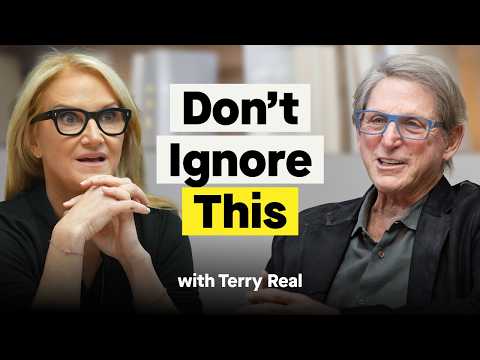
Married, Dating, or Single: The Best Relationship Advice You Will Ever Receive
Terry Real (guest), Mel Robbins (host)
In this episode of The Mel Robbins Podcast, featuring Terry Real and Mel Robbins, Married, Dating, or Single: The Best Relationship Advice You Will Ever Receive explores terry Real teaches modern relationship skills to break harmful cycles Terry Real argues that modern couples want “lifelong lovers” level intimacy but are using outdated, culture-driven “hamburger skills,” leading to recurring conflict without repair.
Terry Real teaches modern relationship skills to break harmful cycles
Terry Real argues that modern couples want “lifelong lovers” level intimacy but are using outdated, culture-driven “hamburger skills,” leading to recurring conflict without repair.
He explains how childhood wounds and “adaptive child” defenses (fight, flight, or fix/over-function) hijack adult partnerships, creating loops like rager vs. shutdown or fixer vs. irritability.
Core tools include relational mindfulness (pause when flooded), telling the truth with love (not harshness), asking directly for what you want, and building a relationship culture of repair through accountability and amends.
He emphasizes relational empowerment (“we’re a team”) over dominance/individual empowerment, and offers decision guidance for when to stay, seek help, or leave—especially when safety, addiction denial, or chronic immaturity block change.
Key Takeaways
Today’s relationship expectations require learnable skills—not luck.
Real says we want passion, communication, and lifelong intimacy, but culture doesn’t teach the skills to sustain them. ...
Get the full analysis with uListen AI
Most couples fail at “repair,” not love.
He describes every relationship as a cycle of harmony, disharmony, and repair; many couples oscillate between harmony and disharmony but never repair because they don’t know how. ...
Get the full analysis with uListen AI
Conflict is often your childhood wound resurfacing, not the present issue.
Partners are “exquisitely designed” to activate each other’s unfinished business; the dead flowers or forgotten bread are triggers that resonate with earlier abandonment, control, or betrayal. ...
Get the full analysis with uListen AI
Your “adaptive child” runs the show when you’re flooded.
When triggered, the prefrontal cortex goes offline and automatic survival strategies appear: fight (rage/one-up), flight (shutdown), or fix (fawn/over-function). ...
Get the full analysis with uListen AI
Relational mindfulness is the first move: pause before you ‘do the pattern.’
Real advises taking a break—walk, breathe, reset—before trying any communication technique. ...
Get the full analysis with uListen AI
Harshness has zero upside; loving firmness works better.
He calls this a life-changing principle: harshness toward your partner (or yourself) doesn’t accomplish anything that kind firmness can’t do better. ...
Get the full analysis with uListen AI
Tell the truth with love: data, meaning, feelings, request—anger last.
For hard conversations, he suggests: what happened, what you told yourself, how you felt, and what you want—while putting the first reactive feeling (often anger) at the end. ...
Get the full analysis with uListen AI
Stop trying to get your partner to heal your wound—heal it yourself.
A central shift: the healing comes when your partner doesn’t deliver what your wounded child craves and you respond differently than you learned as a kid. ...
Get the full analysis with uListen AI
Intimacy requires learning to receive love, not just demand change.
Even when a partner improves, many people block reception with “yes, but” defenses (“too little, too late”). ...
Get the full analysis with uListen AI
Use a clear stay/leave test—and treat safety and denial as dealbreakers.
He offers a “relational reckoning” question: ‘Am I getting enough to make grieving what I’m not getting worth it? ...
Get the full analysis with uListen AI
Notable Quotes
“All relationships are an endless dance of harmony, disharmony, and repair.”
— Terry Real
“We all marry our unfinished business.”
— Terry Real
“Your partner is exquisitely designed to stick the burning spear right into your eyeball.”
— Terry Real
“There is no redeeming value whatsoever in harshness. Harshness does nothing that loving firmness doesn't do better.”
— Terry Real
“Love demands democracy.”
— Terry Real
Questions Answered in This Episode
How do you practically set up a “take a break and return” contract so one partner doesn’t experience it as abandonment or stonewalling?
Terry Real argues that modern couples want “lifelong lovers” level intimacy but are using outdated, culture-driven “hamburger skills,” leading to recurring conflict without repair.
Get the full analysis with uListen AI
Terry, can you give 3–5 examples of the same complaint phrased as (a) criticism and (b) a clean request using your ‘tell the truth with love’ structure?
He explains how childhood wounds and “adaptive child” defenses (fight, flight, or fix/over-function) hijack adult partnerships, creating loops like rager vs. ...
Get the full analysis with uListen AI
You describe ‘grandiosity feels good.’ How can someone tell the difference between healthy confidence/boundaries and grandiosity as a defense?
Core tools include relational mindfulness (pause when flooded), telling the truth with love (not harshness), asking directly for what you want, and building a relationship culture of repair through accountability and amends.
Get the full analysis with uListen AI
In the rager–shutdown loop, what should the shutdown partner do first: stay present, request a break, or respond with vulnerability—and how do you sequence that?
He emphasizes relational empowerment (“we’re a team”) over dominance/individual empowerment, and offers decision guidance for when to stay, seek help, or leave—especially when safety, addiction denial, or chronic immaturity block change.
Get the full analysis with uListen AI
For the ‘spark is gone’ couple, what are concrete reconnection practices that aren’t performative (e.g., weekly rituals, novelty plans, sexual communication exercises)?
Get the full analysis with uListen AI
Transcript Preview
I'm not an empathic therapist. Uh, you want empathy? Uh, oh, I'm sorry. You cracked. Patriarchy cracked. It doesn't mean there was something wrong with you. It means there was something wrong with what you were both trying to live up to.
[upbeat music] Terry Real is one of the most sought-after couples therapist in the world. His private clients pay $7,000 for a single session. He's gonna explain exactly why none of your relationships in the past have worked.
Listen, we've never wanted more from relationships than we do right now. We wanna be lifelong lovers, but we're trying to do that in the context of a culture that is not a relationship-cherishing culture. There is a relationship technology. There's a set of skills that work better. It works better to ask your partner for what you want than to criticize them for what they're doing wrong. All relationships are an endless dance of harmony, disharmony, and repair.
Most couples are in harmony and disharmony. Harmony and disharmony, but no repair.
No repair, because that's where the skills come in. Getting the love you want literally means being a pioneer. We are interconnected. We are interdependent. Healthy self-esteem comes from the inside out. You have worth, you have dignity, because you're here on this planet, you're a human being, no better or worse than anybody else. Remember that, and have that give you courage.
Please help me welcome Terry Real to The Mel Robbins Podcast.
Oh, my gosh, it's a thrill to be here, and bless you, and thank you for the good work you're doing for the world.
Terry, right back at you. Bless you, and thank you for the good work you're doing in the world, and for the good work you're about to help us do in our conversation today. And here's where I wanna start: How could my life be different? If I take everything that you are about to teach me today, after 40 years of wisdom, and work, and the things that you have learned, and the truths that you know, how could my life be different if I take it all to heart, and I apply it to relationships and to my day-to-day life?
I'm gonna tell you, and listeners, viewers, uh, the same thing I say to every single couple: I am inviting you on a rarefied path. It's demanding, it's sophisticated, it's skilled, and it leaves the norms of this culture in the dust. Listen, we've never wanted more from relationships than we do right now.
Hmm.
Gone are our grandparents, even our parents, companion- side by side, pay the bills, raise the kids, no passion, no communication, fine, stable, good enough. That's gone. We wanna walk hand-in-hand on the beach. We want heart to... We want great sex in 70s and 80s. We wanna be lifelong lovers, but we're trying to do that in the context of a culture that is not a relationship-cherishing culture. We live in a patriarchal, and I'll go into that, individualistic culture that does not cherish relationships. I would like basic relationship skills taught in elementary school, junior high, high. We need to know how to pull off this new ambition of being lifelong lovers. Getting the love you want literally means being a pioneer. If you're a hetero man, it means moving into vulnerability, which means deconstructing masculinity itself. Masculinity means being invulnerable. You open your heart, you are redoing what it means to be a man. As we were speaking, standing up for yourself, not with shrillness, but with love and power, is brand-new work for women in this culture. As a people, we all need in our lives to be pioneers. We don't live relationally in this culture. We are individualistic, and we are patriarchal, meaning the basic model is dominance.
Install uListen to search the full transcript and get AI-powered insights
Get Full TranscriptGet more from every podcast
AI summaries, searchable transcripts, and fact-checking. Free forever.
Add to Chrome