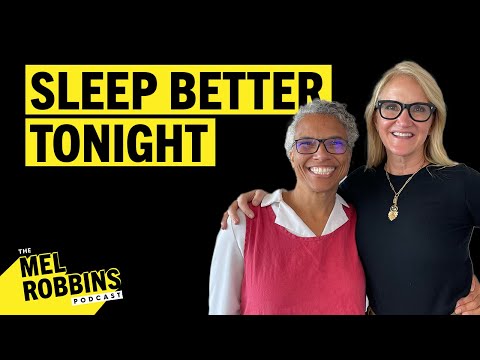
Dr. Gina Poe: How To Get Better Sleep And Boost Your Learning, Memory & Energy | Mel Robbins Podcast
Mel Robbins (host), Dr. Gina Poe (guest), Narrator
In this episode of The Mel Robbins Podcast, featuring Mel Robbins and Dr. Gina Poe, Dr. Gina Poe: How To Get Better Sleep And Boost Your Learning, Memory & Energy | Mel Robbins Podcast explores sleep Scientist Reveals Simple Daily Habits To Supercharge Brain Health Mel Robbins interviews UCLA neuroscientist Dr. Gina Poe about the science of sleep and how it impacts learning, memory, emotional health, and physical repair. Dr. Poe explains sleep stages, REM and non-REM functions, and why the brain does essential “work” only during sleep, including waste cleanup and memory integration. They cover circadian rhythms, light exposure, and growth hormone release, showing how inconsistent bedtimes, late screens, and poor routines sabotage this system. The episode ends with practical, research-backed habits anyone can adopt to dramatically improve sleep quality and, in turn, cognitive performance and healing.
Sleep Scientist Reveals Simple Daily Habits To Supercharge Brain Health
Mel Robbins interviews UCLA neuroscientist Dr. Gina Poe about the science of sleep and how it impacts learning, memory, emotional health, and physical repair. Dr. Poe explains sleep stages, REM and non-REM functions, and why the brain does essential “work” only during sleep, including waste cleanup and memory integration. They cover circadian rhythms, light exposure, and growth hormone release, showing how inconsistent bedtimes, late screens, and poor routines sabotage this system. The episode ends with practical, research-backed habits anyone can adopt to dramatically improve sleep quality and, in turn, cognitive performance and healing.
Key Takeaways
Treat sleep as active brain work, not passive rest.
Sleep isn’t laziness; it is when your brain performs critical tasks—immune support, neural repair, emotional processing, creativity, and memory consolidation—that cannot happen efficiently while awake.
Get the full analysis with uListen AI
Protect deep sleep early in the night for brain ‘cleaning’.
Slow-wave (N3) sleep, which predominates in the first half of the night, runs powerful, wave-like activity that helps clear metabolic waste and repair the brain; staying up too late can cause you to miss much of this phase.
Get the full analysis with uListen AI
Use REM sleep to solidify learning, habits, and emotional healing.
REM sleep integrates new information into existing schemas, supports creativity, and ‘de-links’ painful memories from their raw emotional charge—processes that are essential for habit formation and trauma recovery.
Get the full analysis with uListen AI
Anchor your circadian rhythm with morning light and reduced evening light.
Getting outside into natural light soon after waking powerfully resets your internal clock, while avoiding or filtering bright blue light at night prevents your brain from misreading evening as ‘morning’ and delaying sleep.
Get the full analysis with uListen AI
Keep a consistent bedtime to leverage melatonin and growth hormone surges.
Going to bed around the same time each night allows melatonin and growth hormone to peak together, increasing growth hormone release up to tenfold and enhancing tissue repair, protein synthesis, and memory consolidation.
Get the full analysis with uListen AI
Build a calming pre-sleep routine that cools your core and calms your mind.
Habits like a warm bath or shower (which warms hands and feet and helps cool core temperature), light reading, prayer, or low-stimulation activities cue the body and brain that it’s time to sleep and make falling asleep easier.
Get the full analysis with uListen AI
Support sleep with daytime movement and caffeine timing.
Regular exercise that elevates heart rate improves sleep pressure and depth later that night, while avoiding excessive or late-day caffeine prevents interference with your ability to fall and stay asleep.
Get the full analysis with uListen AI
Notable Quotes
“Sleep is great for the immune system, it's great for cognition, it's great for the emotional system, it's great for growth and repair.”
— Dr. Gina Poe
“If you think of sleep as laziness or a time when you're not doing anything, then it's harder to justify in our workaholic world.”
— Dr. Gina Poe
“During the day you can collect the LEGO pieces, but you don't assemble them into a coherent schema until you sleep.”
— Dr. Gina Poe
“Sleep is another ‘work time’ for your brain, even though it feels quite different than waking work.”
— Dr. Gina Poe
“Having good sleep habits and consistent sleep habits actually can help you heal… it's not only helpful, it's necessary to heal.”
— Mel Robbins and Dr. Gina Poe (paraphrased agreement)
Questions Answered in This Episode
How can someone with chronic insomnia safely rebuild normal REM patterns to help process trauma and emotional pain?
Mel Robbins interviews UCLA neuroscientist Dr. ...
Get the full analysis with uListen AI
What concrete signs should I look for during the day to know whether I’m getting enough deep sleep versus enough REM sleep?
Get the full analysis with uListen AI
If my work schedule forces irregular bedtimes, what are the highest-impact steps I can take to protect my circadian rhythm and brain health?
Get the full analysis with uListen AI
How do sleep needs and the balance of deep versus REM sleep change as we age, and should sleep strategies change accordingly?
Get the full analysis with uListen AI
What are the risks and potential benefits of using supplements (like melatonin) or sleep medications in light of how precisely timed our natural sleep chemistry is?
Get the full analysis with uListen AI
Transcript Preview
(ticking clock) (intense music) So, you're one of the most renowned sleep researchers in the world. What is your sleep routine?
(laughs) That's a great question.
Can you explain why we sleep and why it's so important?
Sleep is great for the immune system, it's great for cognition, it's great for the emotional system, it's great for growth and repair.
Who knew sleeping was so complicated?
(laughs)
(upbeat music) Hey, it's your friend Mel, and welcome to the Mel Robbins podcast. Today, you and I are gonna learn all about the science of sleep from one of the world's leading neuroscientists and researchers. I'm talking about UCLA's Doctor Gina Pau. And before I jump into her credentials and everything that we're gonna cover, I just wanna thank you. Thank you for being here, because when you're here with me, I know it's not about me, it's about you. You listen because you wanna learn, you wanna feel inspired, and you're investing time in yourself right now. And I don't take that lightly, because I love you for being interested in improving your life. I mean, that's why I'm here too, so I'm proud of both of us. And today, we have a private class with one of the most renowned experts and researchers in the science of sleep. Doctor Gina Pau is here. Now, Doctor Pau is a neuroscientist at UCLA. She's been studying the science of sleep for 30 years. Her lab has done pioneering research. Right now, she's looking to the connection of sleep and healing mental illness. Doctor Pau is gonna cover the fundamentals today, and questions like, why do you sleep? What is your brain doing as you sleep? What is REM sleep? What are sleep cycles and how many do you need? If you've been hearing about circadian rhythms, she is gonna break it down and explain what they are and why they matter, and you're gonna leave with five recommendations from Doctor Pau's extraordinary research, recommendations on how anyone, including you, can improve your sleep. And if you're sitting there thinking, "Ugh, Mel? Sleep? This sounds like a snoozefest. I think I'm gonna skip this one," don't you dare, because I thought I knew what I needed to know about sleep too, and then I started preparing for this episode. I learned so many things that I didn't know but you and I need to know, we should know. I'm talking profound, profound information about how sleep is critical for your memory, for neuroplasticity, for locking in new habits, for creativity, for healing, for so much more. This is one of the fundamental pillars for better health and for a better life. And so, that's why I'm excited, that's why I'm glad that you're here. Class is in session, sleep is on the docket, and guess what? The amazing Doctor Gina Pau, she's not only smart, she's super in demand. This woman is hot off a plane because she's been lecturing at conferences all over Europe, but she is here right now for you and for me. So, Doctor Gina Pau, I am so excited to be here with you. So, with that introduction, I gotta tell you on YouTube, I'm so excited that you are here because class is in session, sleep is on the docket, and I'm gonna throw this to the, uh, studios in Los Angeles, because we recorded this in LA because Doctor Gina Pau had been all over Europe lecturing about sleep, and she had flown back to LA and jumped right in the studio for you and me. So, without further ado, let's go.
Install uListen to search the full transcript and get AI-powered insights
Get Full TranscriptGet more from every podcast
AI summaries, searchable transcripts, and fact-checking. Free forever.
Add to Chrome