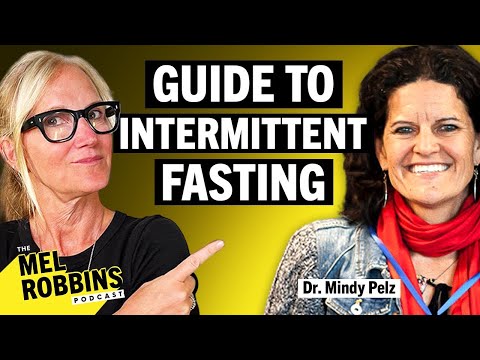
THIS Is Why Intermittent Fasting Never Worked For You | The Mel Robbins Podcast
Mel Robbins (host), Dr. Mindy Pelz (guest)
In this episode of The Mel Robbins Podcast, featuring Mel Robbins and Dr. Mindy Pelz, THIS Is Why Intermittent Fasting Never Worked For You | The Mel Robbins Podcast explores intermittent Fasting That Actually Works For Women’s Hormones And Health Mel Robbins and Dr. Mindy Pelz unpack how to implement intermittent fasting as a practical, step‑by‑step health protocol that focuses on when you eat, not what you eat. They explain the basic science of switching between sugar-burning and fat-burning states and outline what to expect physically and mentally when you first start fasting. A major focus is why women must fast differently than men due to monthly hormonal rhythms, especially the distinct needs of estrogen and progesterone, and how to adapt fasting around menstrual cycles or the moon. The episode ends with simple hacks, food guidelines, and a four-step framework for building a sustainable, community-supported fasting lifestyle.
Intermittent Fasting That Actually Works For Women’s Hormones And Health
Mel Robbins and Dr. Mindy Pelz unpack how to implement intermittent fasting as a practical, step‑by‑step health protocol that focuses on when you eat, not what you eat. They explain the basic science of switching between sugar-burning and fat-burning states and outline what to expect physically and mentally when you first start fasting. A major focus is why women must fast differently than men due to monthly hormonal rhythms, especially the distinct needs of estrogen and progesterone, and how to adapt fasting around menstrual cycles or the moon. The episode ends with simple hacks, food guidelines, and a four-step framework for building a sustainable, community-supported fasting lifestyle.
Key Takeaways
Treat fasting as a timing protocol, not a restrictive diet.
Intermittent fasting is about creating clear windows of eating and not eating (e. ...
Get the full analysis with uListen AI
Expect short‑term discomfort as your body transitions into fat burning.
Headaches, moodiness, brain fog, digestive changes, or mild detox symptoms can appear in the first 1–3 days; these usually pass as your metabolism adapts, similar to the temporary pain of a sprained ankle healing.
Get the full analysis with uListen AI
Women must adjust fasting around hormonal rhythms, especially progesterone.
Estrogen generally thrives with fasting, but progesterone (dominant the week before a period) needs higher glucose and lower stress; fasting hard all month can tank progesterone, leading to anxiety, hair loss, missing periods, and weight gain.
Get the full analysis with uListen AI
Cycling women should avoid fasting the week before their period.
Dr. ...
Get the full analysis with uListen AI
If you don’t have a regular cycle, anchor fasting to the moon.
For women on hormonal birth control, in perimenopause, or postmenopause, use the lunar cycle: start about 21 days of intermittent fasting on the new moon, then take roughly 7 days off fasting around the full‑moon time to mimic natural hormonal rhythms.
Get the full analysis with uListen AI
Use simple hacks to make fasting easier and more sustainable.
You can extend fasts and reduce hunger by adding ½–1 teaspoon of MCT oil and unsweetened full‑fat cream to morning coffee, using high-quality electrolytes (like LMNT) or a pinch of sea salt in water, and freely drinking unsweetened coffee and tea.
Get the full analysis with uListen AI
Protect cellular and hormonal health with a few key food swaps.
Outside the fasting window, focus on good oils (olive, avocado, coconut, sesame), nature’s carbs (fruits, vegetables, potatoes, whole grains), and real foods without artificial sweeteners or industrial seed oils, which inflame cells and disrupt hormones.
Get the full analysis with uListen AI
Notable Quotes
“Fasting is a protocol that focuses on when you're eating for maximum health benefit.”
— Mel Robbins
“Women follow what I call a hormonal hierarchy… and when oxytocin goes up, it brings cortisol down, makes you more insulin sensitive, and then your sex hormones balance.”
— Dr. Mindy Pelz
“Don't fast the week before your period if you're a cycling woman.”
— Dr. Mindy Pelz
“We craved carbs before our period not because we were undisciplined, but because progesterone was asking you to bring your glucose up.”
— Dr. Mindy Pelz
“This is a zero-cost tool that helps you unlock the extraordinary power of your body to heal itself.”
— Mel Robbins
Questions Answered in This Episode
How can I practically track and line up my fasting schedule with my personal menstrual cycle or the moon if my cycle is irregular?
Mel Robbins and Dr. ...
Get the full analysis with uListen AI
If I’m already experiencing anxiety, hair loss, or cycle changes, how should I modify fasting to rebuild progesterone safely?
Get the full analysis with uListen AI
How do strength training and higher protein intake best integrate with an intermittent fasting lifestyle for women who want to gain or maintain muscle?
Get the full analysis with uListen AI
What are some concrete examples of a 30-day cycle-based fasting plan for different life stages (cycling, perimenopause, postmenopause)?
Get the full analysis with uListen AI
How can I build or join a community around fasting to leverage oxytocin and make the practice more sustainable long-term?
Get the full analysis with uListen AI
Transcript Preview
(Clock Ticking) (Upbeat Music) Dr. Mindy is back, office hours are open, people. She is here to grab your hand and help you implement a fasting protocol that focuses on when you're eating for maximum health benefit. We are gonna dive deep, deep, deep, deep into the difference between fasting with men and fasting with women, because there is a profound difference, and this is not being talked about enough. And this stuff is so freaking cool. (upbeat music) Hey, it's your friend Mel, and welcome to the Mel Robbins podcast. I am so excited that you're here. Welcome to this extraordinary master class and step-by-step guide into the science and the application of intermittent fasting into your life as a tool for healing and for improving your health. Now, we're about to jump into the step-by-step part and how you get started, and we're also going to talk about the different protocols for fasting for men and women and why this is extremely critical that you understand and follow. But for the sake of bringing everybody into the tent and so that we're all starting on the same page, if this is the first episode that you're listening to with me and Dr. Mindy Pelz about intermittent fasting, I want you to keep on listening, and I want to let you know that when you're done with this step-by-step guide on how to start and the protocols to follow and what you can expect, there is another resource for you. The episode just before this one is an in-depth analysis into the 101 of intermittent fasting and all the science and research. And so let me just summarize a few key takeaways so that we're all starting with the exact same information. Number one, intermittent fasting is a health protocol whereby you focus on periods of time where you're eating and periods of time where you are not eating. The purpose of intermittent fasting is to use periods of time where you are not eating to help you switch between the two different energy sources in your body. We learned all about this in part one from Dr. Mindy. You have an energy source that is all about sugar and calories and energy that happens when you eat, and then you have a second energy source that only turns on after an eight-hour period of not eating anything, and Dr. Mindy calls that your fat-burning energy source. And so what we learned is that you are designed to switch between these two cycles, kind of like how you have cycles of sleeping and cycles of being awake, you have a circadian rhythm cycle. If you're a woman, you have a menstrual cycle. The human body runs on cycles and rhythms, and your eating is no different, and fasting is a way for you to be very intentional not about what you eat, and that's why this is not a diet. Diets focus on what you eat. Fasting is a protocol that focuses on when you're eating for maximum health benefit, and so we covered all of that in the first master class. We also talked about the six different types of fasting, and just so you know, the six different types are just a matter of how long you are fasting for and the different health benefits and reasons why people fast for different periods of time. In this episode, we're gonna focus on the first type of fasting, which is what you've probably heard of, intermittent fasting, which is when you intentionally do not eat for between 12 and 16 hours. And just so that we're using the same kind of language, that means if you were to stop eating at 9:00 at night and then sleep through the night, sometime between 9:00 AM and noon is when you would have the first thing to eat, because that means that from 9:00 PM until 9:00 AM, you have been fasting for 12 hours. And when you fast for a minimum of 12 hours, you unlock really incredible health benefits. And so that's all you need to know, but you now know everything that you need in order to step into the step-by-step guide. And so here's what we're gonna cover. Dr. Mindy is back. Office hours are open, people. She is here to grab your hand and help you implement a fasting protocol today, and here's what we're gonna cover. We're gonna cover the four questions that you need to ask yourself to determine what type of fasting you want to do and why you're gonna do it. Second, we're gonna do a quick start guide. How do you get started? Like, seriously, how do you actually get started, and when should you start this? We're gonna talk about what you can expect when you try this for the first time, day one, day two, day three. We're gonna talk about what you can expect to experience in terms of results, and then, most importantly, we are gonna dive deep, deep, deep, deep into the difference between fasting with men and fasting with women, because there is a profound difference, and this is not being talked about enough, and we're gonna unpack that today, and you're gonna learn a lot, and this stuff is so freaking cool. And of course, we're gonna talk hacks and everything else. So without further ado, please help me welcome Dr. Mindy Pelz. You know her. You love her. She is an incredible expert about fasting and the benefits. So, Dr. Mindy, welcome back. Let's get started.Let's talk about how. So first, let's start with you, how do you fast, Dr. Mindy?
Install uListen to search the full transcript and get AI-powered insights
Get Full TranscriptGet more from every podcast
AI summaries, searchable transcripts, and fact-checking. Free forever.
Add to Chrome