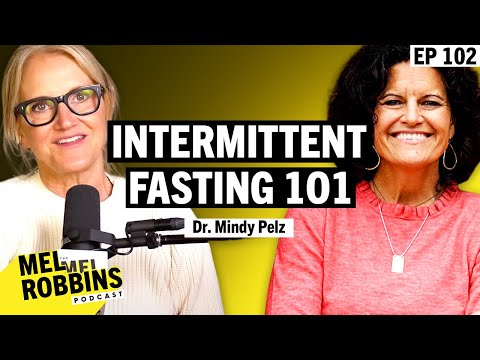
How to Lose Weight, Boost Energy, & Live Longer with Intermittent Fasting | Mel Robbins Podcast
Mel Robbins (host), Dr. Mindy Pelz (guest)
In this episode of The Mel Robbins Podcast, featuring Mel Robbins and Dr. Mindy Pelz, How to Lose Weight, Boost Energy, & Live Longer with Intermittent Fasting | Mel Robbins Podcast explores intermittent Fasting: Free, Science-Backed Tool To Heal And Reboot Health Mel Robbins interviews fasting expert Dr. Mindy Pelz about intermittent fasting as a zero-cost, research-backed health protocol distinct from dieting. They explain how the body has two energy systems—sugar-burning and fat-burning—and how timing when you eat (not what you eat) triggers powerful healing mechanisms. Dr. Pelz outlines six core fasting lengths, each linked to specific benefits like fat loss, reduced inflammation, better brain function, improved gut health, and immune system renewal. The episode positions fasting as an accessible tool for metabolic health, aging, mood, and especially women’s hormone challenges, with cautions for pregnancy, breastfeeding, and eating disorders.
Intermittent Fasting: Free, Science-Backed Tool To Heal And Reboot Health
Mel Robbins interviews fasting expert Dr. Mindy Pelz about intermittent fasting as a zero-cost, research-backed health protocol distinct from dieting. They explain how the body has two energy systems—sugar-burning and fat-burning—and how timing when you eat (not what you eat) triggers powerful healing mechanisms. Dr. Pelz outlines six core fasting lengths, each linked to specific benefits like fat loss, reduced inflammation, better brain function, improved gut health, and immune system renewal. The episode positions fasting as an accessible tool for metabolic health, aging, mood, and especially women’s hormone challenges, with cautions for pregnancy, breastfeeding, and eating disorders.
Key Takeaways
Focus on when you eat, not just what you eat.
Fasting protocols are not diets; instead of restricting specific foods or calories, they compress eating into defined windows, allowing extended periods where the body can heal, repair, and switch into fat-burning mode.
Get the full analysis with uListen AI
Use metabolic switching to tap into your fat-burning energy system.
Your body is designed to alternate between burning glucose (from food) and fat (stored), but constant eating locks you in sugar-burning mode; fasting for 8–12+ hours lets you switch into fat-burning and produce ketones that fuel the brain and reduce hunger.
Get the full analysis with uListen AI
Start with a simple 12–16 hour intermittent fast as a lifestyle baseline.
Stopping food at night and delaying your first meal into late morning (e. ...
Get the full analysis with uListen AI
Match fasting length to the specific benefit you want.
Roughly 12–16 hours supports fat-burning and anti-aging, 17 hours triggers autophagy (cellular cleanup and cancer-protective effects), 24 hours resets the gut with intestinal stem cells, 36 hours targets stored belly fat, 48 hours helps reset dopamine and mood, and 72+ hours can regenerate immune cells.
Get the full analysis with uListen AI
Fasting can help curb cravings and food addiction over time.
By stabilizing blood sugar, producing ketones (which turn off hunger hormones), and reshaping the gut microbiome, fasting can reduce incessant hunger and junk-food cravings even before you change what you’re eating.
Get the full analysis with uListen AI
Fasting is powerful but not for everyone, and medical guidance matters.
It can be especially beneficial for metabolic issues like prediabetes and cardiovascular disease, but pregnant women, breastfeeding women (beyond ~15 hours), and people with eating disorders should avoid or modify fasting and consult professionals first; those on medications (e. ...
Get the full analysis with uListen AI
Think of fasting as reclaiming an ancient, built-in survival tool.
Historically, humans cycled through feast and famine; modern 24/7 food access shut down the famine side. ...
Get the full analysis with uListen AI
Notable Quotes
“Fasting is a healing state you put your body in that you can only get to by avoiding food for a certain period of time.”
— Dr. Mindy Pelz
“It’s in the absence of food the body heals.”
— Dr. Mindy Pelz
“We have two different ways that we can propel our body… and we’re stuck in one of them.”
— Dr. Mindy Pelz
“The only person that wins when they fast is the human that does it.”
— Dr. Mindy Pelz
“Our bodies are brilliant. Let’s start with a healing mechanism that already exists and teach women how to dip in and out and metabolically switch to help their hormonal challenges.”
— Dr. Mindy Pelz
Questions Answered in This Episode
How should someone tailor fasting lengths and frequency based on their age, activity level, and current metabolic health?
Mel Robbins interviews fasting expert Dr. ...
Get the full analysis with uListen AI
What are early warning signs that a particular fasting protocol is too aggressive or unsafe for an individual?
Get the full analysis with uListen AI
How do these fasting benefits compare with other popular interventions like GLP-1 drugs, keto diets, or high-intensity exercise?
Get the full analysis with uListen AI
For women with complex hormone issues (perimenopause, PCOS, irregular cycles), how should fasting be adjusted across the month?
Get the full analysis with uListen AI
What objective markers (labs, wearables, symptoms) can people track to know if fasting is actually improving their health or just stressing their bodies?
Get the full analysis with uListen AI
Transcript Preview
(ticking sound) I started to see this topic everywhere, in podcasts, in articles, in books and I decided, "You know what, Mel? Let's just dig into this." This is part one, and Dr. Mindy is going to start off with the significant, irrefutable research and documented benefits of fasting as a health protocol. Do I eat this? Do I eat that? Do I exercise? What kind of exercise? Is it peptides? Is it this thing? Is it that thing? Am I counting calories? Just tell me what the hell to do. (upbeat music) Hey, it's your friend Mel, and welcome to the Mel Robbins Podcast. So a couple months ago, I was out with some friends, and we were talking about a bunch of stuff, and then the topic of intermittent fasting came up. And they kept going on and on and on about how it was making them feel better, and so I kept, like, putting one nacho in my mouth after another as I was listening to them talk about how they've lost weight and they just feel more alert. And so I was curious. I'll admit, I was curious, and I asked my friends, "All right. So what is this thing that you're doing and how exactly do you do it?" And my friend turned to me, and I gotta tell you, my friend is not a medical doctor, not a nutritionist. This is how they said it. "Basically, Mel, when I wake up, I don't eat my first meal until about 11:00 AM." I'm like, "That's it?" They said, "Yeah." I said, "Really? That's it? You don't eat breakfast? You start eating at 11:00 AM? That's it?" And they said, "Yes," and I said, "Well look, if it can make my pants feel a little looser and my brain a little sharper, I'm in." I started to see this topic everywhere, in podcasts, in articles, in books, and I decided, "You know what, Mel? Let's just dig into this," because you've got questions about it. Like for example, how exactly is intermittent fasting different from dieting? Is it healthy? Is it true what the headlines say, that it can melt body fat, that it can increase your focus, that it can decrease anxiety and depression, and does it really help you live longer? Well, according to one of the world's leading researchers and experts on this topic, Dr. Mindy Pelz, best-selling author, she says the answer's yeah, it can help you do all that and it's even more exciting than that. Check this out. The New England Medical Journal, they reviewed 85 studies on fasting as a health protocol and the research is so compelling about this as a health protocol that the New England Medical Journal recommends this as a frontline intervention for treating depression, cardiovascular disease, obesity, issues like dementia, and that's just the tip of the iceberg. In fact, there is so much mind-blowing and amazing and empowering information about this free protocol that you can use that I've decided that we gotta break this conversation with Dr. Mindy into two parts, into a master class about fasting and the science around it and a step-by-step guide about fasting protocols and how you can use them so that they unleash your body's natural ability to heal itself and become healthier. Yes, you heard me right. Today, this is what you and I are gonna cover. This is part one, and Dr. Mindy is gonna start off with the significant, irrefutable research and documented benefits of fasting as a health protocol. She is gonna teach you about the two different energy systems in your body and how fasting helps you tap into both of them. She's gonna walk you through the six different kinds of fasting protocols and their specific research-backed benefits. You're gonna understand why nothing that you have tried in the past has helped you to get control of your health. You're gonna realize you're not the problem, and you're gonna be empowered because you're gonna know more about how your body functions and you're gonna be so motivated and equipped to try this zero cost fasting protocol for better health in your life. We will cover, in part two, specific fasting protocols for women. So if you have tried intermittent fasting and you didn't see anything happen, right? Or it happened o- or you tried it and it worked for a little bit but then nothing happened, it's probably because you followed the wrong protocol. You were doing it the way that the dudes need to do it and that is not gonna work for you if you identify as a woman. All right. Please help me welcome Dr. Mindy Pelz who has transformed the lives of millions of people with her free videos and best-selling books and all of her research to adopt a healthy fasting protocol and today, she's told all those clients that are Olympic athletes, Academy Award-winning actors, and Silicon Valley CEOs to step aside because she has got an appointment with someone way more important, and that's you and me, baby. All right. Dr. Mindy, welcome to the Mel Robbins Podcast.
Install uListen to search the full transcript and get AI-powered insights
Get Full TranscriptGet more from every podcast
AI summaries, searchable transcripts, and fact-checking. Free forever.
Add to Chrome