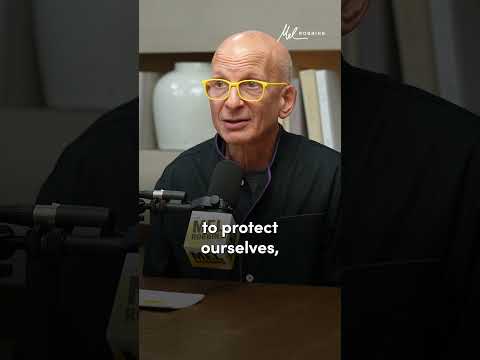
The reason you struggle with procrastination | Mel Robbins #Shorts
Mel Robbins (host)
In this episode of The Mel Robbins Podcast, featuring Mel Robbins, The reason you struggle with procrastination | Mel Robbins #Shorts explores procrastination signals resistance to important, fear-inducing work ahead Robbins defines “resistance” as the internal behavior that gets in our own way when something feels important and scary.
Procrastination signals resistance to important, fear-inducing work ahead
Robbins defines “resistance” as the internal behavior that gets in our own way when something feels important and scary.
She argues that “writer’s block” is not a real condition but a story we tell to avoid being “on the hook” for producing something meaningful.
Resistance is inevitable when the work matters; its presence can be evidence you’re approaching a high-priority task.
Instead of trying to eliminate resistance, she suggests acknowledging it (“thank you”) and using it to identify the hard, creative, truth-telling work you’re avoiding.
Key Takeaways
Procrastination often means the task matters to you.
When something feels important (a memo, a date, a creative project), you may delay to protect yourself from fear, judgment, or failure—being “on the hook.”
Get the full analysis with uListen AI
“Writer’s block” is a form of resistance, not a missing muse.
Robbins frames it as a constructed explanation that lets you avoid producing, rather than a genuine inability to write.
Get the full analysis with uListen AI
You can’t eliminate resistance; you can only respond to it.
Resistance shows up precisely when you’re doing meaningful work, so expecting it to disappear is unrealistic and keeps you stuck.
Get the full analysis with uListen AI
Treat resistance as a signal: prioritize what you’re avoiding.
If you notice yourself procrastinating, use that as data pointing to the work that deserves attention instead of interpreting it as proof you can’t do it.
Get the full analysis with uListen AI
Acknowledge resistance to disarm it.
Saying “thank you” reframes the feeling as a helpful alert—“this is important”—which reduces shame and increases agency.
Get the full analysis with uListen AI
Modern hard work is cognitive, emotional, and creative.
Today’s “hard” is solving non-obvious problems, telling the truth in a hearable way, making sound decisions, and creating something new—tasks that naturally trigger fear and resistance.
Get the full analysis with uListen AI
Notable Quotes
““Resistance means anything that we do to get in our own way to keep us from doing something that's going to scare us.””
— Mel Robbins
““There's no such thing as writer's block.””
— Mel Robbins
““If we're going to do something important, there's going to be resistance.””
— Mel Robbins
““If you don't feel resistance, it might not be important enough.””
— Mel Robbins
““The things I'm procrastinating, I'm procrastinating because of resistance… I now have a compass.””
— Mel Robbins
Questions Answered in This Episode
You say writer’s block is “nonsense”—what do you think people are actually afraid of in that moment: failure, success, judgment, or something else?
Robbins defines “resistance” as the internal behavior that gets in our own way when something feels important and scary.
Get the full analysis with uListen AI
How can someone distinguish between “resistance” and legitimate constraints like burnout, lack of skills, or unclear requirements?
She argues that “writer’s block” is not a real condition but a story we tell to avoid being “on the hook” for producing something meaningful.
Get the full analysis with uListen AI
What does saying “thank you” look like in practice—what are the next 1–2 actions you recommend immediately after that reframing?
Resistance is inevitable when the work matters; its presence can be evidence you’re approaching a high-priority task.
Get the full analysis with uListen AI
If resistance indicates importance, how do you avoid over-prioritizing everything that feels scary (and neglecting strategic planning)?
Instead of trying to eliminate resistance, she suggests acknowledging it (“thank you”) and using it to identify the hard, creative, truth-telling work you’re avoiding.
Get the full analysis with uListen AI
Can resistance be triggered by perfectionism specifically—and if so, what’s the quickest way to lower the stakes without abandoning quality?
Get the full analysis with uListen AI
Transcript Preview
The word resistance means anything that we do to get in our own way to keep us from doing something that's going to scare us. And so let's talk about writer's block. Writer's block was only invented a hundred years ago. Writer's block is based on the idea that you just don't have the muse telling you what to write today. This is nonsense. There's no such thing as writer's block. What happens is if it feels important, if writing a memo feels important, if painting something feels important, if going on a date with someone you've always wanted to go on a date with and it's tomorrow night feels important, we do something internally to insulate ourselves, to protect ourselves, to keep us from being on the hook. But it's also, I think, part of human nature. And resistance then is something that we cannot make go away. If we're going to do something important, there's going to be resistance. If you don't feel resistance, it might not be important enough. So the question then is, what do you do when it shows up? And the answer is you say thank you. Thanks for letting me know I'm on the verge of doing something important. Thanks for reminding me that this needs to be on the top of my priority list. The things I'm procrastinating, I'm procrastinating because of resistance. And so I now have a compass, and the compass points me to the hard work to be done. And hard work, I think, is, is worth talking about for a minute. Hard work in the old days was how many pounds of gravel can you carry on your back because we don't have any machines. But now hard work is, did I come up with a solution that's not on the list of solutions? Did I tell the truth in a way that the other person could hear? Did I make a good decision? Did I write something that's never been written before, sing something that's never been sung before, paint something that's never been painted before? That's our job. What is the work that needs to be done that I'm afraid of? [outro music]
Install uListen to search the full transcript and get AI-powered insights
Get Full TranscriptGet more from every podcast
AI summaries, searchable transcripts, and fact-checking. Free forever.
Add to Chrome