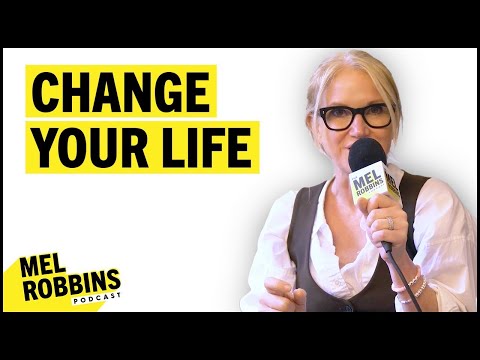
8 Simple, Research-Backed Changes That Will Change Your Life | The Mel Robbins Podcast
Mel Robbins (host), Tracy (guest)
In this episode of The Mel Robbins Podcast, featuring Mel Robbins and Tracy, 8 Simple, Research-Backed Changes That Will Change Your Life | The Mel Robbins Podcast explores eight Science-Backed Micro-Habits To Radically Improve Your Daily Life Mel Robbins and researcher Tracy break down eight new, peer‑reviewed studies that reveal surprisingly simple, science-backed habits that can significantly improve happiness, mental health, and performance.
Eight Science-Backed Micro-Habits To Radically Improve Your Daily Life
Mel Robbins and researcher Tracy break down eight new, peer‑reviewed studies that reveal surprisingly simple, science-backed habits that can significantly improve happiness, mental health, and performance.
They cover topics ranging from the underestimated power of tiny acts of kindness and three‑second strength exercises, to bird sounds boosting mood and mindfulness rivaling anxiety medication.
Other findings highlight how planning and environment beat willpower, how smells can instantly unlock joyful memories, and why harmless “little secrets” can actually motivate better behavior.
They close by previewing the most impactful habit of all—learning to be kind to yourself—which will be the focus of the next episode.
Key Takeaways
Do small, frequent acts of kindness even when they seem insignificant.
New research shows people vastly underestimate how meaningful tiny gestures—a smile, a compliment, an extra tip, waving someone into traffic—are for recipients; they boost the receiver’s day and the giver’s happiness.
Get the full analysis with uListen AI
Use eccentric movements to build strength in seconds a day.
Focusing on the lowering phase of a movement (like slowly sitting into a chair or slowly lowering a weight) for just three seconds daily can significantly increase strength, meaning you can ‘exercise’ through small, deliberate daily motions.
Get the full analysis with uListen AI
Listen to birdsong for a fast, lasting mental health boost.
A large study found that even one brief exposure to bird sounds—outside or via an app—can improve mental wellbeing for up to eight hours, independent of other aspects of nature exposure.
Get the full analysis with uListen AI
Make mindfulness a daily habit to reduce anxiety as effectively as meds.
Mindfulness-based stress reduction practices like body scans, gratitude journaling, or five-senses exercises produced anxiety reductions comparable to Lexapro in a major study, by pulling the mind out of future-focused worry into the present.
Get the full analysis with uListen AI
Stop relying on willpower; engineer your environment instead.
Research on 20,000 SAT students shows higher performance comes from strategies—turning off phones, creating distraction-free zones, and scheduling focused blocks—rather than trying to ‘power through’ with willpower alone.
Get the full analysis with uListen AI
Intentionally use scent and taste to trigger joyful memories and states.
Because smell and taste directly access memory centers, recreating a meaningful scent or flavor (or designing one for big life moments like weddings) can instantly transport you back to positive experiences and boost happiness on demand.
Get the full analysis with uListen AI
Don’t obsess over harmless ‘little secrets’—they may actually help you show up better.
Most people hide minor behaviors (sneaky snacks, secret online buys, watching ahead in a series); studies show these small, victimless secrets often create mild guilt that motivates people to be better partners or friends rather than harming relationships.
Get the full analysis with uListen AI
Notable Quotes
“Most people do not do random acts of kindness because we actually don’t think it’s gonna matter to other people.”
— Tracy
“One muscle contraction in this downward movement for just three seconds a day can increase muscle strength if you do it each day.”
— Tracy
“This one thing is going to give you an improvement in mental well-being for eight hours, and it works in healthy people, it works in those with depression.”
— Tracy (on listening to birdsong)
“Mindfulness-based stress reduction, like a gratitude journal, dropped anxiety as much as Lexapro.”
— Paraphrased summary by Mel and Tracy of the Georgetown study
“Of all the things that you could change in the coming year, the research is conclusive that learning how to be kind to yourself as a daily practice has the single biggest impact on your happiness.”
— Mel Robbins
Questions Answered in This Episode
Which of these eight habits would be most realistic for me to implement daily, and what specific trigger or routine could I pair it with so it actually sticks?
Mel Robbins and researcher Tracy break down eight new, peer‑reviewed studies that reveal surprisingly simple, science-backed habits that can significantly improve happiness, mental health, and performance.
Get the full analysis with uListen AI
How could I redesign my environment—devices, workspace, schedule—so that I rely less on willpower and more on structure for important goals?
They cover topics ranging from the underestimated power of tiny acts of kindness and three‑second strength exercises, to bird sounds boosting mood and mindfulness rivaling anxiety medication.
Get the full analysis with uListen AI
What are one or two powerful positive memories I’d like to instantly access, and what scent or taste could I use to anchor and recall them?
Other findings highlight how planning and environment beat willpower, how smells can instantly unlock joyful memories, and why harmless “little secrets” can actually motivate better behavior.
Get the full analysis with uListen AI
In what situations do I hold back from small acts of kindness because I assume they won’t matter, and how might my relationships change if I did them anyway?
They close by previewing the most impactful habit of all—learning to be kind to yourself—which will be the focus of the next episode.
Get the full analysis with uListen AI
Where am I currently harsh or unkind to myself, and what would a concrete daily self-kindness practice look like if I treated myself as I would a close friend?
Get the full analysis with uListen AI
Transcript Preview
(ticking sound) Get ready. It is Science Hour. We've got brand new research, everybody.
So, this study, when I first read it, I was a little bit floored by it. So, this is a-
Floored in the, this is stupid or floored? 'Cause there's some-
A mix. It- it felt-
... there's some research we find.
... stupid and I cannot believe how big of an impact and how big this study is for one second each day.
Wait, one second?
One second.
Well, you know, I think five seconds can change somebody.
Five seconds.
You are taking it down, Tracy.
This one thing. (upbeat music)
Hey, it's your friend Mel, and get ready. It is Science Hour on The Mel Robbins Podcast. I am so fired up for today's conversation 'cause I am going to introduce you to one of my favorite people on the planet.
Oh, thank you.
That is Tracy. Tracy and I have worked together for years. She is, no joke, the smartest person I know. I have a huge brain crush on her. She heads up the research that we do here on all projects that we do. Uh, Tracy has done the research on six audio productions for Audible-
Mm-hmm.
... two self-published audio books and hard cover books, all of the courses that we have taught for folks like Starbucks, LinkedIn-
Mm-hmm.
... CreativeLive. The list goes on and on and on. And Tracy and I geek out on research.
Mm-hmm.
We absolutely love it, right Trace?
Yes, definitely.
And everything that we talk about here on The Mel Robbins Podcast, we have meticulously researched. In fact, Tracy and I get in fights all the time.
(laughs)
Like, mental fights.
Yes, yeah. (laughs)
She's like, "Technically, you can't say that," or, "That science, that- that research study that everybody's talking about technically does not say that, so you can..." And so we are meticulous and super interested in this. And so, I am so excited for today's show because we are about to talk about eight things. What are we talking about? What are we-
Yeah.
There's eight things we're talking about.
Yeah, definitely. So, the first thing is that every single thing you always hear about in your work and Mel's podcast is always true, it's always real, and you can always trust it. And so, Mel wanted to talk about some of the absolute newest, most amazing habits and new studies of things that you can apply right now. And so, we've been diving in all day to all the newest, most awesome research, and we wanted to share it with you guys today.
So, this is also like a behind the scenes, because this is how we produce the show. We look at your DMs, your questions.
Yeah.
Install uListen to search the full transcript and get AI-powered insights
Get Full TranscriptGet more from every podcast
AI summaries, searchable transcripts, and fact-checking. Free forever.
Add to Chrome