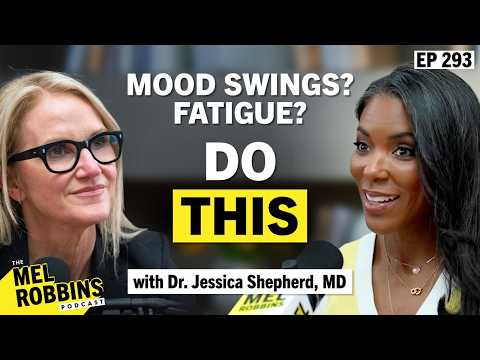
The Ultimate Guide to Women’s Hormones: Use Science to Reset Your Body, Balance Mood, & Feel Amazing
Mel Robbins (host), Dr. Jessica Shepherd (guest)
In this episode of The Mel Robbins Podcast, featuring Mel Robbins and Dr. Jessica Shepherd, The Ultimate Guide to Women’s Hormones: Use Science to Reset Your Body, Balance Mood, & Feel Amazing explores science-Backed Hormone Guide Empowers Women To Own Every Life Stage Mel Robbins and OB-GYN Dr. Jessica Shepherd break down how women’s key hormones—estrogen, progesterone, testosterone, thyroid, and cortisol—shape health, mood, fertility, weight, skin, hair, sleep, and brain function from puberty through menopause.
Science-Backed Hormone Guide Empowers Women To Own Every Life Stage
Mel Robbins and OB-GYN Dr. Jessica Shepherd break down how women’s key hormones—estrogen, progesterone, testosterone, thyroid, and cortisol—shape health, mood, fertility, weight, skin, hair, sleep, and brain function from puberty through menopause.
They explain why stress, ultra-processed foods, and modern lifestyle accelerate hormonal disruption, and how mind–body connection, nutrition, exercise, and sleep hygiene can partially compensate for inevitable hormonal declines.
A major focus is perimenopause and menopause: what’s actually happening biologically, why so many women feel anxious, depressed, foggy, and sleepless, and how hormone replacement therapy (HRT) and non-hormonal tools can improve both symptoms and long-term health.
Throughout, Dr. Shepherd stresses that understanding hormones is an act of self-worth and self-care, urging women to stop normalizing suffering, ask better questions, and actively partner with their doctors.
Key Takeaways
Hormones are whole-body messengers, not just ‘period’ regulators.
Estrogen, progesterone, testosterone, thyroid hormones, and cortisol send chemical signals that affect the brain, heart, bones, muscles, fat distribution, skin, hair, mood, and sleep—so symptoms in any of these areas can be hormone-related, not “just in your head.”
Get the full analysis with uListen AI
Stress and ultra-processed foods disrupt hormones early and profoundly.
Chronic stress elevates cortisol and alters brain signaling to the ovaries and thyroid, while high-sugar, processed diets affect insulin and metabolic health, contributing to earlier puberty, irregular cycles, severe PMS, hormonal acne, and later-life metabolic disease.
Get the full analysis with uListen AI
Perimenopause is a long, fluctuating transition that often starts in the mid-30s to 40s.
As estrogen, progesterone, and testosterone begin to decline and fluctuate, women may experience irregular periods, hot flashes, night sweats, weight gain (especially abdominal), mood swings, anxiety, depression, and sleep problems—sometimes years before their final period.
Get the full analysis with uListen AI
Estrogen decline drives major risks: heart disease, osteoporosis, and dementia.
Estrogen receptors are in the heart, bones, and brain; when estrogen drops after menopause, inflammation rises, bone density falls, and dopamine and other neurotransmitter systems change, helping explain why women have higher rates of osteoporosis and dementia.
Get the full analysis with uListen AI
Modern HRT can be safe and highly beneficial for many women.
Updated research shows that, for most appropriately screened women, starting HRT near menopause can significantly improve symptoms (hot flashes, sleep, mood, brain fog, skin, hair) and support bone and possibly brain and heart health; true contraindications are narrower than many believe and should be individually reviewed with a doctor.
Get the full analysis with uListen AI
Lifestyle changes can’t replace estrogen, but they can powerfully compensate.
Strength training, regular movement, anti-inflammatory eating (more protein, antioxidants, omega-3s; less sugar, alcohol, ultra-processed foods), stress reduction, and sleep hygiene all help preserve muscle, support metabolism, stabilize mood, and improve sleep even as hormones decline.
Get the full analysis with uListen AI
Persistent symptoms deserve investigation, not normalization.
Issues like heavy or painful periods, severe PMS, missed periods, unexplained weight gain, hair thinning, debilitating hot flashes, or mood changes can signal conditions such as PCOS, endometriosis, thyroid dysfunction, or significant perimenopausal shifts—and should prompt lab work, discussion of treatment options (including HRT, GLP‑1s, targeted medications), and possibly referrals rather than dismissal.
Get the full analysis with uListen AI
Notable Quotes
“Hormonal health represents who we are as women, and the more that we vilify it or kind of fight against it, then that's not ultimately helping who we can be and our best version of ourselves.”
— Dr. Jessica Shepherd
“Your body can only do what you give it, and if we're not giving it the things that it can thrive, then that's when it's like, ‘I may not be able to perform at my best ability.’”
— Dr. Jessica Shepherd
“We haven't accommodated the body to function without estrogen. We're living longer, but we're living life in poor quality of health.”
— Dr. Jessica Shepherd
“Why are we allowing women to feel their absolute worst before we will offer them something that is going to help how they feel and their vitality?”
— Dr. Jessica Shepherd
“I don't want you to leave yourself behind. You should never leave yourself behind, and bring yourself into this transition with your hormones in a way that it can be beautifully constructed to be the best version of yourself.”
— Dr. Jessica Shepherd
Questions Answered in This Episode
How do I distinguish between ‘normal’ hormonal changes for my age and symptoms that warrant lab tests or specialist evaluation?
Mel Robbins and OB-GYN Dr. ...
Get the full analysis with uListen AI
Given my personal and family medical history, am I actually a candidate for HRT—and has my doctor updated their thinking beyond the older WHI fears?
They explain why stress, ultra-processed foods, and modern lifestyle accelerate hormonal disruption, and how mind–body connection, nutrition, exercise, and sleep hygiene can partially compensate for inevitable hormonal declines.
Get the full analysis with uListen AI
What specific nutrition, exercise, and stress-management changes would make the biggest hormonal difference for me in the next 6–12 months?
A major focus is perimenopause and menopause: what’s actually happening biologically, why so many women feel anxious, depressed, foggy, and sleepless, and how hormone replacement therapy (HRT) and non-hormonal tools can improve both symptoms and long-term health.
Get the full analysis with uListen AI
If I have a diagnosis like PCOS, thyroid dysfunction, or endometriosis, is my current treatment plan targeting the root metabolic and hormonal drivers or mainly masking symptoms?
Throughout, Dr. ...
Get the full analysis with uListen AI
How can I better track my cycles, sleep, mood, and physical changes over time so I can have more informed, data-driven conversations with my healthcare providers?
Get the full analysis with uListen AI
Transcript Preview
Wow. I, I think I hear somebody hitting share right now and sending this to their mother.
Hormonal health represents who we are as women, and the more that we vilify it or kind of fight against it, then that's not ultimately helping who we can be and our best version of ourselves.
Today's episode, it is the ultimate guide to understanding and optimizing women's hormones for better health at all ages. Our guest today is world-renowned OB-GYN Dr. Jessica Shepherd. She's here with the answers you need. If you have really bad PMS, what does that tell you as a medical doctor?
When women come in, I always like to-
Can you speak to, you know, a person listening who, you know, comes off birth control?
Mm-hmm.
Like, what do you want them to know?
I want them to know that...
Wow.
Yeah.
Why do so many women in their 20s get, quote, "hormonal acne"?
There can be stuff that is due to chemicals that-
Top foods you should eat for good skin.
Oh, I think the top foods should be blueberries, nuts, but also-
Hey, it's your friend Mel, and welcome to the Mel Robbins Podcast. I am so excited that you're here. The conversation that you're about to hear is life-changing, and I wanna say, it's always such an honor to spend time and to be together with you. And if you're a new listener, I also wanna take a moment and welcome you to the Mel Robbins Podcast family. And here's one thing I wanted to say. Because you made the time to listen to this particular episode, here's what I know about you. You're the kind of person who values information that can help you take control of your health and make you feel your absolute best at every single day, no matter how old or young you may be. And if you're listening to this right now because someone in your life shared this episode with you, I just think that's really cool because here's what that means. It means you have people in your life that care about you, they want you to be healthy, and they know that understanding and knowing how to optimize your hormones, that it's critical for your overall health. That's why they sent that to you. And I think that's just really cool, that you have people in your life that care about you. So, thank you for listening to this. Thank you for being here. I'm so excited because our guest today is gonna help us do exactly that, understand our bodies, understand our hormones, and help us optimize them for better health. Dr. Jessica Shepherd is a board-certified OB-GYN who specializes in women's health, sexual wellness, and menopause. Dr. Shepherd completed her medical residency at Drexel University. She also completed a fellowship in minimally invasive gynecological surgery at the University of Louisville, where she also earned her MBA. Dr. Shepherd also served as the director of minimally invasive gynecologic surgery at the University of Illinois at Chicago before leaving to practice at Baylor University, where she is still affiliated today. She sits on the advisory boards for Women's Health Magazine, womenshealth.org, and the Society for Women's Health Research, and is the chief medical officer at the healthcare company Hers. Dr. Shepherd is also the author of the best-selling book, Generation M: Living Well in Perimenopause and Menopause. So, please help me welcome Dr. Jessica Shepherd to the Mel Robbins Podcast. Dr. Jessica Shepherd, I am so excited to meet you. Thank you for hopping on a plane. Thank you for making the time. I cannot wait to have this conversation with you.
Install uListen to search the full transcript and get AI-powered insights
Get Full TranscriptGet more from every podcast
AI summaries, searchable transcripts, and fact-checking. Free forever.
Add to Chrome