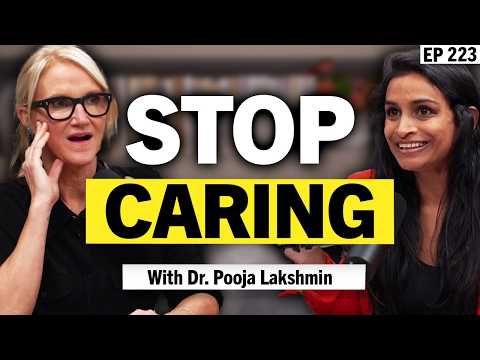
Focus on Yourself: 3 Signs You’re Giving Too Much & What to Do About It Right Now
Dr. Pooja Lakshmin (guest), Mel Robbins (host), Narrator
In this episode of The Mel Robbins Podcast, featuring Dr. Pooja Lakshmin and Mel Robbins, Focus on Yourself: 3 Signs You’re Giving Too Much & What to Do About It Right Now explores redefining Self-Care: How Boundaries Turn Guilt Into Genuine Power Mel Robbins and psychiatrist Dr. Puja Lakshman dismantle the popular, surface-level idea of self-care as bubble baths and wellness products, and reframe it as an internal practice rooted in boundaries, compassion, values, and power. They explain that real self-care is not about doing more “things” but about how and why you do them, and the sense of agency you reclaim in the process.
Redefining Self-Care: How Boundaries Turn Guilt Into Genuine Power
Mel Robbins and psychiatrist Dr. Puja Lakshman dismantle the popular, surface-level idea of self-care as bubble baths and wellness products, and reframe it as an internal practice rooted in boundaries, compassion, values, and power. They explain that real self-care is not about doing more “things” but about how and why you do them, and the sense of agency you reclaim in the process.
A central theme is that boundaries begin with a pause—creating space between external demands and your response—so you can act from choice instead of reflexive people-pleasing, guilt, or fear. They outline three major signs of poor boundaries (chronic irritability, resentment over unappreciated efforts, and constant fantasies of escape) and connect these to burnout.
Practical tools include a five-question self-assessment, the “yes/no/negotiate” framework, and a visualization technique to treat guilt as just one passing thought among many rather than a moral compass. The conversation ends with a concrete 20‑minute exercise: scan your calendar, notice where you feel dread or resentment, and choose one small boundary or request to act on next week.
Key Takeaways
Real self-care is about your internal decisions, not external rituals.
Yoga, sleep routines, or skincare only become meaningful when you understand why they matter to you and align them with your values; otherwise they become another checklist item that fuels shame when you inevitably “fail” at them.
Get the full analysis with uListen AI
Boundaries start with a pause, not an automatic “no.”
Dr. ...
Get the full analysis with uListen AI
Guilt is a passing feeling, not proof you’re a bad person.
Using the sushi conveyor-belt metaphor, guilt is just one plate on the belt—uncomfortable but not authoritative; your job is to tolerate its presence instead of letting it dictate every decision about rest, help, or time for yourself.
Get the full analysis with uListen AI
Three signs you lack boundaries: chronic irritability, unreturned gratitude, and escape fantasies.
If you’re often angry, resentful that others aren’t sufficiently thankful, or constantly fantasizing about running away or starting over, it usually points to overgiving and an absence of limits rather than other people’s ingratitude.
Get the full analysis with uListen AI
Start with tiny, low-stakes boundaries to build confidence.
Instead of confronting family or quitting your job overnight, begin with small acts—sitting down to eat lunch, drinking water hourly, or adjusting one recurring meeting—so you can collect data on how people react and prove to yourself the world doesn’t collapse.
Get the full analysis with uListen AI
Agency means seeing where you still have choices, even in constraint.
In rigid systems (toxic jobs, demanding caregiving roles), reclaiming agency might look like correcting someone on your name, shifting one responsibility, or asking to move a standing meeting—small decisions that reinforce that your actions can still create change.
Get the full analysis with uListen AI
A weekly 20-minute “calendar pause” reveals where you need boundaries.
Block 20 minutes to review your upcoming week, notice which items trigger dread, resentment, or boredom, and identify one concrete request, negotiation, or change you can make; then act on it next week to begin rebuilding your sense of power.
Get the full analysis with uListen AI
Notable Quotes
“Real self-care is not a thing to do, it's a way to be.”
— Dr. Puja Lakshman
“Your yoga class is only as powerful as the boundaries that you've set beforehand.”
— Dr. Puja Lakshman
“Wellness has given us methods and tools, but it has not given us principles or perspective.”
— Dr. Puja Lakshman
“You can be a good person and have a kind heart and still say, 'Absolutely not.'”
— Mel Robbins
“The boundary is the pause, and then you always have three options: yes, no, or negotiate.”
— Dr. Puja Lakshman
Questions Answered in This Episode
Where in my current routine am I focusing on “the thing” (yoga, sleep, productivity hacks) instead of the deeper reason I want it and what it actually does for me?
Mel Robbins and psychiatrist Dr. ...
Get the full analysis with uListen AI
What is one small, low-risk boundary I could set this week—at work or at home—that would test my belief that I have no power to change anything?
A central theme is that boundaries begin with a pause—creating space between external demands and your response—so you can act from choice instead of reflexive people-pleasing, guilt, or fear. ...
Get the full analysis with uListen AI
When guilt or selfishness shows up as I consider a boundary, what would happen if I treated those feelings like passing sushi plates rather than commands to obey?
Practical tools include a five-question self-assessment, the “yes/no/negotiate” framework, and a visualization technique to treat guilt as just one passing thought among many rather than a moral compass. ...
Get the full analysis with uListen AI
In which areas of my life do I feel like I’m managing everyone instead of actually being part of my own life, and what does that reveal about my boundaries?
Get the full analysis with uListen AI
If I did the 20-minute calendar review today, which single meeting, commitment, or obligation would I most want to renegotiate, and what specific request would I be willing to make?
Get the full analysis with uListen AI
Transcript Preview
Self-care, (laughs) the term, has gone wildly off the rails.
When I go online, you are bombarded with people's skin care routines, and the bubble baths, and the things that they're doing at night to take care of themselves.
Wellness has given us methods and tools, but it has not given us principles or perspective. A juice cleanse is not going to fix all of those problems.
But when you think about it from the lens of a psychiatrist, what does self-care mean to you?
When we're talking about real self-care, there's four principles: boundaries, compassion, values, and...
Hey, it's your friend Mel. I'm so excited that you are here today. It is always an honor to spend time with you and to be together. If you're brand new, welcome to the Mel Robbins Podcast family. I wanna just take a quick moment before we jump into this amazing topic about boundaries and acknowledge you for taking time to listen to something that can truly help you create a better life. And I'm gonna tell you something, one thing that will help you have a better life is learning how to have better boundaries. Look, I'm sure you've heard the word a thousand times, and I've even talked about boundaries before. I like to remind you that you can be a good person and have a kind heart and still say, "Absolutely not." Today, you and I are gonna come at boundaries from a completely new angle, because Dr. Puja Lakshman is here in our Boston podcast studios, and she says there are three surprising signs that she sees in her patients day in and day out that indicate no boundaries. And she's gonna explain exactly what these three signs are, why you need boundaries, how your life is gonna change, and more importantly, how you can get started in creating them today. In fact, you and I are gonna leave this conversation with a very simple exercise. I love this thing, 'cause you're gonna do it as soon as you're done listening, and it's gonna reveal all the moments in the coming week where you do not have a boundary in place, but you need one. Dr. Puja Lakshman is a board-certified psychiatrist and the author of the best-selling book Real Self Care. She's a professor of psychiatry at George Washington University School of Medicine. And one more thing, before we stepped into the studio, she said, "Mel, after you introduce me, I like to be called Puja. Not Dr. Puja, not Dr. Lakshman, Puja." So Puja, welcome to the Mel Robbins Podcast.
It is such an honor to be here, Mel.
I am so thrilled that you're here, and I am very excited to talk to you about your work. And where I wanna begin is, could you tell the person that's listening what they can expect to change in their life or experience their life differently if they really take to heart everything that you're about to share?
Install uListen to search the full transcript and get AI-powered insights
Get Full TranscriptGet more from every podcast
AI summaries, searchable transcripts, and fact-checking. Free forever.
Add to Chrome