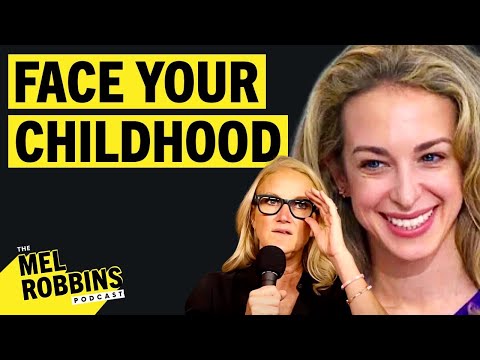
3 Steps To Understanding Your Childhood TRIGGERS And How To Repair Them | The Mel Robbins Podcast
Mel Robbins (host), Dr. Becky Kennedy (guest)
In this episode of The Mel Robbins Podcast, featuring Mel Robbins and Dr. Becky Kennedy, 3 Steps To Understanding Your Childhood TRIGGERS And How To Repair Them | The Mel Robbins Podcast explores rewiring Childhood Triggers: Turning Old Adaptations Into Adult Healing Mel Robbins and clinical psychologist Dr. Becky Kennedy explore how early childhood experiences wire our nervous system and silently shape our adult reactions, especially emotional triggers. Dr. Becky explains that what we label as “bad habits” or overreactions are usually old, adaptive survival strategies from childhood replaying in the present. Together they unpack how this shows up in parenting, relationships, people-pleasing, and self-abandonment, and why memory lives in the body even when we have no clear stories. The episode offers concrete tools—like reframing identity, double repair, and talking to our “parts”—to begin repairing ourselves and changing long‑standing patterns.
Rewiring Childhood Triggers: Turning Old Adaptations Into Adult Healing
Mel Robbins and clinical psychologist Dr. Becky Kennedy explore how early childhood experiences wire our nervous system and silently shape our adult reactions, especially emotional triggers. Dr. Becky explains that what we label as “bad habits” or overreactions are usually old, adaptive survival strategies from childhood replaying in the present. Together they unpack how this shows up in parenting, relationships, people-pleasing, and self-abandonment, and why memory lives in the body even when we have no clear stories. The episode offers concrete tools—like reframing identity, double repair, and talking to our “parts”—to begin repairing ourselves and changing long‑standing patterns.
Key Takeaways
Your triggers are unprocessed childhood stories acting themselves out now.
When you’re disproportionately activated—by a tantrum, whining, or a partner’s tone—your body is replaying old wiring formed to survive earlier environments. ...
Get the full analysis with uListen AI
Memory lives in the body, even when your mind “doesn’t remember.”
We often have no narrative memory of how caregivers handled our big feelings, but our nervous system encoded those experiences. ...
Get the full analysis with uListen AI
Many “bad” adult patterns were once adaptive survival strategies.
People‑pleasing, self‑silencing, perfectionism, and emotional shutdown helped you preserve attachment and safety as a child. ...
Get the full analysis with uListen AI
Use the “I am a good person who…” frame to separate identity from behavior.
Replacing “I’m a terrible parent/partner” with “I am a good person who yelled at my kid” preserves your core goodness while acknowledging misaligned behavior. ...
Get the full analysis with uListen AI
Repair—first with yourself, then with others—is the single most important skill.
After a rupture (like yelling), ground yourself, reclaim your goodness, then go back and name what happened, clearly state “it’s not your fault I yelled,” and validate their feelings. ...
Get the full analysis with uListen AI
Triggers point to parts of you that need reintegration, not elimination.
Using an IFS lens, the harsh inner voice or shutdown is a “protector part” trying to keep you safe, often by attacking or suppressing another vulnerable part. ...
Get the full analysis with uListen AI
Desire is healthy; many especially women learned it’s unsafe to want.
As kids, expressing strong wants (the core of tantrums) often brought shame, withdrawal, or punishment, so we learned to mute desire to preserve attachment. ...
Get the full analysis with uListen AI
Notable Quotes
“Our triggers are stories from our past, acting themselves out in our present.”
— Dr. Becky Kennedy
“We don’t respond to our kids; we respond to the circuit in our own body that gets activated when we witness things in our kids.”
— Dr. Becky Kennedy
“Your mind doesn’t remember. Your body is acting out that memory every time your kid has a tantrum.”
— Dr. Becky Kennedy
“I am a good person who yelled at my kid.”
— Dr. Becky Kennedy
“If you want to let yourself off the hook for change, shame and blame yourself, because that will make it impossible to change.”
— Dr. Becky Kennedy
Questions Answered in This Episode
Which situations trigger the most disproportionate reactions in me, and what early experiences might those reactions be trying to protect me from?
Mel Robbins and clinical psychologist Dr. ...
Get the full analysis with uListen AI
Where in my life do I still treat my own desires as dangerous or inconvenient, and how did my childhood teach me that?
Get the full analysis with uListen AI
What would it look like to consistently use the “I am a good person who…” frame when I’m ashamed of something I did?
Get the full analysis with uListen AI
How can I begin practicing repair—with myself and others—after moments I’m not proud of, even if the other person doesn’t respond perfectly?
Get the full analysis with uListen AI
If I thought of my harsh inner critic or avoidant part as a protector, what would I want to say to it to both thank it and ask it to step back?
Get the full analysis with uListen AI
Transcript Preview
(ticking sound) (upbeat music) Dr. Becky.
Here we are.
This conversation is required listening, whether you have children or not, because this is not a parenting conversation. If you're listening to this, you have been a child.
Our triggers are stories from our past.
Everybody, did you hear that? Is it normal to not remember what your parents did when you were, like, emotional?
Your mind doesn't remember. Your body is acting out that memory every time your kid has a tantrum.
Wait, what? (upbeat music) Hey, it's Mel, and welcome to the Mel Robbins podcast. Today, we have one of those episodes that I would label required listening. What you're gonna learn in today's episode, after you meet the expert that I'm gonna talk to, wow, it's gonna make you a better person, because you're gonna get tools that will help you repair the kind of crap that went down in your childhood that you don't even realize is impacting you as an adult. Who do I have on the show today? None other than Dr. Becky Kennedy. Dr. Becky Kennedy is the brand new number one New York Times best-selling author of Good Inside. She says no matter what's going on in your life, there is good inside of you, and today, we are gonna give you the tools and the simple scripts to help you access it. Dr. Becky is a clinical psychologist with a PhD from Columbia. She is blowing up online. She was deemed the Millennial Parenting Whisperer by Time magazine. And here's the thing, this is not a conversation about parenting. This is a conversation for everybody, because even if you're not a parent right now, you were once a child, and you're about to learn how things that you don't even remember are impacting you as an adult, and keeping you stuck and unhappy. Well, today on the Mel Robbins podcast, we're gonna fix that with tools and advice that you need to create a better life. Let's get into it. Okay.
Yeah.
Dr. Becky.
Here we are.
Here we are. Congratulations.
Thank you.
Wow. How you feeling?
I feel really energized. I really do. I love these ideas. I love hearing people's stories, and on the book tour, I've gotten to talk about ideas and hear people's stories, so it's been pretty fantastic.
Amazing. So I, uh, devour your content online, and I know that you're a parenting expert-
(laughs)
But every single post, I get something as an adult, and there are two things that I get from every post that you have. One is that I, uh, see reasons why I feel the way that I feel as an adult, because you're talking about experiences that children have. Um, and then I also go, "Oh my God, I'm clearly fucking up my children right now." Or- and it's too late, 'cause they're 23, 22, and 17.
Install uListen to search the full transcript and get AI-powered insights
Get Full TranscriptGet more from every podcast
AI summaries, searchable transcripts, and fact-checking. Free forever.
Add to Chrome