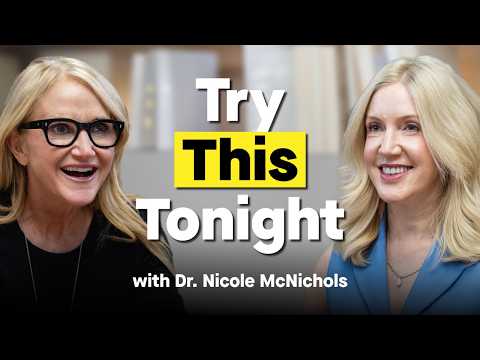
How to Have Better Sex: Your Guide to Romance, Intimacy, & Love From the #1 Sex Professor
Dr. Nicole McNichols (guest), Mel Robbins (host)
In this episode of The Mel Robbins Podcast, featuring Dr. Nicole McNichols and Mel Robbins, How to Have Better Sex: Your Guide to Romance, Intimacy, & Love From the #1 Sex Professor explores science-backed roadmap to better sex through pleasure, communication, anatomy, Dr. Nicole McNichols reframes sex as a health- and relationship-supporting pillar of well-being, not a “treat,” emphasizing that prioritizing pleasure builds resilience, creativity, and relationship satisfaction.
Science-backed roadmap to better sex through pleasure, communication, anatomy,
Dr. Nicole McNichols reframes sex as a health- and relationship-supporting pillar of well-being, not a “treat,” emphasizing that prioritizing pleasure builds resilience, creativity, and relationship satisfaction.
She introduces a “sexual growth mindset,” arguing great sex is a learnable skill that improves through experimentation, communication, and non-sexual touch—especially in long-term relationships where spontaneous desire may be low.
Key sex-ed myths are debunked with data: most women don’t orgasm from penetration alone, penis size is far less important than technique and clitoral stimulation, fantasies don’t equal real-life desires, and kink is not inherently unhealthy.
The episode provides concrete guidance on foreplay and clitoral anatomy (including internal structures), stopping orgasm-faking via honest communication, navigating menopause-related pain, body-image anxiety, and hookup culture with clarity about motivation and consent.
Key Takeaways
Treat sex like exercise: a priority that fuels health and resilience.
McNichols argues satisfying, consensual sex supports cardiovascular and brain health and may predict longevity, while also boosting “ego resilience”—more creativity, openness, and capacity to handle life stressors.
Get the full analysis with uListen AI
A “sexual growth mindset” predicts better sex more than innate chemistry.
Believing sex can improve through practice, feedback, masturbation/self-knowledge, and experimentation is linked to higher satisfaction; “sexual destiny” beliefs (“it is what it is”) keep couples stuck.
Get the full analysis with uListen AI
Desire often starts after touch—especially in long-term relationships.
Many people (often women) experience responsive desire, where arousal emerges once closeness begins; giving the body time to “warm up” reduces pressure and increases pleasurable outcomes.
Get the full analysis with uListen AI
Non-sexual touch prevents “every touch means sex” avoidance.
Regular cuddling/holding hands/hugging reduces recoil and obligation; she cites a simple habit—hugging for ~90 seconds daily—to build connection and indirectly support desire.
Get the full analysis with uListen AI
Penetration is not the default path to orgasm for most women.
Only ~18% of women orgasm from penetrative sex alone; most need clitoral stimulation. ...
Get the full analysis with uListen AI
Faking orgasms blocks the feedback loop that creates great sex.
Over half of women report faking orgasms, often to protect a partner’s ego or end sex. ...
Get the full analysis with uListen AI
Clitoral anatomy is larger than most people realize—and changes technique.
The clitoris includes internal structures extending ~6–8 inches; internal stimulation (2–3 inches in on the upper wall, “come hither” motion) often targets the clitorourethral vaginal complex, reframing the “G-spot” as internal clitoral stimulation.
Get the full analysis with uListen AI
“Micro novelty” keeps long-term sex alive without becoming someone else.
Novelty doesn’t require extreme kink; small changes (time of day, mood-setting, kissing more, saying “I love you,” blindfold/sensation play, hotel night) once a month or more correlates with higher sexual satisfaction.
Get the full analysis with uListen AI
Menopause-related pain is common—and treatable.
Declining estrogen/progesterone can cause dryness and atrophy, making sex painful; options discussed include lube (“the wetter, the better”), topical estrogen creams, and medical consultation about HRT/testosterone—while also addressing stress and inequitable labor that suppress desire.
Get the full analysis with uListen AI
Body-image anxiety is reduced by sexual mindfulness, not perfection.
When self-judgment activates during sex, attention training (breath, sensations, partner cues) helps quiet the evaluative mind. ...
Get the full analysis with uListen AI
Casual sex satisfaction depends more on motivation than gender stereotypes.
She describes research patterns: roughly a third report positive, a third mixed, a third negative casual-sex experiences. ...
Get the full analysis with uListen AI
Fantasy, fluidity, and kink are often normal variations—not red flags.
Fantasies (e. ...
Get the full analysis with uListen AI
Notable Quotes
““We tend to think of sex as something that's just a treat… the reality is that sex is something that needs to be prioritized.””
— Dr. Nicole McNichols
““Only 18% of women can have an orgasm from penetrative sex alone.””
— Dr. Nicole McNichols
““Sex is a skill… trial and error… we can teach each other to have Eduardo’s tongue.””
— Dr. Nicole McNichols
““Distance does not make the heart grow fonder; gratitude does.””
— Dr. Nicole McNichols
““Own your pleasure, and own your fundamental right as a human being to enjoy a healthy sex life.””
— Dr. Nicole McNichols
Questions Answered in This Episode
You distinguish “sexual growth mindset” from “sexual destiny beliefs”—what are 3 concrete weekly practices couples can use to build the growth mindset without it feeling like homework?
Dr. ...
Get the full analysis with uListen AI
You mention a 90-second daily hug improves relationship satisfaction—what’s the mechanism (stress response, bonding hormones, attachment cues), and does it work similarly for different attachment styles?
She introduces a “sexual growth mindset,” arguing great sex is a learnable skill that improves through experimentation, communication, and non-sexual touch—especially in long-term relationships where spontaneous desire may be low.
Get the full analysis with uListen AI
For someone who recoils because touch feels like an obligation, what exact words can they use in the moment to request closeness without escalating to intercourse?
Key sex-ed myths are debunked with data: most women don’t orgasm from penetration alone, penis size is far less important than technique and clitoral stimulation, fantasies don’t equal real-life desires, and kink is not inherently unhealthy.
Get the full analysis with uListen AI
You cite 10–15 minutes as average time for women to orgasm in partnered sex—what changes most reliably reduce that gap (technique, context, communication, toys), and what should couples stop doing immediately?
The episode provides concrete guidance on foreplay and clitoral anatomy (including internal structures), stopping orgasm-faking via honest communication, navigating menopause-related pain, body-image anxiety, and hookup culture with clarity about motivation and consent.
Get the full analysis with uListen AI
When a partner has been faking orgasms for years, what’s the least damaging way to disclose it and reset expectations without creating shame or mistrust?
Get the full analysis with uListen AI
Transcript Preview
We tend to think of sex as something that's just a treat, right? If you even look at the language that we use around it, it's, "You get lucky," or, you know-
Hmm
... "Save room for dessert." And, you know, the reality is that sex is something that needs to be prioritized. We understand the effects of exercise or the benefits of nutrition, but most of us don't really have an awareness of the basic benefits of sex.
Today, you're getting the guide to better sex, intimacy, and love from the number one sex professor in the world. Dr. McNichols is a professor at the University of Washington, who teaches the single most popular course, and today, you're getting a front row seat in her class. What is one adult sex ed fact about women's pleasure?
Only 18% of women can have an orgasm from penetrative sex alone.
Only 18%?
Let that sink in.
18?
18%. And it leads to a huge epidemic of people faking orgasms, especially women faking orgasms. Over 50% of women say they have faked an orgasm at some point.
What is the average size of a penis?
It is about... The most popular sexual fantasy in America is- I am going to give you a roadmap to having amazing, incredible sex.
Hey, it's Mel, and before we get into this episode, my team was showing me 57% of you who watch The Mel Robbins Podcast here on YouTube are not subscribed yet. Could you do me a quick favor? Just hit subscribe so that you don't miss any of the episodes that we post here on YouTube. It lets me know you're enjoying the guests and the content that we're bringing you, because I wanna make sure you don't miss a thing, and I'm so glad you're here for this episode, 'cause this is a really good one. All right, let's dive in. Dr. Nicole McNichols, welcome to The Mel Robbins Podcast.
Thank you, Mel. I'm so excited to be here.
I'm really excited that you're here, too, because I know I personally, uh, would like to be having better sex-
[chuckles]
... and I'm sure as you're listening, you would like to be having better sex. And so let's start with this. Dr. McNichols, what could change about my life-
Yeah
... if I take everything to heart that you're about to share with us today, and I apply it to my life?
Mel, if you take all of my advice today to heart, I am going to give you a roadmap to having amazing, incredible sex. And it's not gonna be the kind of sex that you see in porn or the kind of sex that you see on shows, on TV, or that makes you feel like, "Oh, my God, that's just an unattainable goal." It's going to be the kind of sex that feels not only pleasurable, but authentically connected to who you are as a person. And I just wanna tell anyone who's listening to this podcast, this podcast episode is for you if you're in a 20-year marriage, if you are finding your way back to each other but don't quite know how, if you are newly single and trying to figure out what sex and dating are like now that you're in this new phase of your life, if you are having okay sex, but you just have this sense that it could be a bit better. I wanna really be able to speak to all of those people and tell them that I can give you the science-backed tools and roadmap toward cultivating a truly pleasurable sex life.
Install uListen to search the full transcript and get AI-powered insights
Get Full TranscriptGet more from every podcast
AI summaries, searchable transcripts, and fact-checking. Free forever.
Add to Chrome