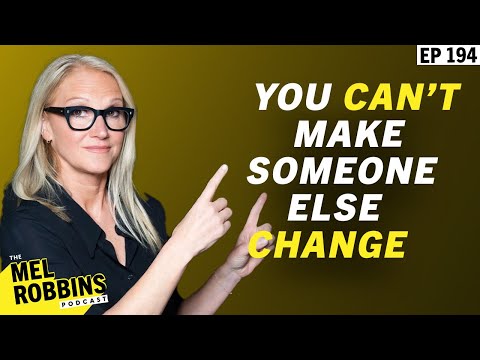
3 Requirements of a Good Relationship | Mel Robbins
Mel Robbins (host), Lisa (guest), Guest (guest)
In this episode of The Mel Robbins Podcast, featuring Mel Robbins and Lisa, 3 Requirements of a Good Relationship | Mel Robbins explores mel Robbins’ Three Tough-Love Rules For Healthier Adult Relationships Mel Robbins explains three core truths about adult relationships: if people wanted to change, they would; you cannot make another adult change; and you must stop being mad at people for not being who you want them to be.
Mel Robbins’ Three Tough-Love Rules For Healthier Adult Relationships
Mel Robbins explains three core truths about adult relationships: if people wanted to change, they would; you cannot make another adult change; and you must stop being mad at people for not being who you want them to be.
She argues that trying to fix or push others often creates resistance, shame, and distance, whereas acceptance, empathy, and clear boundaries create space for genuine change.
Through listener questions and personal stories, she shows how to manage frustration, handle chronic complainers (with her “6‑month rule”), and navigate the relational ripples that happen when you start improving your own life.
Robbins emphasizes redirecting energy from controlling others toward your own growth, using curiosity, compassion, and boundaries instead of judgment and lectures.
Key Takeaways
Accept that adults only do what they truly want or can do.
“If they wanted to, they would” means you should read people’s actions, not their promises, and also recognize that capacity, trauma, and mental health can limit what someone is currently able to do, even if they care.
Get the full analysis with uListen AI
Stop trying to force change; it almost always backfires.
Adults only change when they’re ready, and research shows only about 3% change when they feel lectured or coerced; focus instead on your own behavior, questions, and example so they can arrive at change as their own idea.
Get the full analysis with uListen AI
Replace judgmental “shoulds” with compassionate understanding.
Check whether your desire for someone to “do better” comes from love and belief in their potential or from superiority and frustration; compassion recognizes differences in background, trauma, resources, and brain wiring.
Get the full analysis with uListen AI
Use boundaries, not nagging, with people who chronically wallow.
Robbins’ “6‑month rule” allows someone a limited window to vent; after that, you clearly state you’re no longer available to listen unless they want help taking action, redirecting the relationship away from endless complaint.
Get the full analysis with uListen AI
Let go of resentment toward people for not being who you want.
Resenting others for their habits, choices, or limitations only drains your energy and erodes connection; loving someone as they are (while setting your own boundaries) brings more peace and authenticity to the relationship.
Get the full analysis with uListen AI
Recognize that your growth confronts others with their own choices.
When you improve your health, habits, or mindset, it can trigger defensiveness or ridicule in others because your change forces them to look at themselves; expect this and avoid preaching or pushing them to follow you.
Get the full analysis with uListen AI
Change the energy you bring to relationships to change the dynamic.
Dropping the “tug‑of‑war rope” of control—shifting from pushing and criticizing to acceptance and clear boundaries—often removes the struggle and paradoxically creates more room for the other person to evolve.
Get the full analysis with uListen AI
Notable Quotes
“If they wanted to, they would. Adults only do what they feel like doing.”
— Mel Robbins
“You can't make someone else change. Adults only change when they are ready to change.”
— Mel Robbins
“Stop being mad at people for not being who you want them to be.”
— Mel Robbins
“Wanting someone else to change doesn’t make them change; it usually stops them from changing.”
— Mel Robbins
“Your changes do not inspire other people; they confront them.”
— Mel Robbins
Questions Answered in This Episode
Where in my life am I trying to control or “fix” another adult instead of setting a boundary or working on myself?
Mel Robbins explains three core truths about adult relationships: if people wanted to change, they would; you cannot make another adult change; and you must stop being mad at people for not being who you want them to be.
Get the full analysis with uListen AI
How can I distinguish between genuinely supporting someone’s growth and subtly judging or shaming them with my expectations?
She argues that trying to fix or push others often creates resistance, shame, and distance, whereas acceptance, empathy, and clear boundaries create space for genuine change.
Get the full analysis with uListen AI
Which relationships in my life feel like a constant tug‑of‑war, and what would it look like to ‘drop the rope’ there?
Through listener questions and personal stories, she shows how to manage frustration, handle chronic complainers (with her “6‑month rule”), and navigate the relational ripples that happen when you start improving your own life.
Get the full analysis with uListen AI
Who in my life has been wallowing for more than six months, and what specific boundary do I need to communicate to protect my energy?
Robbins emphasizes redirecting energy from controlling others toward your own growth, using curiosity, compassion, and boundaries instead of judgment and lectures.
Get the full analysis with uListen AI
In what ways might my own positive changes be confronting the people around me, and how can I handle their reactions without shrinking or preaching?
Get the full analysis with uListen AI
Transcript Preview
You ever had someone in your life that you really wish would change? You just wish that they would get motivated and lose 20 pounds or stop at one glass of wine? You wish they wouldn't spend their weekends indoors playing video games or just scrolling away on social media. I mean, you've tried everything, and you know that they would be happier if they just did what you think they should do. But what if I told you you're approaching this all wrong? See, there are three rules about adults. These are truths that you need to know, and the faster that you accept these three rules about other adults, the faster this situation is gonna change. Not because they're gonna change, but because you will. (clock ticking) Hey, it's your friend Mel, and thank you so much for being here with me. I'm so fired up that you tuned into this particular episode. I wanna acknowledge you for taking the time to listen to something that could improve your life, and today it's gonna improve your life by teaching you these three rules and truths about adults and adult relationships. And if you're a new listener, I wanna personally welcome you to the Mel Robbins Podcast family. I'm so glad you are here. I'm Mel Robbins. I cannot wait to share this time together with you, and we're gonna be talking about three truths that define all adult relationships, and I learned these three truths way too late, which is why I am so excited for you to learn them today. And, you know, interestingly, I'm working on my next book. The title is The Let Them Theory. You're gonna fricking love it. It comes out in January, and I'm not gonna talk about the Let Them Theory, but the thing that I wanted to share with you is that as I'm researching this book, these three truths come up over, and over, and over again in the research, in every situation I'm writing about. And, you know, the fact is, the reason why these, these truths come up is because you and I have someone in our lives we wanna change. You want them to drink less, to lose weight. You'd like them to help around the house. I mean, you're not being a pain in the rear end, you just are asking for them to move a little bit more. Maybe you want them to be a little bit more affectionate. Maybe they could use a different tone. Maybe you want them to be a little bit more motivated in their career. I get it. I get it. I would want that too for somebody that I love. But let's just take that last example, that you want someone that you care about who is currently in a job that is making them miserable, you want them to be motivated, you want them in a better job, because why? Well, you don't wanna see them miserable. Plus they're making you miserable, because they come home every day and they complain about their boss, Steve. And you've seen this play out. They've been working their tail off, they've been up for promotion several times, they've hit their mark, and good old Steve always has a reason why that promotion isn't coming. And you know, you can see it, can't you? Clear as day. This job is a dead end. And you know that Steve is being totally unprofessional and unfair and he just keeps stringing this person that you love along, and you know that every single day that goes by is one more day that the person that you love is not in a supportive environment. And you, you just see this playing out. You see the toll it's taking on the person you love. And here's the thing. You know exactly what they need to do, right? In fact, you've got at least a dozen people that you have lined up that are ready to network with this person that you love, but every time that you push, have you noticed? Every time that you push, "Hey, you know, maybe you should look for a new job," or, "You know, I'd really love for you to talk to David," or, "You know, you have so many amazing things to offer, you should be with a better company. They're just stringing you along, honey. When are you gonna see the writing on the wall and leave and find your power?" If you notice that every time you push, whether it's in a loving way or a little forceful way, what do they do? They push back. And so here you are. You're at this impasse. You're annoyed at this person that you love, and you're starting to feel a little judge-y about the situation, and you're so sick of it that you can't even hear them complain about it anymore, because they're not doing anything. And every little thing that they do, from laying on the couch all weekend and watching golf instead of looking for the new job, everything that they do, it just bothers you. And here's what I wanna tell you. There are three rules about adults and adult relationships that you have to learn, and you need to start living by them. And these three rules, they are the truth about how adults work, and these three truths, holy cow, if you really embrace them and you incorporate them into your life and your relationships, it's gonna create so much more harmony in your life. These truths will give you so much peace and power in the situation. They're gonna help you feel more in control, and if you're lucky, it might just create the space for the person that you love to actually want to change for themselves, because I'm here to tell you, they are never going to change for you. And that brings me to these three truths. Truth number one, if they wanted to, they would. Adults only do what they feel like doing. And if your loved one doesn't feel like looking for a job right now, they're not going to. And I will unpack this truth in detail in just a minute, but let me get to the other two. Truth number two, you can't make someone else change. Adults only change when they are ready to change.And if your loved one hasn't changed jobs yet, they're not ready to. And truth number three. Stop being mad at people for not being who you want them to be. Let adults be adults. I mean, if your loved one isn't who you want them to be, who's the bigger jerk? Them for not getting the job that you want them to get? Or you for judging them? (inhales sharply) Yeah, that one kind of stings, right? Definitely makes you think. This is going to be one of those conversations, by the way, where I'm talking to myself as much as I'm talking to you, because it took me way too long to learn these three truths. And now that I can see them, and I know them, and I'm living by them, I have had to confront what a control freak I've been. And I can also see how I wasn't accepting and loving the people in my life exactly as they are. I mean, isn't that what you want from the people in your life who love you? Don't you want people to accept you as you are, to love you for who you are, and for who you're not? Well, I wasn't doing that. I was doing a lot of judging. And so as I unpack each of these truths, you may have that same kind of reckoning with yourself, and I want you to know it's okay. We all do it. We all control the people that we love instead of accepting and supporting and loving the people that we love. And what I can promise you is that when you truly embrace these three truths. Truth number one, if they wanted to, they would. Truth number two, you can't make someone else change. And truth number three, stop being mad that people aren't who you want them to be. When you accept these truths, your life is going to get a whole lot easier, because right now you have no idea how much unnecessary stress and frustration you're creating for yourself. And I think the most surprising realization that I've had is that wanting someone else to change doesn't make them change. It usually stops them from changing. See, it's only when you back off and you learn how to show up differently that the people in your life will have the space to start showing up differently too. You know, I think about relationships as this mutual exchange of energy. Like, y- y- you really impact one another with your energy. So when you shift your energy from judging, and pushing, and wanting, and wishing, and all of this, and you shift how you show up to the relationship, it changes everything. Trust me. You'll see. So let's start with truth number one. If they wanted to, they would. "I wish they'd make an effort." "I wish they'd show up." "I wish they'd reach out." "I wish they'd be on time." "I wish they'd try a little harder." "I wish they'd get healthier." If they wanted to, they would. And here's something that really is going to sting. It also applies to you. I mean, there are people in your life right now that wish you would make an effort, that wish you would change some aspect about yourself. And the truth about all of us is we do things we feel like doing, period. And when it matters to you, you do it. And what's really hard to accept is that if you want to know where somebody stands on an issue, just watch their actions. Actions are how people speak to you. Don't listen to their words. Someone else will tell you exactly what they want to do and what they don't want to do. Don't listen to what they say because it's easy to say, "Yeah, sure, I'll do this." Talk is cheap. It is hard to accept that if they wanted to, they would. But the truth about you is if you wanted to, you would. So it's very important to realize that this truth swings both ways, because again, I said that these are fundamental truths about all adults. And that's the empowering part of this. Like, you see how you can change your actions for the better, and that makes better relationships. Everything that you and I are going to talk about today is true about other people, and these rules are also true about you because you're an adult. And I like reminding both you and me that these rules apply to everybody else, adults only do what adults want to do, and I only do what I want to do, and you only do what you want to do, because it gives you a level of humility and a little bit more compassion when you get into situations with people where they're not doing what you want them to do. And so I'm going to dig deep into these rules by taking questions from your fellow listeners of the podcast. And our very first one comes from a listener named Lisa.
Install uListen to search the full transcript and get AI-powered insights
Get Full TranscriptGet more from every podcast
AI summaries, searchable transcripts, and fact-checking. Free forever.
Add to Chrome