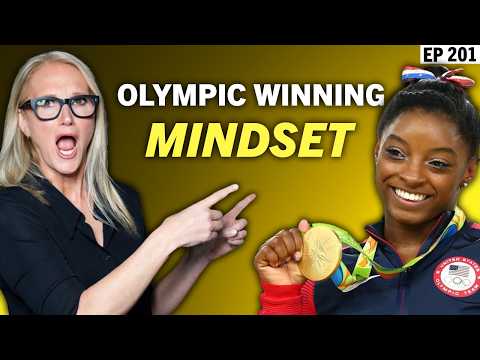
The “Bronze Medal Mindset” (and 4 More Surprising Habits From Olympians)
Mel Robbins (host)
In this episode of The Mel Robbins Podcast, featuring Mel Robbins, The “Bronze Medal Mindset” (and 4 More Surprising Habits From Olympians) explores olympian Habits: Visualization, Bronze Mindset, Quitting, Enthusiasm, Clarity Mel Robbins distills five performance and mindset habits she’s observed from Olympians and Paralympians: feeling-based visualization, the “bronze medal mindset,” contagious enthusiasm, the courage to quit, and radical clarity about what you want.
Olympian Habits: Visualization, Bronze Mindset, Quitting, Enthusiasm, Clarity
Mel Robbins distills five performance and mindset habits she’s observed from Olympians and Paralympians: feeling-based visualization, the “bronze medal mindset,” contagious enthusiasm, the courage to quit, and radical clarity about what you want.
Using stories of gymnast Steve Nedoroscik, Simone Biles, swimmer Henrik Kristiansen, and Paralympian Femita Ayembeku, she shows how elite athletes train their brains as deliberately as their bodies.
She explains the neuroscience behind mental rehearsal, how comparison shapes happiness, why strategically quitting is a mark of winners, and how enthusiasm amplifies opportunity and resilience.
Robbins closes by arguing that real progress starts with clearly answering “What do I really want?” and then visualizing and chipping away at it daily.
Key Takeaways
Visualization works best when you feel the action, not just see it.
Robbins explains, via Steve Nedoroscik’s pommel horse routine and UCLA research, that mentally rehearsing movements while feeling them in your body activates the same brain regions as real performance, encoding actions into procedural memory.
Get the full analysis with uListen AI
Double down on your strengths instead of trying to be good at everything.
Nedoroscik chose to specialize in pommel horse rather than chase all-around gymnastics, showing that becoming a joyful specialist in what you love can create world-class results and unconventional career paths.
Get the full analysis with uListen AI
Adopt a bronze medal mindset by comparing down, not up.
Studies show bronze medalists are often happier than silver medalists because they focus on gratitude for being on the podium at all, while silver medalists obsess over narrowly missing gold—illustrating how upward comparison erodes satisfaction.
Get the full analysis with uListen AI
Guard against destructive comparison by shifting perspective intentionally.
Whether it’s book rankings, salaries, or home renovations, Robbins notes we often ruin our own joy by measuring against those just ahead; consciously comparing to where you used to be or those with less can restore motivation and gratitude.
Get the full analysis with uListen AI
Winners quit strategically when it protects their wellbeing and long-term success.
Using Simone Biles’ withdrawal from events in Tokyo due to the twisties and PTSD, Robbins distinguishes cowardly running away from courageous quitting, emphasizing that real winners make hard calls that prioritize safety, health, and sustainability.
Get the full analysis with uListen AI
Treat your mindset like a muscle that needs training, repair, and rest.
Biles’ 7 a. ...
Get the full analysis with uListen AI
You can’t move your life forward until you know what you really want.
Paralympian Femita Ayembeku’s simple initial goal—“learn to run and do something meaningful with this blade”—shows that progress starts with honest clarity, even if the first desire is small; once defined, you can visualize, plan, and chip away daily.
Get the full analysis with uListen AI
Notable Quotes
“Visualization isn’t about seeing the finish line; it’s about feeling yourself doing the hard, step-by-step work no one wants to do.”
— Mel Robbins
“What you perceive to be a weakness could become your greatest strength.”
— Mel Robbins
“Bronze medalists are so damn happy they’re on the podium at all; silver medalists are often thinking, ‘I lost gold.’”
— Mel Robbins
“Winners always quit when they know it’s the right thing to do.”
— Mel Robbins
“The biggest obstacle in your way is yourself.”
— Femita Ayembeku (quoted by Mel Robbins)
Questions Answered in This Episode
How could I apply feeling-based visualization to a goal I’m avoiding because it feels uncomfortable or tedious?
Mel Robbins distills five performance and mindset habits she’s observed from Olympians and Paralympians: feeling-based visualization, the “bronze medal mindset,” contagious enthusiasm, the courage to quit, and radical clarity about what you want.
Get the full analysis with uListen AI
Where in my life am I stuck in a ‘silver medal mindset,’ and how would my outlook change if I adopted a bronze medal perspective?
Using stories of gymnast Steve Nedoroscik, Simone Biles, swimmer Henrik Kristiansen, and Paralympian Femita Ayembeku, she shows how elite athletes train their brains as deliberately as their bodies.
Get the full analysis with uListen AI
What is one area where I might need the courage to quit—relationship, job, habit—in order to protect my long-term wellbeing?
She explains the neuroscience behind mental rehearsal, how comparison shapes happiness, why strategically quitting is a mark of winners, and how enthusiasm amplifies opportunity and resilience.
Get the full analysis with uListen AI
If I treated my mindset like a muscle, what specific daily or weekly practices would I add to strengthen and repair it?
Robbins closes by arguing that real progress starts with clearly answering “What do I really want? ...
Get the full analysis with uListen AI
When I honestly ask myself, ‘What do I really want right now?’, what is the first answer that comes up before I edit or downplay it?
Get the full analysis with uListen AI
Transcript Preview
(instrumental music plays) I love the Olympics. I love seeing the athletes come together from around the world, I love performance, competition, and of course, I love to win. And that's why I'm so excited to share five things that I've noticed and learned from the Olympics this year. These are habits, habits of Olympians and Paralympians. These are not things you realize that they do, these are habits that you can put into your life, and today, that's what you and I are digging into. So, let's go. Hey, it's your friend Mel Robbins. I am so glad you're here. Welcome to the Mel Robbins Podcast. If you're brand new, welcome to the family. I am so glad you decided to tune in. If you've been here for a while, thank you, thank you, thank you for being here with me today. I am so excited about the episode today, not only because of the fact that I just love the Olympics. I mean, don't you love the Olympics? I wanna dive into five things that I've noticed and learned from the Olympics this year. These are habits, habits of Olympians and Paralympians, and one of them is the bronze medal mindset. I'm gonna tell you what that is in just a little bit, so we're gonna get to that. But first up is a huge, huge habit around something called visualization. Visualization is real, it is scientifically proven, and the first habit is not only that you have to do it, but here's the main habit that I have learned from the Olympics this year: You don't see it when you visualize, you feel it. You have probably seen Olympic athletes performing visualization and mental rehearsing, and you might not have even realized that's what they have been doing as they're waiting to compete. And the thing about visualization that everybody gets wrong is you do not need to see it in order to do visualization correctly. Done correctly, visualizing, manifesting, mentally rehearsing, you feel it. And I got this takeaway, that visualization isn't about seeing, it's about feeling yourself do it, from none other than the pommel horse guy. Can you guess who I'm talking about? Yup, that's right, USA's Steve Nedoroscik. Everybody loves this guy. He's the guy with the brown hair and the glasses, and he's blown up on social media because on the side, as he's working off his nerves, he's solving the Rubik's Cube as a way to kinda keep himself calm. This guy's story has so much I wanna unpack. There is so much you can learn from Steve, the pommel horse guy. So, Steve grew up in Western Massachusetts. Worcester is the name of the town. It's probably about a 40-minute drive from our studios in, uh, Downtown Boston, and he was a gymnast as a kid, but here's the thing, he had all of these issues with his eyes. He does not have depth perception, he is super sensitive to light, he has to wear glasses all the time. His eye issues are so profound, it's almost like his pupils are permanently dilated, and he's not able to get a driver's license, like this is how much his vision is impacting kinda his day-to-day life, but that did not stop him. Okay? That did not stop Steve, the pommel horse guy. And what happened is he, he pursued gymnastics through, like, middle s-, or you know, elementary school, middle school, Oakley was a gymnast, but I've spent many a weekend sitting in the tiny little spaces that parents sit in while they watch their kids do gymnastics. So, Steve, our pommel horse guy, he gets to high school and realizes, "I'm not gonna make it as an all-around gymnast," and if you're gonna make it as a gymnast, almost all the gymnasts are all-around athletes. He realized he wasn't gonna get recruited to college because he wasn't good enough in the all-arounds, and so he made this critical decision, and this is a really important takeaway from Steve, he doubled down on the thing he was amazing at, and that was the pommel horse. He made it his thing, and he made that decision in high school, which led him to go to Penn State, he competed, he ends up focusing so much on the pommel horse that in 2021, he becomes the world champion in the pommel horse. And I wanna pause right here, because I don't think anybody wakes up and they go, "You know, I'm three, I think I wanna be the world champion at the pommel horse." And what I love about Steve, and the fact that he doubled down on the pommel horse, is that it just goes to show you, there's a bazillion things you could do with your life. You know, everybody runs towards being a doctor, or being in finance, or doing a startup, or becoming an influencer these days. You could do the pommel horse. You could build a life where your passions are about flowers. Like, there is so much more to life than the same five lanes that most people pursue, and so I love this reminder too that if you enjoy it, if you're good at it, double down on it. Like, you don't need to be a generalist. Sometimes in life, being a specialist in something that you love, something that you're good at, that is the ticket, so focus, focus, focus. So, I love this and I love what he's teaching us, and I also love the fact that he seems to have a lot of fun as he's doing it. Like, at one point as he was competing, he was wearing goggles, not glasses, he has a great sense of humor, but let me get to the point about visualization and the fact that you don't have to see yourself doing it, you have to feel yourself doing it. That is the science of visualization. It's also called mental rehearsing. We're gonna get into how you can do it, but I wanna, I wanna set the scene for this moment that happened at the Olympics with Steve.So, you may have seen this, it was the men's gymnastics team final. Okay? So, the whole team is there, everybody is competing in all of the different events. You get down to the final event for the men's gymnastics team final. What event is it? It's the pommel horse. So naturally, who do you bring i- you bring in your ringer. You call Steve over, you tell him, "Put the Rubik's Cube down, buddy. It is time for you to hop on that pommel horse and do your thing." And his performance is going to determine whether or not the US men's gymnastics team is going to earn a medal for the first time in 16 years. So, stakes, super high. And here's what I love, so as we are progressing toward the pommel horse event, all of a sudden there's all these photos of Steve going viral. And it's of him with his head tipped back, and you can see me on YouTube, kind of, and he's just literally got his eyes closed. And people started to joke, like, "The dude's napping. Steve is now napping." That's not what he was doing. He was visualizing. He was running himself through his routine in his mind. In fact, he said he did it about 100 times. And it's really important to understand the true science of visualization, because then, after he opened up his eyes and he got out of his chair and he stood up and he was kind of in that holding area getting ready to go, there's another video that went viral where you can see him standing there and he's moving his hands and his shoulders. And what you realize is, oh my gosh, he is feeling his way through the entire routine. He's not just imagining himself doing it, he is feeling himself doing it before he actually does it. And I wanna explain from a neurological standpoint what is actually happening, and this comes from research at UCLA. We have covered the science of manifestation on the Mel Robbins podcast, but you don't need to have heard that episode 'cause I'm gonna put my arm around you and explain this. Here's what's super cool, when you imagine and feel in your body doing the step by step by step by step, and in the case of Steve, our pommel horse guy, it's like one hand, other hand, this bar, that bar, leg swing, this thing. As he is feeling this in his body and moving his hands, brain scans have shown that it stimulates the same brain region as when you are actually performing the action. Closing your eyes, imagining it in your mind, and allowing you to feel the sensation in your body is you socializing your mind to take that action. And this taps into what scientists call procedural memory. Now, procedural memory is a term that describes what's happening when you take something that you're learning and then you repeat it so often that you lock it in as a habit and it becomes part of your long-term memory. I can give you some examples of things that you use procedural memory for. So, if you ever pick up a pen and write something, you're using your procedural memory. You're not really thinking about writing, are you? Just like Steve does not think about being on the pommel horse. Because he has rehearsed this so many times, it is now stored in his procedural memory. Another thing that you do, have you ever poured a glass of water or opened up a door? Uh, that's all actions in your procedural memory. And the reason why procedural memory is so important is because these moves become patterns, whether it's brushing your teeth. Another thing that you do, procedural memory, walking. If you are in a wheelchair, rolling and moving in your wheelchair. That's all done through procedural memory. The connections get made between these gaps in your neurons that pass signals, and, you know, you think that, "Okay, I'm just visualiz-" No, no, no, no, no, no. You're actually encoding a pattern in your brain, and the more that you feel it in your body, the stronger the connection becomes. Why? Well, because the research from UCLA shows that the brain region that's being stimulated by this is the same one as the region that actually governs the actions that you take. Your brain doesn't know the difference. This is so cool. You can use it to your advantage. I'm gonna give you two examples and then we're gonna go back to Steve. But first, I wanna teach you how you can use this in your own life. You can use the example of Steve. You can use visualization. You can take this research from UCLA. So, let's just say it's always been on your bucket list to run a marathon. The way that you use manifestation, visualization, this mental rehearsing, is not visualizing yourself crossing the finish line. Like, if Steve, if all Steve did when he was on the sidelines at the Olympic was close his eyes and think about standing on the podium, he would have completely blown the actual event. That's not what visualization is. Visualization isn't about visualizing winning, it's about visualizing doing it. The small moves that lead you to the podium. So, for example, if you were wanting to train for a marathon, you would visualize and feel in your body how awful it's gonna feel to get up at five o'clock in the morning to go on a training run. How, ooh, that's not even the awfulest part. Imagine opening the door and it's like freaking sleeting outside. Ugh.Who wants to run then? Not me, but you do. So, you're gonna visualize yourself pushing yourself out the door. Uh, you're gonna visualize yourself, it's a long training run. You've just hit mile eight, and guess what just happened? Oh, the battery in your earbuds just died. You don't have any music. Visualize that moment, feel it in your body, and then feel yourself as you continue to run. That's how you can train yourself to do what you need to do. I can give you another example. I'm working on my next book. I'm so excited for you to read it. It's called The Let Them Theory. It's coming out in January, and it was a beast to write. And there were so many weekends that I was up here in my office in the summer while my kids were home hanging out with all their friends, and as I would have a weekend coming up where I knew I had a huge deadline, you know what I would visualize? I would visualize what it felt like to be up here above the garage alone on yet another Saturday, and I would visualize how it would feel to sit there for two hours and then go downstairs to the kitchen where everybody's in bathing suits and having fun, and then I would visualize myself kinda smiling and laughing, and then I'd walk back up the stairs and get back to my chair and sit back down and keep writing. Why would I do that to myself? I'll tell you why. Because I am socializing my brain to the pattern of doing the work even when I don't feel like it. This is so powerful, and I want you to steal it from Steve, and the fact that he has vision problems, in my opinion, makes him the perfect spokesperson for visualization. Because again, it's not about seeing yourself, it's about feeling yourself doing it. God, I love that. God, I love that. I guess one more thing that he teaches us, which is really cool, is that what you perceive to be a weakness could become your greatest strength. Like, in an alternate universe, if you've got those kind of issues with your eyes and you gotta be wearing glasses and goggles and, you know, kids are looking at you funny or teasing, like, you might give up. The fact that he can whip off his glasses, and he doesn't even need to be able to see clearly to get up on that pommel horse and be the world freaking champion, he just does his thing. And if you really stop and think about it, maybe not being able to focus on all the external stuff isn't a weakness. Maybe it's a strength because it allows him to drive the focus inward. And there's some area of your life where you think you have a weakness. What if you were able to find the strength in that thing the way that Steve, the pommel horse guy, has? Because what ended up happening after he had his eyes closed and he was mentally rehearsing 100 times and then he stood up and he was feeling and gripping and moving through the routine? There's such a cool video of him side by side standing and doing all that with the actual routine, and it is hand by hand, like, syncs up. It's unbelievable. I will link to it in the show notes so that you can see it. It's crazy cool. What was he doing? He was preparing to freaking dominate, 'cause that's what he did. He got on that pommel horse, and he pummeled that thing, let me tell you. And the second that he, like, moved down and moved up and lifted his legs and then, like, whoo, he dismounts and sticks the landing, you can tell when his feet hit that ground, he doesn't need to see anything. He knew he destroyed it because he felt the fact that he was destroying it. And the U.S. men's team went on to cinch the bronze medal, first medal in 16 years. The ringer rang the bell, man. It was so cool. It was such a great moment, and I wanna thank Steve. Hopefully we'll get him to the studios. I would love to talk to this guy, 'cause he seems really awesome. He taught you that not every weakness is a weakness, that they can all be a strength. He taught you that doubling down on something instead of trying to be a generalist and do everything well, just follow your strengths, follow the things that you love, be a specialist. He also made it cool to be a pommel horse guy, and you can make it cool to be whatever kind of person you wanna be and whatever you're interested in. And finally, he taught you that visualization isn't about seeing it, and it's definitely not about seeing the finish line or the podium or the book being done. It's about feeling yourself doing the very difficult step-by-step hard stuff that no one wants to do. And when you do that, trust me, you'll shock yourself by what you're capable of achieving. And that brings me to the second big takeaway from the Olympics, which is I think we all need to strive to have a bronze medal mindset. Not a gold medal mindset, but a bronze medal mindset. So, what is a bronze medal mindset? Great question. Have you ever noticed that if you look at the kinda ceremony when they give the medals, yes, the person who wins gold is ecstatic and they reach up and they bite the medal and, you know, ah-da-da-da-da-da. But number two always has kind of this forced smile. You know, they, they look happy, but do they really look happy? But have you ever noticed the person who wins the bronze, they are flipping ecstatic. I mean, they're literally up there like, "Look at me. I'm the champion. Holy cow. What the... What just happened?"They're thinking about all their homies back home, like, cheering in the local tavern for you. Like it's- it's- it's noticeable. In fact, it's so noticeable that there have been studies done about the fact that people that win the bronze are happier than people who win silver. I mean, I think we all know, yeah, gold, you're gonna be ecstatic. I mean, a little footnote on the gold medal is that they also show that when you win a medal, you're really ecstatic in the moment if you've won gold, bronze, whatever. But after the Olympics are over, it's really common for people to hit a really low period. Why? Well, because you're not really pursuing something important. We've talked about this so much on the Mel Robbins podcast, that having something that's important and meaningful to you to pursue, and it could be something small, could be just creating a cutting garden, it could be going back to school, it could be just working on being a nicer person, having something to pursue creates meaning in your life. It is the source of happiness, personally, in terms of the kind of happiness you can create for yourself. But let's get back to why are bronze medalists, based on just watching television and also based on research, happier than silver medalists? Well, there's a very specific reason why, and the reason is because silver medalists stand on the podium and you know what they think about? They think about the fact that they could have been first, and, you know, I guess there's that saying that, uh, coming in second is the first place for the loser. I don't like that, but a lot of people when you come in second, you don't think, "Oh, I- I won second place," or, "I won the silver," you think, "I lost gold. I didn't make number one." They did this huge research study that was published in the American Psychological Association, I'm having trouble speaking today, American Psychological Association, thank God I'm only talking and I'm not on a pommel horse right now, that the reason why silver medalists are not as happy as people who win bronze is because they are comparing up. They're looking at the gold medalist and they're thinking to themselves, "Maybe if I'd just done this, if only I'd been a second faster, if I'd only tried this, if I had trained a little harder, if I would..." (babbles) So they're no longer happy with where they are, and it's this thing that you and I can do too where you compare up. Maybe you're starting your singing career and you're- you're comparing yourself to Taylor Swift. That's gonna make you miserable. What you wanna do is you wanna have a bronze medal mindset. Why? Because a bronze medalist is so damn happy that they're on the podium at all, that they're even in the game, that they're in the arena, and they're doing what psychologists call comparing down. They're like, "Oh my God, at least I'm up here. You know, at least I'm up here. I'm doing a lot better than a lot of people right now and I'm very happy. I'm doing a lot better than my old self 'cause I am actually standing up. This is pretty amazing." So their ability to put where they are in perspective, not compared to people who are better than, not compared to people who are more than, not compared to people that are ranked higher than, but their ability to compare themselves downward creates this level of gratitude and humility for what you just accomplished, and this has now been shown in research. And the truth is, how does this work for you and me? Because this is a phenomenon in life. We are all struggling with comparison. You gotta be careful what you're looking for 'cause if you're looking for evidence that other people are better than you, you're gonna find it, and this is why I want you to have a bronze medal mindset. We're not gonna be looking up and looking around and looking for people who have more or better, and I'll tell you why. Because on a planet with eight billion people, there will always be someone who is smarter, richer, taller, shorter, skinnier, fatter, like, you name it, there is somebody who has done it. And if you allow yourself to get a silver medal mindset where you're constantly scanning the world looking for people that, "Oh, I could have been that, I could have been this, if only I'd done that," and- and- and you start to then just glaze your whole life with this sort of silvery gray (groans) where you are constantly seeing what you're not, which means you don't appreciate what you have. Like, you can't be grateful and beat yourself up at the same time. You can't appreciate what you have and at the same time be just pounding yourself with all the things you wish you would have done. And that's why silver medalists, based on research and based on experience, are not as happy as bronze medalists. And it kinda shows you that life is really about your perspective. You gotta be very careful in life because whatever it is that you're looking for, you're gonna find it. If you're gonna spend your time searching for all the things you should have done or for people that have done a better job than you, you will find them. This I- I- I experienced this when I published my, uh, book, The High 5 Habit. One of my goals had always been to be a New York Times bestselling author, and of course I dreamt in my wildest dreams that I would be number one New York Times bestselling author, but for years and years and years, I was just dying to get that recognition. And one of the reasons why is when I published The 5 Second Rule, it was a self-published book and I didn't know they don't recognize those on the New York Times list, so I never made the New York Times list. So The High 5 Habit comes out and I debut as number two. Do you wanna know what my reaction was? I'm sort of embarrassed to tell you this. (laughs) I was pissed. I wasn't happy at all. I actually burst into tears. That was partially 'cause I was so exhausted, but I was not happy, and I was not happy precisely because of this research, that I was comparing myself to the person that got number one, and I immediately went from this moment that should have been like, "I just achieved something I've been dreaming about for five years. Well done, Mel. Congratulations, Mel." Like, "Let's go have a beer. That's fantastic. Let's go to Disney World. Let's celebrate. You did it, girl. Go." No, I was like, "Damn it," and that's exactly what people do and feel when they compare up. You renovate your kitchen. Then you go to a friend's house. "Oh, there's is nicer. I don't like mine anymore." You know, I was reading this article in Inc. Magazine by one of their editors, Jeff Haden, and he tells this incredible story that you may be able to relate to that is an example of the silver medalist comparing up versus the bronze medal mindset, which is being where you are and comparing down, and that makes you grateful. He said that he had started this entry level shop floor position, and he worked his tail off and climbed the ladder and became a supervisor who's super happy with the increase in pay, and that only made him want to work harder, right? Get in early, stay late, volunteer for projects, like, be more collaborative, take on more responsibilities. He was so happy, happy to work hard, and then he found out that another supervisor, who was a little lazy, a little difficult, you know, kind of uncooperative, made half again the salary that he made, meaning made more money. And nothing had changed in his life except for the upward comparison that he applied, and he said he could not get past it, that he still worked hard, but he didn't work that hard, right? And that's what can happen when you fall prey to this upward comparison. Like, he was perfectly happy with what he earned until he learned what someone else made, and then he became profoundly unhappy even though his pay hadn't changed. His duties hadn't changed. His future opportunities hadn't changed. The only thing that had changed in that situation was his perspective. Now, what's interesting is that of course there's things he can do. Is it fair? I don't think it's fair, but, you know, he can go do something about it while still maintaining a different attitude, because if you get yourself all worked up and pissed off like I did when I was number two and silver medalists do or you've done in your life, it's not gonna help you walk into your supervisor's office and actually advocate for what you want. It's not gonna help you stay in a place where you are grateful for what you have, and it's also not gonna help you feel motivated to continue to do the work that will help you earn that raise that you deserve. So, there's a bazillion reasons why you need a bronze medal mindset. Number one, because you deserve to be happy. Number two, because it is gonna help you stay motivated to being in the game. Somebody asked me the other day, "God, I really hope I make it." I said, "Stop focusing on making it and focus on doing it," because when you focus on doing it and visualizing, like our pommel horse friend, doing the work, eventually all that work pays off, and you find out, "Holy cow, I made it, and I'm standing here on bronze. This is pretty fricking spectacular." And that's what's gonna keep you happy, and that's what's gonna keep you in the game. And that's what's gonna keep you going. So, the third takeaway is enthusiasm. Enthusiasm will always make you a winner, and this life lesson comes from Henrik Kristiansen, who is a Norwegian swimmer who has gone bananas viral. He is an obsession with everybody online. I have no idea how he's doing in the Olympics. I'm just following him on (laughs) social media 'cause he is adorable, and I love his enthusiasm. And his enthusiasm, what do you think it's about? Swimming? Eh, you're wrong. Being an Olympian? Mm, nope, not so much. He has gone crazy viral because he has been making these little videos about how obsessed he is over these chocolate muffins that they are serving to athletes in the Olympic Village (laughs) . Little bit of background. He's 27. He's from Norway. He's just posted, like, nine little videos about this, and they're, like, six to nine seconds long, and what's so cool is it's these chocolate muffins. So, imagine a brownie that is baked in a muffin shape with a little muffin paper thing and it's got chunks of chocolate on it. They honestly look kinda dry and disgusting, and, you know, the thing is... A- a- and he's making these videos where he's, like, biting into it, and he's, like, making these faces, and his face is covered in chocolate. And he's so enthusiastic about it that it makes you want a muffin. It makes you want to get on a plane and spend a month's salary to get yourself to Paris so that you can get your hands on one of these Olympic Village muffins. That's how influential his enthusiasm is. And, and here's the thing. These muffins, this is not like a muffin that you would see in a beautiful cafe in Paris. Like, imagine you walk into a beautiful cafe in Paris and... I can't even talk, but whatever.And behind the glass on these beautiful kinda display wooden things, you've got beautiful muffins, and you're like, "Oh, that looks so fancy and so beautiful. I'm gonna, I'm gonna spend $8 on that muffin, and that's gonna be like a molten chocolate lava explosion. I just know it. This is gonna be..." That's not what these muffins are, you guys. These muffins are in a, um, what do you call it? It's, they're in, like, a cafeteria on a buffet. So if you've ever gone to a buffet at a grocery store, and there's the metal trays, and you've got, like, a bunch of food in a tray, and it's half picked over, these muffins are sitting in a tray on a buffet for thousands of athletes to eat. This is not, like, a special muffin. But here's the point for why enthusiasm makes you a winner. Henrick and his enthusiasm has made the Olympic chocolate muffin the most sought after piece of food in Paris right now. And why am I telling you this? Because enthusiasm is a lot like a Brian's metal mindset. Enthusiasm is a way to go through life. Enthusiasm, I was researching this, it's when you expect the best, so you see some, like, dry looking muffin, and you reach for it, and you kinda peel back the paper, and you bite in, you're like, "Oh, wow." And enthusiasm is also working to make good things happen, and when you're somebody that brings enthusiasm to your life, and you bring enthusiasm to the meals you cook and enthusiasm to your friendships, it's infectious. And I personally believe that enthusiasm raises your IQ and it definitely increases your luck. Because if you're enthusiastic, you're present, you're in the flow, your energy is vibing, and that, of course, makes you luckier. And so whatever it is that you are excited about, bring the emotion of joy to it. Bring silliness to it. Be enthusiastic. We're all so worried about looking good and people thinking certain things about us that oftentimes enthusiasm can make you feel, am I being silly? Am I being over... No. Be enthusiast... People need it. They love it. You know, when I watch Henrick grab one of those chocolate muffins and lip lock the thing, it's like watching a two-year-old eat their birthday cake. Have you ever seen that where they, like, drop their face into it? And it just reminds you that life is there for you to enjoy it. And even a stale, mass manufactured chocolate muffin is there for you to enjoy it. Whether or not you do is up to you. And that brings me to the next thing we're gonna talk about, which is winners always quit. This is a huge thing in life. Knowing when to quit. It takes courage to quit. And we're gonna unpack that and the person that inspired this, and you're gonna love this story, and I'm sure you've been thinking about lots of friends and family who are watching the Olympics. Make sure you share this episode with them. If you've got people in mind that have taught you something while you've been watching the Olympics, or stories, I'd love to hear it in the comments or the reviews. Uh, and let's take a listen to our sponsors, and stay with me. I'll be back after a very short break to explain why winners always quit. Hey, it's your friend Mel, and because you're here with me on YouTube, I took out my own ad because I wanted to say one thing. First of all, hit subscribe because that really helps support this channel, helps you bring you free videos. Second, make sure you take advantage of this free workbook that I have created as a thank you to you for subscribing to this channel. This workbook is gonna help you answer the single most important question you could answer in life, which is, what do you really want? It's a surprisingly hard question to answer, but now it's not. Because you have the science-backed approach that I use in my work, in my marriage, in my life, to help me get to the truth about what I actually want. This workbook uses science. It is free to you. You can get your hands on this puppy in just a minute. Click the link below and it is yours as my thank you for being here and supporting this channel. Again, this is gonna help you answer the question, what do you want, because if you can't answer that question, there's no way you're gonna get it. So use science and let me support you in answering the question and gaining the clarity and the courage that you need to figure out what your next move is. All righty. Take advantage of this. MelRobbins.com/what. Hit subscribe and let's get back to the video. Mwah. Welcome back. It's your buddy Mel Robbins. You and I are unpacking some major lessons from the Olympics, and we've covered a bunch so far, but this one, I think, is my favorite. Winners always quit. I'm gonna say that again. Winners always quit. And in order to teach you why winners always quit, I am going to tap none other than Simone Biles, one of the greatest athletes of all time. Correct? If not the greatest and the most decorated US gymnast in history. I mean, I, I, I could read you the number of, uh, medals and world championships and all the stuff that she's won, but I think it's really important to just focus on what happened in the last Olympics. So let's go back in time in order to learn this lesson that winners always quit. In 2016, Simone wins gold medal all around. She is a force, and holy cow, the Olympics, when it came to gymnastics, Simone, Simone, Simone, Simone. Now, let's roll the clock to the Olympics in 2020, '21, right? In Tokyo.And there's all this pressure. I mean, when you are the top dog and you're coming back into the game, like all eyes are on you, and so there's this intense pressure for her to win again. And you'll probably recall that she started having all kinds of problems during the warmups, and she was warming up, for example, back in 2021, and when it was during the big team competition, and during the warmups, she tried to do some of these moves that she could normally just boom, stick the landing, 'cause why? She's done it so many times it's recorded in her procedural memory. And so she's trying to do this, like two and a half rotation flip move thing, and she can only do it 1.5 times. She tries again. She can't do it 2.5. She can only do it 1.5, and almost falls out of the sky, 'cause she can't find the floor. This is, I guess, a condition. I had never heard of it until this happened. It's a condition that gymnasts call The Twisties, and it means that your body and your mind become disconnected as you're trying to execute on skills. And what gymnasts say is that you feel lost in the air. You feel completely disconnected from your body. And the only thing that's ever happened to me in my life where I felt like that is I had really awful post-partum depression when our daughter, who's now 25, Sawyer, was born. This was a long time ago. But I didn't have the twisties, but I did feel completely disconnected from my body. I felt like I was up above my body watching myself, and I had no ability with my thoughts to make my body move. It was terrifying. And so here she is, the, like, returning gold medalist, she is warming up for the team competition, she is experiencing this disconnect between her brain and her body, she nearly falls out of the air and injures herself, and what does she do? She withdrew, citing mental health concerns due to the twisties, and then she went on to withdraw from every single event at the 2021 Olympics, except for the balance beam. She competed in the balance beam. Interestingly, she won a medal. Can you guess which one? The bronze. And she says to this day, it is the best medal she's ever won because it symbolized her putting herself and her safety and her health first. It's the only event she competed in. Now, this became huge news, and by the way, I didn't even stop to pause on the fact that when she first withdrew, this is in the middle of the team competition, so imagine the pressure. It's just- it's not just you quitting. It's you quitting on the team. But this is what winners do. This is so hard to do in life. If you've ever broken up with somebody that you love and you have to quit the relationship because you know in your heart it's not the right one for you right now, that is hard, but winners always quit when they have to. If you've dropped out of school, if you've quit a job, if you've even told your boss who's super demanding, "I can't work this weekend," and they've threatened to fire you, if you've called off an engagement, if you've dropped out of school, these are all decisions that winners make, when you make the decision knowing this is the best decision for you. There's a very big difference between running away from your problems and running away because you're afraid and choosing to quit something. One takes courage. That's why winners always quit. They make a decision that requires courage, and that's how you know it's the right decision. Losers run when they're afraid. That's a very different dynamic. That's not what we're talking about here. We're talking about the courage it takes to make the right call. And, of course, when the news broke, oh my God, the world exploded. "She's a quitter. She quit too early. They were racist. They were sexist." They then started saying that she was a drug cheat because she had an exemption for ADHD medication. Like the whole thing blew up. And what did Simone do? She focused on herself, and that's what you have to do, too, when you find and tap into that bravery and that courage to make the right call. Now, here's something else that's really interesting, 'cause she came back. She came back this year, man. And talk about the pressure. She's that- that- that diamond that gets created under pressure, because she is just unbelievable at the Olympics right now. I- I don't even know how many gold medals she's won. In fact, we were just about to start taping, and somebody's like, "Oh, she just won a silver." Like she's just boom, boom, boom, boom. And there's another takeaway here. Do you know what she did the morning that she won gold at the Olympics this year? At 7:00 AM the morning of that massive all-around team competition, you know what Simone was doing? She was not eating a chocolate muffin, that's for sure. She was talking to her therapist. Why? And this is another takeaway.Your mindset is a muscle. Strength isn't just physical strength. Mental strength is the part of every game you play. You could be the most gifted athlete on the planet. If you are not there mentally, you're not doing anything. Life is a mental game, and knowing that she started the day at 7:00 AM, getting her head in the game, making sure she was mentally well. Just like you would warm up your muscles, she's warming up her mind. She's getting herself focused. That is available to you to train your mind. How cool is that? And I wanna also give a little bit of a backdrop here, because I don't know if you've seen it, but it's really fantastic. There's this documentary special called Simone Biles Rising, and they're following her at the Olympics. And here's the other thing that most people don't realize. So, let me give you the timeline. 2016, she destroys the Olympics. Holy cow, gold medals. Simone, Simone, Simone, Simone. What happened two years later? In 2018, Larry Nesser, who was the former team doctor of the US gymnastics team, was sentenced to 125 years in prison. There are 265 victims that we know of at this point in terms of victims that he touched inappropriately, molested, like horrible, horrible, horrible. So, this was happening in the background two years after the 2016 Olympics, and in the Netflix documentary, Simone reflects back on this and says there's no doubt that when she got to the Olympics in 2020 and 2021, this was on her mind. This was triggering PTSD. Well, of course. I mean, here you have this huge case. She was one of the victims in the case. Now, you're on the biggest world stage in the Olympics. No wonder if you're suffering from PTSD, you would have this sort of thing happening to you, and then you wanna know what else happened? Is that right after she withdrew from the Olympics, there was this huge Senate Judiciary Committee meeting in September of 2021 after the Olympics where all of our women on the US gymnastics team then went and testified before Congress. Talk about traumatizing. And I say that because I think it's really important to highlight the fact that past experiences absolutely impact you mentally, and it's why just, like, you need to repair a muscle that is torn or, like, some part of your body that's in pain. You have to do the same thing with your brain and your nervous system. And that's why mindset is a muscle. It's a muscle that you stretch. It's a muscle that you strengthen. It's a muscle that you repair. It's a muscle that you take care of. It's a muscle that needs rest. And I love that she is teaching us that winners always quit when they know it's the right thing to do, that they find the courage and the bravery to take care of themselves, and that winners also treat their mindset as a muscle. They work it, and that is 1,000% available to you and me too, and that's what I hope you get a lot out of as you listen to the Mel Robbins podcast. Last but not least, we're gonna talk about something that every single Olympic athlete shares. You wanna know what it is? They're very clear about what they want, and you can only go after something if you know what it is you wanna go after. And if you are feeling stuck in life, if you're feeling a little lost, I guarantee you it's 'cause you don't know what you want. And until you get clear about what you want, you're not gonna change anything. You're not gonna go anywhere. Being able to answer the question, what do you really want? That gives you a sense of direction. That helps you define your goals. And every single Olympic athlete that you are watching and Paralympic athlete that you are watching, they know what they want. They know what their goals are. That's why they're very clear in their training. That's why they're working on it, and the same is true in life. And this lesson comes from Paralympian Femida Ayembeku. Let me tell you a little bit about Femida. So, she's from Boston. She's now 32 years old. When she was 11, she was in a car accident and got injured, and that car accident resulted in her losing her right leg. It had to be amputated from the knee down. So, fast-forward a couple years, and she is attending this running clinic in Boston that is hosted by Challenged Athletes Foundation, where she, out of all of the, like, people that are attending this kind of clinic, she is selected to win a free running blade. You know, those really cool, like, curved blades that you see on Paralympians and Paralympic athletes and super, super cool. And so when they gave her the blade, she met this three-time Paralympian and two-time medalist, Jerome Singleton, and Jerome asked her a simple question. "What do you want to do with this running blade?" Simple question. She told him she wanted to learn how to run and to do something meaningful with it. Now, let's just pause on that. She didn't say, "I wanna be a Paralympian."She didn't say, "I wanna be an American record holder," which she now is. She said, "I wanna learn how to run. Like, let's just start with the basics. I'd like to use this and learn how to use this to run." And then she said, "I'd like to do something meaningful with this." That's all you need. Like, if you don't know what you want, oftentimes just start by improving yourself. That's all she was doing, "I'd like to learn how to run. I'd like to do something meaningful." Did she say what the meaningful thing was? No. And that's all you need to know, that one question, "What do you wanna do with your running blade?" And her answer illustrates the power of knowing what you want, and it doesn't have to be anything big. It can just be one step forward. It could be, "I don't wanna be doing this. I'd like to be doing that. I just don't wanna be where I am. I'd just like to be a bit better than I am. I'd like to be a bit happier." She just wanted to learn to run. She not only learned to run, she has gone on to become a three-time Paralympian, an eight-time national champ. I mean, holy smokes, and the Paralympics are at the end of the summer, and she will be there. She's gonna be running after having a baby six months ago. Her baby's gonna be with her, and you know, as I was looking into her story, I found this quote from Fahmida. And she said, "The biggest obstacle in your way is yourself." It's so true, isn't it? And here's an insight that I wanna share with you. Having coached people for more than a decade, having researched and written all these books, having hosted this podcast now for almost two years and hearing your feedback, I can boil down the two ways that you become your own obstacle, 'cause there's only two. You either stop yourself from going after what you want, or more likely, you've never taken the time to be honest with yourself about what you really want. And that last obstacle, you've never taken the time to truly ask yourself, "What do you really want?" Fahmida was lucky. She had somebody ask her the question, "What do you wanna do with this running blade that you just won?" And she answered it, and so I'm gonna ask you. Do you know what you really want? It's kind of a hard question to answer, honestly, 'cause it's easy to just kinda keep going after the next thing that seems like the right thing and just go through the motions, and it's how we all climb the ladder, right? You just kinda go from high school to college, and then you get your job. Then you get the next job, and then you, like find the person, and then you get in a committed relationship, and then you get married, and then you gotta get the apartment. And then you have the kids or you don't have the kids, and then next thing you know what, you want a better kitchen, but then, like it just is like the next thing and then... But what do you really want? Like if we borrow what we're learning from all these amazing Olympic and Paralympic athletes is they're very clear about what they want, and they are laser focused on chipping away every day and doing the work to get there. So I wanna help you answer that question. In fact, I'm really excited because the very next episode that you're gonna listen to on the Mel Robbins Podcast helps you answer this question. The entire episode uses this scientific method called the five whys, I'll tell you all about it in this episode that's gonna come next, that will help you get to the truth about what you really want at this exact moment in your life, and this is the perfect time to ask yourself that question. You've been watching the Olympics. You're so inspired. I mean, you, you, you wanna do something exciting, right? Well, here's your chance. Couple times a year, I launch a podcast episode that's more like a cool inspiring workshop, and it has a free download that allows you to take what you're gonna learn even deeper, and you can right now just go to melrobbins.com/what, W-H-A-T, right here, melrobbins.com/what, and you can download the workbook right now. And that workbook is gonna use science, and it's gonna walk you through all these prompts, and it's going to force you to sit down and get really clear about what you actually want at this moment in your life, and this is so good. It's a surprisingly hard question to answer. In fact, not a day goes by when I don't receive dozens of emails in the inbox at melrobbins.com asking this question, "Mel, I don't know what I want. Mel, how do I figure out what I want? Mel, I don't know what my purpose is. How do I know what my purpose is? How do I, how do I figure out what my goals are?" I'll tell you how. You listen to your friend Mel Robbins because I'm gonna help you answer this question. I don't care how successful you are. I don't care if you're stuck, if you're just cruising through your life, if you're an Olympic athlete, or you're just an Olympic hopeful like the rest of us, taking a moment and asking yourself the question, "What do I really want? At this moment in my life, what do I really want?" Gaining the clarity about what you want and why you want it-It will launch you forward. It will give you exactly what you need to apply everything that you've learned today from all these amazing Olympians and Paralympians, and apply the bronze medal mindset, and start chipping away at it. Start working toward it. 'Cause once you figure out what you want, you know what you can do? You can visualize. You can feel yourself doing the work to make it happen, but not until you're clear about what you actually want. And in the very next episode, guess what question I'm gonna ask you? What do you really want? And more importantly, in the next episode, I am going to walk you through this extraordinary research-backed scientific method that will help you get to the root of what you want, with a level of honesty and bravery you probably have never had. And when you get to the root cause of what you want right now in your life for you, you will have the roadmap to going and achieving it. And I think you'll be astonished by what you can accomplish and how free you feel knowing what you're working toward. And because you're listening right now, you can get the free download that goes with this next episode right now. Just go to MelRobbins.com/what, W-H-A-T. MelRobbins.com/what. Get the download. The very next episode I'm releasing is this amazing, like, you're gonna cry, you're gonna laugh. You're gonna just have these profound insights. You're gonna have your download, and you're going to be listening with millions (laughs) of people who are getting clear about what they want, and then you better believe your friend Mel Robbins is gonna be there every step of the way to put my hand on your back and empower you to keep on moving forward. Because once you're clear about what you want, all you need to do is wake up every day and chip away at it. And if you can do that, I am certain you can achieve extraordinary things. So, thank you for listening and allowing me to go on and on about the Olympics. Thank you for letting me give you this gift. Just go to MelRobbins.com/what. Please share this with your friends and family. This is a game changer. Share this with them, and I will be waiting for you in the very next episode to help you get very clear about what you deserve, what you want, and why you want it. Awesome. All right, in case nobody else tells you, I'm gonna tell you. I love you. I believe in you, and I believe in your ability to be enthusiastic about chocolate muffins and have a bronze medal mindset. And in the next episode, I believe in your ability to get very clear about exactly what you want. I'll see you there. And, you, you for being here on YouTube, I love you. I believe in you. I believe in your ability to create a better life. Oh, and by the way, boom. This is what that download is gonna look like and with all downloads, you can do it in paper. There's a color version. There's a friendly printer version that has a lot less, uh, color, so it won't suck your ink dry. There's even a digital fill version. Why? Because I love you, and you know what you could do to tell me how much you love me because I'm constantly showing up here every day with free videos? Hit subscribe. It takes you two seconds, and it really supports this channel, and it also allows me to know what you enjoy. It allows me to continue to bring you not only new videos every day, but free programs with free downloads that help you apply the science and everything that you're learning to your life. So please, hit subscribe, get your workbook, MelRobbins.com/what, and the next episode, I'm gonna be waiting for you, and you and I are gonna be going through this, and I'm gonna be answer, asking you the question, what do you really want? Because it's time that you answer it. And in the meantime, I know you're like, "Okay, what do I do now?" You go right here.
Install uListen to search the full transcript and get AI-powered insights
Get Full TranscriptGet more from every podcast
AI summaries, searchable transcripts, and fact-checking. Free forever.
Add to Chrome