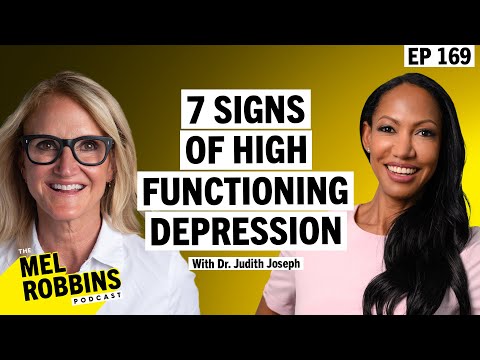
#1 Researcher: 7 Signs You May Have High Functioning Depression
Mel Robbins (host), Dr. Judith (guest)
In this episode of The Mel Robbins Podcast, featuring Mel Robbins and Dr. Judith, #1 Researcher: 7 Signs You May Have High Functioning Depression explores hidden epidemic: Understanding and treating high-functioning depression in achievers Mel Robbins interviews psychiatrist and researcher Dr. Judith Joseph about high-functioning depression, a form of depression affecting people who appear successful, productive, and “fine” on the outside but feel emotionally flat and joyless inside. Dr. Joseph explains how current diagnostic systems often miss these people because they are still performing at a high level and don’t fit classic depression stereotypes. They explore symptoms like anhedonia (loss of pleasure), over-busyness, doom-scrolling, and self-gaslighting, along with contributing factors such as trauma, genetics, inflammation, and societal pressures. The conversation also touches on scarcity trauma, the importance of naming experiences (affect labeling), and emerging research on women, menopause, and mental health.
Hidden epidemic: Understanding and treating high-functioning depression in achievers
Mel Robbins interviews psychiatrist and researcher Dr. Judith Joseph about high-functioning depression, a form of depression affecting people who appear successful, productive, and “fine” on the outside but feel emotionally flat and joyless inside. Dr. Joseph explains how current diagnostic systems often miss these people because they are still performing at a high level and don’t fit classic depression stereotypes. They explore symptoms like anhedonia (loss of pleasure), over-busyness, doom-scrolling, and self-gaslighting, along with contributing factors such as trauma, genetics, inflammation, and societal pressures. The conversation also touches on scarcity trauma, the importance of naming experiences (affect labeling), and emerging research on women, menopause, and mental health.
Key Takeaways
You can be highly productive and still be clinically depressed.
High-functioning depression affects people who meet responsibilities and appear successful but feel numb, joyless, or “off” inside; because they’re still functioning, doctors and even they themselves often dismiss it.
Get the full analysis with uListen AI
Loss of joy (anhedonia) is a key red flag to notice early.
When hobbies, food, relationships, or everyday moments that once felt pleasurable now feel “meh,” that flattening of emotion is a sneaky but highly correlated symptom of depression, especially in high-functioning people.
Get the full analysis with uListen AI
Over-busyness can be a coping mechanism, not just a lifestyle.
Many high achievers cope with emotional pain by constantly working, caretaking, and multitasking so they never have to feel or process their experiences, which can delay help until a crisis hits.
Get the full analysis with uListen AI
Naming what you’re experiencing reduces fear and opens the door to change.
Through affect labeling—accurately naming feelings or patterns like ‘high-functioning depression’ or ‘scarcity trauma’—you move issues from the subconscious into awareness, which calms the nervous system and makes them more manageable.
Get the full analysis with uListen AI
Scarcity trauma can silently drive hoarding, over-saving, or over-spending.
Histories of financial insecurity, war, immigration, or family scarcity can lead to behaviors like never throwing things out, not wearing new clothes, or compulsive spending, all rooted in an unconscious fear of losing everything again.
Get the full analysis with uListen AI
Depression today may look different due to modern stressors and biology.
Post-pandemic inflammation, constant exposure to global crises via social media, and accumulated unprocessed trauma mean depressive presentations are shifting, which demands updated clinical thinking and more inclusive research.
Get the full analysis with uListen AI
Don’t wait until you ‘fall apart’ to seek support.
If you’re functioning but joyless, exhausted, and disconnected, that’s the time to talk to a doctor, therapist, or use screening tools—not to minimize your experience because you’re still getting things done.
Get the full analysis with uListen AI
Notable Quotes
“People cope with their depression by busying themselves, because that's the only way they know.”
— Dr. Judith Joseph
“They don't feel what they're feeling, so they end up feeling very little.”
— Dr. Judith Joseph
“Anhedonia is a sneaky symptom of depression. It's a joy thief. It comes in the middle of the night and steals your joy.”
— Dr. Judith Joseph
“You're not letting anyone down, but you're letting yourself down.”
— Dr. Judith Joseph
“Stop outworking it. Stop outrunning it. Just because you’re getting through the day doesn’t mean that’s the way to live.”
— Mel Robbins
Questions Answered in This Episode
How can someone practically distinguish between being overworked and having high-functioning depression, especially when their life circumstances genuinely demand a lot?
Mel Robbins interviews psychiatrist and researcher Dr. ...
Get the full analysis with uListen AI
What specific self-assessment questions or screening tools would you recommend for someone who suspects they may have high-functioning depression?
Get the full analysis with uListen AI
How should friends or family approach a loved one who appears successful but shows signs of numbness, anhedonia, or constant busyness?
Get the full analysis with uListen AI
In what ways can workplaces better recognize and support employees who may be struggling with high-functioning depression without penalizing them?
Get the full analysis with uListen AI
How can individuals begin to unwind scarcity trauma and emotional scarcity when their current family system still reinforces those patterns?
Get the full analysis with uListen AI
Transcript Preview
What exactly is high functioning?
People who are taking care of their families. They're meeting work deadlines. They're the ones that everyone says, "Oh my gosh, you're doing a great job. You're the rock of the family. You can't stop because people depend on you." You're meeting deadlines, you're collecting accolades, but you're just not really feeling a sense of joy, so we push, push, push through it.
My husband Christopher suffered from long-term treatment-resistant depression.
Mm-hmm.
And this was a guy who was sober for a number of years, he would meditate, he was exercising, he was close to our children, and yet deep inside of him, there was something that was off. It was another doctor that we've had on this show, Dr. Amen, who did a brain scan and called us up and was like, "Uh, he has dysthymia. Like, he's got really treatment resi- resistant depression, and normally I see a brain like this after they're dead."
People cope with their depression by busying themselves.
Mm-hmm.
Because that's the only way they know. So a lot of times people just gaslight themselves, they don't feel what they're feeling, so they end up feeling very little. They have anhedonia, which is a sneaky symptom of depression. It's a joy thief. It comes in the middle of the night and steals your joy. Before you know it, nothing gives you excitement.
Hey, it's Mel, and today you and I are talking about something that is extremely important and it is only recently getting the research and attention that it deserves. We're talking about high functioning depression, and we're gonna learn all about it from a renowned researcher who's a medical doctor and PhD, and she is also the number one expert in the world on this topic. If you're someone, like me, who considers yourself a high achiever, I have a few questions for you. Do you grab a cup of coffee in the morning because you just don't have time to eat breakfast? Same thing with lunch. You eat it while you work and it doesn't even occur to you to take a break. Or how about this? When the alarm goes off in the morning, is the first thing that you feel dread about how much you have to get done today? Have you noticed lately that you're spending way more time mindlessly scrolling on social media at night, even though you don't want to? Do you want to take a day off, but you literally feel like you can't? Or you know you need help at work and you need help around the house, but instead of asking for it, you tell yourself, "Oh, it's just easier if I do it." If you answered yes to any of these questions, or you have someone that you love that immediately comes to mind, I dedicate this episode to you. Because according to the world's leading expert on high functioning depression, every single question I just asked you is a symptom of it. And today, the remarkable Dr. Judith Joseph is here to share her groundbreaking research on this important subject and exactly what you need to do to feel more energized, excited, joyful, and present in your life again. So, Dr. Judith, I'm so excited you're here. Welcome back to the Mel Robbins podcast.
Install uListen to search the full transcript and get AI-powered insights
Get Full TranscriptGet more from every podcast
AI summaries, searchable transcripts, and fact-checking. Free forever.
Add to Chrome