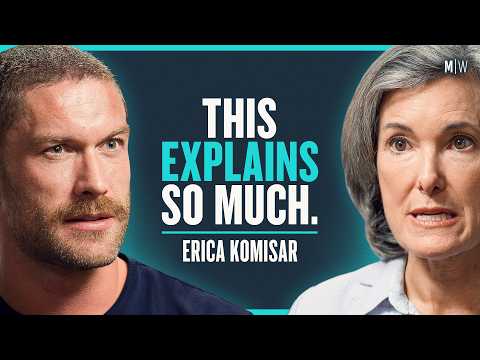
The Permanent Impact of Divorce on Children - Erica Komisar
Chris Williamson (host), Erica Komisar (guest), Chris Williamson (host), Chris Williamson (host)
In this episode of Modern Wisdom, featuring Chris Williamson and Erica Komisar, The Permanent Impact of Divorce on Children - Erica Komisar explores erica Komisar on divorce, attachment, and child development stability costs Komisar argues divorce is universally stressful for children, but a “good divorce” can be less damaging than a high-conflict marriage, with the key variable being chronic stress exposure and stability.
Erica Komisar on divorce, attachment, and child development stability costs
Komisar argues divorce is universally stressful for children, but a “good divorce” can be less damaging than a high-conflict marriage, with the key variable being chronic stress exposure and stability.
She emphasizes the first three years as a critical neurodevelopmental window where separation from the primary attachment figure and high-conflict environments can dysregulate stress systems and shape later anxiety, depression, and emotional regulation problems.
Komisar critiques court norms like default 50/50 custody for infants, claiming they often prioritize adult fairness over developmental needs, and she advocates custody patterns that preserve a stable primary home and minimize long separations from the primary attachment figure.
The conversation frames divorce as grief for children (loss of permanence and trust), highlights common child cognitions like self-blame via “magical thinking,” and outlines best practices for disclosure, communication, and ongoing co-parenting.
Broader societal incentives—careerism, minimal parental leave, normalization of daycare, and cultural devaluation of caregiving—are presented as upstream drivers of attachment disruption and the youth mental health crisis.
Key Takeaways
Divorce is not costless, even when amicable.
Komisar argues divorce reliably challenges children’s sense of permanence, trust, and emotional security; the goal is mitigation, not pretending it’s neutral.
Get the full analysis with uListen AI
Chronic interparental conflict can be worse than a well-managed divorce.
She cites research suggesting living amid intractable hostility is more damaging than a “good divorce,” making conflict reduction a primary child-protection strategy.
Get the full analysis with uListen AI
Avoid divorce during ages 0–3 when possible (unless abuse).
She frames the first three years as foundational for attachment and stress buffering; major destabilization or separation from the primary attachment figure then can have outsized downstream effects.
Get the full analysis with uListen AI
50/50 custody for infants may be developmentally mismatched.
Komisar contends infants—especially when the mother is the primary attachment figure and breastfeeding—can experience frequent overnights/long separations as traumatic, and courts often overvalue “fairness” over sequencing (“attach before you separate”).
Get the full analysis with uListen AI
Stability beats symmetry in custody schedules.
She criticizes rapid-switch routines (e. ...
Get the full analysis with uListen AI
Treat divorce disclosures like a high-stakes memory you can’t undo.
She advises parents tell children together, emotionally regulated, not around holidays/birthdays/exams, and avoid explanations that imply the child was unwanted or the family was never real.
Get the full analysis with uListen AI
Don’t make guilt-driven promises; it creates secondary breaches of trust.
Komisar warns reassurance like “nothing will change” or “we’ll always do holidays together” often collapses later, compounding children’s insecurity with perceived lying.
Get the full analysis with uListen AI
Children’s self-blame is predictable and must be directly countered.
She attributes self-blame to early “magical thinking” (believing they cause events); parents should explicitly clarify responsibility and permanence of parental love to reduce fear of abandonment.
Get the full analysis with uListen AI
Parents need external emotional containers so they don’t ‘leak’ onto kids.
She recommends therapy/support systems during divorce to prevent oversharing, using children as confidants, or offloading rage/despair that children then internalize.
Get the full analysis with uListen AI
Early attachment is positioned as a major lever in the mental health crisis.
She links widespread dysregulation (anxiety/depression/attention problems) to early stress exposure, daycare separation, and insufficient emotionally attuned caregiving—arguing policy (paid leave) is a prevention strategy.
Get the full analysis with uListen AI
Notable Quotes
“A good divorce is better than a terrible marriage.”
— Erica Komisar
“You shouldn’t divorce till your children are at least three years of age… unless there’s some kind of abusive situation.”
— Erica Komisar
“You don’t separate before you’re attached. You have to attach. It’s all about sequencing.”
— Erica Komisar
“Children hate [two-three-two]. When they grow up… ‘I was thrown back and forth like a sack of potatoes.’”
— Erica Komisar
“Quality time is a ruse… It is not possible to be there emotionally if you are not there physically.”
— Erica Komisar
Questions Answered in This Episode
Komisar repeatedly prioritizes 0–3 attachment needs—what specific evidence best supports avoiding overnights away from the primary attachment figure in that period?
Komisar argues divorce is universally stressful for children, but a “good divorce” can be less damaging than a high-conflict marriage, with the key variable being chronic stress exposure and stability.
Get the full analysis with uListen AI
How should courts operationalize “developmentally appropriate” custody without defaulting to gender assumptions, especially in families where the father is the primary attachment figure?
She emphasizes the first three years as a critical neurodevelopmental window where separation from the primary attachment figure and high-conflict environments can dysregulate stress systems and shape later anxiety, depression, and emotional regulation problems.
Get the full analysis with uListen AI
You describe “2-3-2” as destabilizing—what schedule principles (max transitions per week, minimum consecutive nights, school-night rules) would you recommend by age band?
Komisar critiques court norms like default 50/50 custody for infants, claiming they often prioritize adult fairness over developmental needs, and she advocates custody patterns that preserve a stable primary home and minimize long separations from the primary attachment figure.
Get the full analysis with uListen AI
What are the most reliable signs a child is ‘stuck’ in grief after divorce, and what interventions are most effective at different ages?
The conversation frames divorce as grief for children (loss of permanence and trust), highlights common child cognitions like self-blame via “magical thinking,” and outlines best practices for disclosure, communication, and ongoing co-parenting.
Get the full analysis with uListen AI
You claim ADHD is a symptom of chronic stress exposure—how do you distinguish stress-driven attention problems from neurodevelopmental ADHD in clinical practice?
Broader societal incentives—careerism, minimal parental leave, normalization of daycare, and cultural devaluation of caregiving—are presented as upstream drivers of attachment disruption and the youth mental health crisis.
Get the full analysis with uListen AI
Transcript Preview
Why do you think your work is seen as controversial?
Well, a number of reasons. I think some of the things I talk about, even though they're truths, they're inconvenient truths. Um, you know, my first book was about the importance of attachment security the first three years and a mother's presence. And so I think originally when that book came out, um, it was perceived as a message, which it really wasn't, which was an anti-feminist message that women shouldn't work. That wasn't the message of the book at all. Um, rather it was a message about the importance of a, a mother or primary attachment figure's physical and emotional presence as much as possible in the first three years. And again, that's a sensitive message in a society that says work, work, work. Everybody should work, work, work, and no one should raise their own children. And so I think that's how I originally became controversial. I think I'm controversial in many ways. I think my most recent book is controversial in other ways. Um, my book on divorce, which-
Much less contentious topic.
It is, but it isn't, because the book actually makes the argument of, um, this idea of 50/50 needs to be looked at very carefully, that we are treating children like possessions in divorces. So that's, that's a sort of controversial idea.
Mm.
Um, yeah.
I think many people assume that kids are quite resilient.
Mm-hmm.
From your clinical work, what do most adults misunderstand about what divorce does to kids?
So divorce is, we know, is universally not great for children. Um, it tests their emotional security, it tests their sense of permanence and trust in relationships. So, you know, one would never say it's good for children, and I certainly would never say it's good for children. There was a woman named Judith Wallerstein who wrote a book many, many years ago, decades ago, about how all divorce is terrible for children and no one should divorce. Meaning the implication is you should stay with your spouse, even though you don't get along with them, for the benefit of the children. But research that's come out, come out more recently says that, well, no, divorce is not good for children. But there are ways to mitigate how bad it is, and it's that in fact, chronic conflict, uh, intractable conflict for children-
Mm
... is much worse. So to live with parents who hate each other. So the ideal being, uh, two parents who love one another, respect one another, are affectionate with one another, that's what's ideal for children. But if you can't have that and you have two parents who hate each other or who are in permanent conflict, that's actually shown to be worse for children's psyches than a good divor- divorce. So what I say is a good divorce is better than a terrible marriage.
Hmm, okay. Does that mean that divorce is costless if the marriage is sufficiently bad?
Install uListen to search the full transcript and get AI-powered insights
Get Full TranscriptGet more from every podcast
AI summaries, searchable transcripts, and fact-checking. Free forever.
Add to Chrome