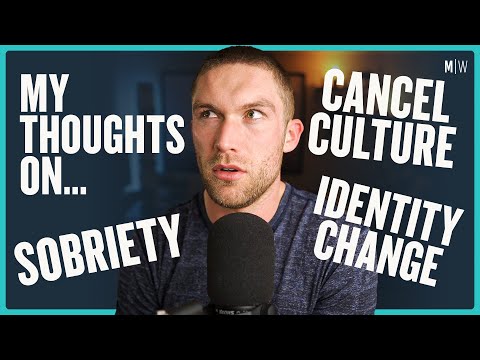
Cancel Culture, Sobriety & Identity Change | Modern Wisdom Podcast 313
Chris Williamson (guest), Sean Spooner (host), Narrator
In this episode of Modern Wisdom, featuring Chris Williamson and Sean Spooner, Cancel Culture, Sobriety & Identity Change | Modern Wisdom Podcast 313 explores from Party Boy To Philosopher: Sobriety, Identity And Online Outrage Chris Williamson reflects on his transformation from nightclub promoter and Love Island contestant into a more introspective, growth‑oriented thinker and podcaster. He explains how shedding old personas, doing deep self‑inquiry, and consuming ‘mindful’ content helped him update his identity and values.
From Party Boy To Philosopher: Sobriety, Identity And Online Outrage
Chris Williamson reflects on his transformation from nightclub promoter and Love Island contestant into a more introspective, growth‑oriented thinker and podcaster. He explains how shedding old personas, doing deep self‑inquiry, and consuming ‘mindful’ content helped him update his identity and values.
A major thread is his nuanced stance on alcohol: after years in nightlife he sees strategic sobriety as a massive competitive advantage for time, money, energy, and genuine confidence, while rejecting both binge culture and sobriety fundamentalism.
He and the host discuss post‑traumatic growth, how crises can catalyze radical life changes, and how to consciously design habits and priorities that align with who you actually want to become.
They also tackle cancel culture and online moral grandstanding, arguing that status envy and the pursuit of effortless moral superiority are wasting cultural energy that could be used for genuine progress.
Key Takeaways
Regularly audit and update your identity and values.
Williamson describes how living under multiple personas to be liked left him unsure who he really was; he argues you must periodically ask who you actually want to be and what current behaviors no longer align with that.
Get the full analysis with uListen AI
Use focused sobriety as a strategic performance tool.
He calls quitting alcohol the biggest competitive edge most people are leaving on the table, freeing up time, money, calories, energy, and emotional stability, and recommends planned sober blocks (e. ...
Get the full analysis with uListen AI
Expect growth to be uncomfortable and lifelong.
Deep introspection is likened to turning over dirty stones—mostly unpleasant at first—but he stresses identity change is a 60‑year project, not a six‑week ‘booty cleanse’, so discomfort is part of the process.
Get the full analysis with uListen AI
Crises can be powerful catalysts for deliberate change.
Both speakers describe traumatic moments (messy breakups, a parent’s Alzheimer’s diagnosis) that forced them to confront whether their lives matched their values, and then make immediate, irreversible shifts in work, lifestyle, and priorities.
Get the full analysis with uListen AI
Stop practicing what you don’t want to become.
Drawing on Jordan Peterson, Williamson notes you don’t choose whether you form habits, only which ones—every snoozed alarm or weekend binge is active practice at being the person you say you don’t want to be.
Get the full analysis with uListen AI
Cancel culture often reflects status games, not principled morality.
He argues many pile‑ons are driven by people who can’t win in meritocratic arenas, so they seek status by attacking status hierarchies and enjoying ‘moral’ superiority without doing anything actually moral.
Get the full analysis with uListen AI
Pursue what only you can uniquely contribute.
Williamson’s “weirdness imperative” says it’s a duty to give the world the specific combination of talents and perspectives only you possess; conforming to norms at the expense of that uniqueness leaves the world poorer.
Get the full analysis with uListen AI
Notable Quotes
“You can bury yourself under so many personas that you genuinely don't know who you are anymore.”
— Chris Williamson
“Stopping drinking is the biggest competitive advantage that everybody is leaving on the table except for sleep.”
— Chris Williamson
“You do not have the choice around whether or not you make a habit. You simply get to choose what habit you make.”
— Chris Williamson
“The reason that people love scandal and watching the take-down of people on the internet is because it allows them to feel a moral emotion without having to actually do anything moral.”
— Chris Williamson
“It is your duty to give the world what only you can give it, because only you can.”
— Chris Williamson
Questions Answered in This Episode
If you stripped away every role and persona you currently perform, who would be left and how different is that from who others think you are?
Chris Williamson reflects on his transformation from nightclub promoter and Love Island contestant into a more introspective, growth‑oriented thinker and podcaster. ...
Get the full analysis with uListen AI
What might six months of total sobriety reveal about your confidence, relationships, and priorities that you can’t see while drinking regularly?
A major thread is his nuanced stance on alcohol: after years in nightlife he sees strategic sobriety as a massive competitive advantage for time, money, energy, and genuine confidence, while rejecting both binge culture and sobriety fundamentalism.
Get the full analysis with uListen AI
Which painful or unsettling event in your life could you reinterpret as an opportunity for post‑traumatic growth rather than just damage?
He and the host discuss post‑traumatic growth, how crises can catalyze radical life changes, and how to consciously design habits and priorities that align with who you actually want to become.
Get the full analysis with uListen AI
In what ways are you ‘practicing’ becoming someone you don’t want to be through your daily micro‑habits and excuses?
They also tackle cancel culture and online moral grandstanding, arguing that status envy and the pursuit of effortless moral superiority are wasting cultural energy that could be used for genuine progress.
Get the full analysis with uListen AI
How has social media shaped your sense of morality—do you ever feel morally ‘good’ just by condemning others rather than doing anything constructive?
Get the full analysis with uListen AI
Transcript Preview
... the smartest minds on the planet have had most of their time taken up arguing about whether men are men and women are women over the last few years. Like, **** me, if that's not the way to send our civilization back a couple of generations in terms of the development of where it could be... You know I said about like, imagine the person that you could be if you went sober for six months? Like, imagine the civilization we could have if we stopped debating stupid **** for a decade.
Cool. So look, before we begin, this is going to be an absolute roller coaster because I like to pride myself, uh, with having a bit of a narrative when it comes to the guests I speak to. We kind of start in the early days, move through to what they're currently doing. It almost feels like there's a nice story there. But I've listened to 250, if not more, of your podcasts, so I feel like I know far too much to have a narrative here. So before we begin, just prior warning, this is going to jump from one topic to another really quite quickly. But where I want to begin is actually how I discovered you, because I discovered you entirely by accident in a place that I never thought I would discover the content that you produce, which is on a video about Love Island. There I was in our office back in Cardiff, typed into YouTube "behind the scenes Love Island" and there was this video that had just recently been published of you and two guys sat on a sofa talking about Love Island. And I clicked on it and truthfully I thought I'd stayed for about four minutes. I thought, "For fuck's sake, one of these- another one of these guys just trying to milk his attention." Um, but actually what I found was the complete opposite. So I clicked onto your channel, I think I watched a video of Don McGregor and a couple of others, and I realized that you were actually the exact opposite to every stereotype I had created about you in my mind, right? You are the ex Love Island club promoter with a six-pack and a blue tick. And I thought, "Fuck's sake." But actually, you're this incredibly, uh, curious person who uses your platform not to try and sell booty, but actually just to have conversations, right? And so in the midst of living in all of those stereotypes that I just described, when was it you realized that you weren't that guy?
That's a good question. I didn't quite have an existential crisis on Love Island, but it certainly catapulted me toward one. Um, I spent a lot of time with people who genuinely are the person I thought I was, these guys with endless charisma that are built to be party boys, and that's the role that I thought I was playing, but it didn't necessarily turn out that way, and when I was given this fatal dose of contrast, I had to live with them, right, for three weeks. And I just realized, right, that's not me. It was a fortunate time. Jordan Peterson and Joe Rogan and Sam Harris and Ben Shapiro, everybody was coalescing. It was about a year before Bill C-16, Jordan Peterson's thing, it's two years before Evergreen State College for Bret Weinstein, and there's just this whole slew of mindful content coming out. So I jumped into that and thankfully managed to pull my head back above the parapet, didn't drown, uh, in introspection and self-reflection, and then, yeah, here we are.
Install uListen to search the full transcript and get AI-powered insights
Get Full TranscriptGet more from every podcast
AI summaries, searchable transcripts, and fact-checking. Free forever.
Add to Chrome