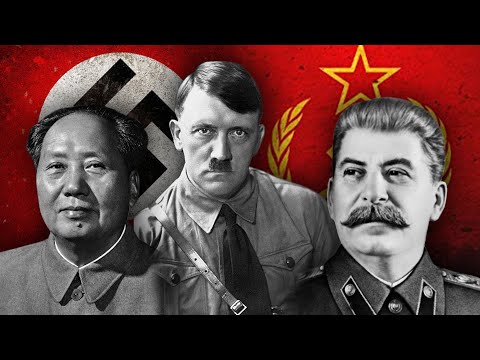
How To Be A Dictator | Frank Dikotter | Modern Wisdom Podcast 102
Chris Williamson (host), Frank Dikötter (guest), Narrator
In this episode of Modern Wisdom, featuring Chris Williamson and Frank Dikötter, How To Be A Dictator | Frank Dikotter | Modern Wisdom Podcast 102 explores inside the Modern Dictator’s Playbook: Power, Illusion, and Control Historian Frank Dikötter explains how 20th‑century dictators rose and stayed in power by combining naked terror with a carefully manufactured illusion of popular support. He argues that modern dictatorship exists in the context of an age of democracy, forcing autocrats to claim they embody the people’s will while eliminating all real opposition.
Inside the Modern Dictator’s Playbook: Power, Illusion, and Control
Historian Frank Dikötter explains how 20th‑century dictators rose and stayed in power by combining naked terror with a carefully manufactured illusion of popular support. He argues that modern dictatorship exists in the context of an age of democracy, forcing autocrats to claim they embody the people’s will while eliminating all real opposition.
Central to this is the cult of personality: dictators demand loyalty to themselves rather than to any ideology, using propaganda, parades, and staged enthusiasm to conceal fear and repression. Examples from Hitler, Stalin, Mao, Kim Il‑sung, Papa Doc, Mengistu and others show how opportunism, local culture, and family networks shape each regime.
Dikötter also contends that while dictatorships still exist, especially in China and North Korea, the long arc of the 20th century has strengthened democratic institutions and made full-blown dictatorship harder to establish and sustain today.
Key Takeaways
Modern dictators must claim democratic legitimacy while destroying real democracy.
Since sovereignty is now widely seen to rest with 'the people', dictators cannot just rule by divine right; they must stage elections, invoke the popular will, and insist that coercion reflects true consent.
Get the full analysis with uListen AI
The cult of personality is more important than ideology for dictators.
Dikötter argues that what ultimately matters is personal loyalty to the leader; doctrines like Marxism are bent, diluted, or discarded when they conflict with consolidating the leader’s absolute authority.
Get the full analysis with uListen AI
Dictators are opportunistic pragmatists who weaponize setbacks and culture.
From Hitler turning a failed coup and trial into nationwide publicity, to Mao and Kim Il‑sung radically reinterpreting Marxism to suit peasants or self‑reliance, successful dictators adapt ruthlessly to local conditions and events.
Get the full analysis with uListen AI
Fear inside the inner circle is as crucial as fear among the masses.
Because coup threats usually come from allies, dictators constantly test and purge their closest lieutenants, forcing them to lie and flatter so thoroughly that it becomes unclear who actually supports whom.
Get the full analysis with uListen AI
Public enthusiasm under dictatorship is often a survival performance, not genuine devotion.
Mass parades, choreographed mourning, and stage-managed cheering—like North Korean rallies or Haitian marches—are designed to display love for the leader, but participation is coerced and dissent can be deadly.
Get the full analysis with uListen AI
Succession is the Achilles’ heel of most dictatorships.
With no peaceful mechanism to step down, dictators rarely retire; some try to pass power to family members (e. ...
Get the full analysis with uListen AI
Despite current concerns, full-scale dictatorship is harder to build today.
Repeated historical failures and collapses have strengthened checks and balances in many countries; Dikötter suggests that while regimes like China’s are serious, they are increasingly out of step with global trends and 'running out of time.'
Get the full analysis with uListen AI
Notable Quotes
“A dictator must coerce his people into acclaiming him. He must create the illusion that people actually support him.”
— Frank Dikötter
“What matters is not loyalty to a creed, but loyalty to his person.”
— Frank Dikötter
“In a democracy, it’s not so much that people get voted in, they get voted out.”
— Frank Dikötter
“Dictators are great actors and people are great actors.”
— Frank Dikötter
“We tend to overestimate how many dictators there still are and what threats there might be to democracy.”
— Frank Dikötter
Questions Answered in This Episode
If ideology is largely instrumental for dictators, how should we rethink the way we teach and analyze regimes like Nazism or Maoism, which are often framed primarily as ideological movements?
Historian Frank Dikötter explains how 20th‑century dictators rose and stayed in power by combining naked terror with a carefully manufactured illusion of popular support. ...
Get the full analysis with uListen AI
What early warning signs in a contemporary democracy would most closely resemble the pre-dictatorial patterns Dikötter identifies (e.g., cult of personality, erosion of checks and balances)?
Central to this is the cult of personality: dictators demand loyalty to themselves rather than to any ideology, using propaganda, parades, and staged enthusiasm to conceal fear and repression. ...
Get the full analysis with uListen AI
How can outside observers reliably distinguish between genuine popular support and coerced, performative enthusiasm in authoritarian states today?
Dikötter also contends that while dictatorships still exist, especially in China and North Korea, the long arc of the 20th century has strengthened democratic institutions and made full-blown dictatorship harder to establish and sustain today.
Get the full analysis with uListen AI
Given the central role of new technologies in past dictatorships, how might modern tools like social media, AI surveillance, and big data change the dynamics of control and resistance?
Get the full analysis with uListen AI
Are there realistic pathways for deeply entrenched regimes like China’s or North Korea’s to transition to more open systems without violent collapse, and what would those transitions likely look like?
Get the full analysis with uListen AI
Transcript Preview
(wind blowing) Oh, hello there, friends. Today we're going to learn how to be a dictator. Well, kind of. Frank Dikotter is an author, and his most recent book, How To Be A Dictator, looks at eight of the most chillingly effective dictators of the 21st century. So we're gonna learn about Mussolini, Hitler, Stalin, Mao Zedong, Kim Il-sung, and a couple of leaders that I'm going to leave to Frank to pronounce. But yeah, the characteristics of a dictator are oddly similar whilst also being incredibly unique. As Frank identifies, one dictator from one regime at one particular period of time wouldn't work at all if he was to swap places with another. As always, if you've got any questions, comments or feedback, feel free to get at me @chriswillx wherever you follow me. But for now, please welcome Frank Dikotter. (electronic music plays) I am joined by Frank Dikotter at the beginning of his book tour. Frank, how are you? Welcome to the show.
Thank you. Thank you for having me.
It's an absolute pleasure to have you on. So today you're going to teach us how to be a dictator, right?
That's the title of the book. Not sure I can, um, really help you go all the way.
It's not a ... So it's not a personal development, self-development, how-to book?
It's, um, it's probably more of a history book that will tell you how to spot other potential dictators.
Got you. (laughs) Okay. Well, if there are any budding dictators in the, uh, in the audience, they, they might be a little disappointed. But for everyone else, those of us who are gonna be fascinated. So tell us w- why you wrote the book, first off.
Um, well, I'm a historian, and when you think about it, uh, you could pretty much summarise the 20th century, uh, in about a sentence. There is an attempt um, on the one hand, to separate out powers. In other words, to build up a civil society, um, to have checks and balances. That's a very difficult thing to do. Um, it's frail, it's fragile, um, but it's made great progress. And then on the other hand, there is an attempt to concentrate all power. In other words, to make sure that there is an authoritarian regime with one person who makes all the decisions. These are two very contradictory trends, um, and I spent most of my career really studying countries, um, where attempts have been made to concentrate powers in the hands of a dictator. Um, so that really was pr- what prompted me to write this book.
I suppose that when people think back to the 20th century that are, that, that will be some of the defining characteristics, right? So what is a dictator in its purest form?
Well, this may sound strange, but you have to think of a dictator, um, as developing against a background of democracy. In other words, to put it slightly differently, we live in an age of democracy. In fact, since the French and the American revolutions of the 18th century, we live more or less in an age of democracy. In other words, sovereignty with the collapse of old regimes and France, uh, in particular, uh, power is seen to reside no longer in some sort of, uh, heavenly mandate or in the divine rights, but in the people. And people select a leader through a process of elections. Of course, this is a, a very gradually unfolding age of democracy, but it means that there is a paradox with dictators. They seize power on the one hand, but they must also create the illusion somehow of popular support. And that's where the cult of personality comes in. That's one of the key focuses of the book. Uh, a dictator must, on the one hand, uh, use terror, you know, the, the secret police, military forces, uh, torturers, spies, the Praetorian Guard, concentration camps. But on the other hand, there must also be an attempt to build up what I call a cult of personality. In other words, a dictator must coerce his people into acclaiming him. He must create the illusion that people actually support him.
Install uListen to search the full transcript and get AI-powered insights
Get Full TranscriptGet more from every podcast
AI summaries, searchable transcripts, and fact-checking. Free forever.
Add to Chrome