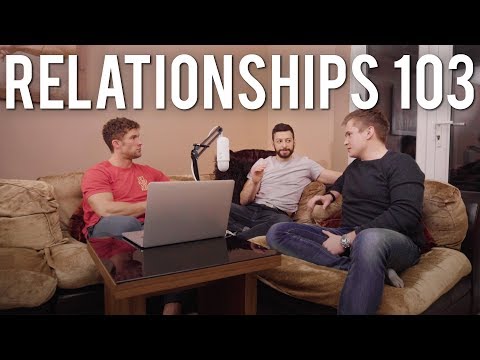
Cheating & How To Get Over Someone
Chris Williamson (host), Yusef (guest), Jonny (guest), Narrator, Narrator, Narrator, Narrator, Narrator
In this episode of Modern Wisdom, featuring Chris Williamson and Yusef, Cheating & How To Get Over Someone explores why People Cheat, When To Break Up, And Healing Afterward Chris Williamson, Johnny, and Yousaf explore the darker side of relationships: cheating, knowing when to end things, and how to get over someone. They unpack different motivations for infidelity, from seeking novelty to using cheating as a warped emotional hedge or escape hatch. The conversation then shifts to when and how to end a relationship respectfully, emphasizing honesty, decisiveness, and not wasting each other’s time. Finally, they discuss practical and psychological strategies for handling heartbreak, including cutting contact, leaning on friends, and learning to sit with painful emotions as an opportunity for growth.
Why People Cheat, When To Break Up, And Healing Afterward
Chris Williamson, Johnny, and Yousaf explore the darker side of relationships: cheating, knowing when to end things, and how to get over someone. They unpack different motivations for infidelity, from seeking novelty to using cheating as a warped emotional hedge or escape hatch. The conversation then shifts to when and how to end a relationship respectfully, emphasizing honesty, decisiveness, and not wasting each other’s time. Finally, they discuss practical and psychological strategies for handling heartbreak, including cutting contact, leaning on friends, and learning to sit with painful emotions as an opportunity for growth.
Key Takeaways
Cheating usually masks deeper issues rather than solving them.
The hosts describe cheating as either an emotional hedge (“I’ll hurt you before you hurt me”) or a way to prospect for a new partner, but in both cases it only papers over underlying misalignments and drives a deeper wedge into the relationship.
Get the full analysis with uListen AI
Novelty is not a fix; you’ll face similar problems in the next relationship.
They argue that many people wrongly believe a new partner will magically erase current issues, but most long-term relationships follow a similar ‘product life cycle’—after the sugar-coating of sex and novelty fades, the same core challenges resurface.
Get the full analysis with uListen AI
If you’re sure it’s over, end it quickly and clearly.
Staying in a dead relationship wastes both people’s time and blocks each from meeting someone better suited; their advice is to end it firmly, compassionately, and in person when the decision is clear, without dangling false hope.
Get the full analysis with uListen AI
Share honest reasons when breaking up to give the other person a chance to grow.
Rather than vague clichés, they recommend truthfully explaining what didn’t work (without cruelty), so the other person has meaningful ‘metrics’ to improve themselves for future relationships.
Get the full analysis with uListen AI
Trying to be ‘friends’ immediately after a serious breakup usually slows healing.
For longer relationships, they suggest cutting contact—blocking, deleting photos, returning belongings—for at least six months so you can accept the finality and stop re-triggering emotional loops.
Get the full analysis with uListen AI
How you frame a breakup largely determines how you recover from it.
Two people can experience the same loss, but one uses it as fuel for self-improvement and new opportunities while the other spirals in rumination; you can’t control the breakup, only your thoughts and actions afterward.
Get the full analysis with uListen AI
Sitting with pain, not fleeing from it, is key to truly moving on.
Drawing on meditation and endurance-sport analogies, they recommend noticing the specific sensations and emotions (tight chest, knot in stomach, racing thoughts) rather than labeling them as one overwhelming ‘unbearable’ feeling—this reduces suffering and helps the pain pass.
Get the full analysis with uListen AI
Notable Quotes
“If you know it’s not going anywhere and you’re certain of it, you should finish it right now.”
— Chris Williamson
“The longer you let it go on, the more painful it’s going to be when it finally ends.”
— Chris Williamson
“People think a relationship happens to them. When it stops working, they think, ‘I need a new one,’ rather than, ‘I should invest more to fix this one.’”
— Johnny
“By the time someone cheats, the relationship’s already broken. It’s a lagging alarm, not the problem.”
— Yousaf
“What better way to take ownership of something painful than to use it for growth?”
— Chris Williamson
Questions Answered in This Episode
How can someone objectively tell the difference between a fixable rough patch and a fundamentally misaligned relationship?
Chris Williamson, Johnny, and Yousaf explore the darker side of relationships: cheating, knowing when to end things, and how to get over someone. ...
Get the full analysis with uListen AI
Is there ever a realistic scenario where a relationship genuinely becomes stronger after infidelity, or is that just post-hoc rationalization?
Get the full analysis with uListen AI
How do attachment styles or childhood experiences influence whether someone cheats as ‘insurance’ versus seeking a new partner?
Get the full analysis with uListen AI
What practical steps can couples take before cheating ever happens to address waning sexual interest and value misalignment?
Get the full analysis with uListen AI
For people considering polyamory after reading or hearing about it, what psychological and logistical costs should they realistically factor in?
Get the full analysis with uListen AI
Transcript Preview
(wind blowing) Welcome back. It is Johnny and Yousaf from Propem Fitness. Hi, there.
Hello.
(laughs)
Yousaf, stop. You're always messing up the start of my podcast.
I'm always messing up the start. Today, we are going to talk about relationships 103. We have done two very successful episodes that I think have helped a lot of people, or at the very least, uh, helped us understand our own stance on relationships.
Had some good feedback on that one.
And it ended a relationship. Pardon?
It's ended a relationship.
It ended a relationship. So I got a message from someone-
Just being careful.
... I won't say who, um, I got a message from a girl on Twitter saying that after she watched one of the relationships podcasts, she decided to finish a relationship she'd been unhappy in for a long time and was now four weeks hence and feeling liberated and better for it. So congratulations.
Through the Instagram funnel.
Exactly. So today, we're actually, speaking of ending relationships, we're getting to the, the darker parts, I think, of, uh, of relationships. We're gonna talk about cheating, how to get over someone, and how to end relationships. It's quite a, um, quite a murky world-
Mm-hmm.
... this one, isn't it? We're down into the depths now, where all of the fish have got long teeth and they've got those little angle things that come off the top.
The globe and the teeth that come like this.
Yeah. And one of the worst things is that all of us have got really terrible-
Brilliant stories about us.
... um, brilliant/terrible, however you would like to look at it, indeed, yeah. So, um, yeah, I think we left off last time kind of trying to work out how to establish a good relationship and move it forward. But obviously, doesn't matter how well you try and start things off, inevitably relationships do sometimes go awry. And certainly in my experience, um, in relationships, the beginning of, for me, the first realization that there's something wrong is when sexual interest starts to wane. So for me, that's like the, th- the first warning signal. Like as soon as that starts, I'm like, "Ah, man." Like I'm not being interested, I'm not being challenged, I'm not being... I'm just not as bothered.
I would say when sexual interest starts to wane, that's the sugary coating to the relationship and it reveals any underlying malformations with the way that you've come together, and it makes it more obvious because there's no longer any sugarcoating to make that better. And there was two themes that you mentioned in 102 about when you meet someone and you have slightly misaligned values, and as you grow together, those trajectories will move further and further apart. And then when they get to breaking point, then there's a natural progression which is breaking up. And the other thing was about tolerating things, or what was the word you used? Like keeping someone right or-
Install uListen to search the full transcript and get AI-powered insights
Get Full TranscriptGet more from every podcast
AI summaries, searchable transcripts, and fact-checking. Free forever.
Add to Chrome