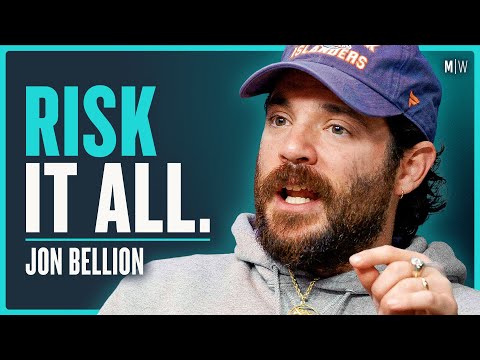
The Art of an Authentic Comeback - Jon Bellion
Chris Williamson (host), Jon Bellion (guest), Narrator
In this episode of Modern Wisdom, featuring Chris Williamson and Jon Bellion, The Art of an Authentic Comeback - Jon Bellion explores jon Bellion Redefines Success: Family, Faith, Art Over Fame Machine Jon Bellion discusses his six‑year hiatus from being a front‑facing artist, how he walked away from financially and spiritually exploitative touring and label deals, and then returned only once he had ownership, leverage, and a new sense of self. He explains why he now centers his life around family, faith, and day‑to‑day “mundane” joy rather than perpetual career growth, fame, or content output. The conversation unpacks his new album *Father Figure* as both a tribute to his own dad and a call to modern fathers to recognize their significance in their children’s lives. Throughout, Bellion and Williamson explore artistic integrity versus commercial utility, the mental cost of social media and relevance, and what it means to live a balanced, deeply ordinary but meaningful life after nearly burning out at the top.
Jon Bellion Redefines Success: Family, Faith, Art Over Fame Machine
Jon Bellion discusses his six‑year hiatus from being a front‑facing artist, how he walked away from financially and spiritually exploitative touring and label deals, and then returned only once he had ownership, leverage, and a new sense of self. He explains why he now centers his life around family, faith, and day‑to‑day “mundane” joy rather than perpetual career growth, fame, or content output. The conversation unpacks his new album *Father Figure* as both a tribute to his own dad and a call to modern fathers to recognize their significance in their children’s lives. Throughout, Bellion and Williamson explore artistic integrity versus commercial utility, the mental cost of social media and relevance, and what it means to live a balanced, deeply ordinary but meaningful life after nearly burning out at the top.
Key Takeaways
Owning your leverage lets you say no to bad deals.
Bellion only returned to touring and releasing music after understanding exactly how he’d been underpaid and exploited; once he renegotiated ownership and structure, two nights at Forest Hills Stadium paid more than all previous tours combined, proving that knowledge and leverage are as powerful as talent.
Get the full analysis with uListen AI
You can step away at the peak and come back bigger.
He walked away from being an artist for six years, accepting he might never release again and even considering working fast‑food—yet the hiatus grew his mystique, freed him from expectations, and his comeback album debuted bigger than anything prior, with sold‑out shows and a more grounded self.
Get the full analysis with uListen AI
Treat relevance as a vehicle for utility, not self‑worth.
Bellion fears irrelevance only to the extent that it stops his ideas helping others; he frames “relevance” as a tool to keep contributing to culture and other artists, not as a measure of his own value, which reduces pressure and ego around staying visible.
Get the full analysis with uListen AI
Separate your life from your work or success will hollow you out.
He emphasizes that music is what he does, not who he is—describing fame as a “prison” for many and arguing that if your identity and community are entirely built around work, any career wobble can shatter your sense of self; family, faith, and friendships must stay primary.
Get the full analysis with uListen AI
Constraints and instinct often create better art than perfectionism.
Bellion notes that great producers like Max Martin and Pharrell rely less on technical wizardry and more on taste and gut feeling about what feels good for humans; accepting limits (time, simple chords, pop form) and following instinct often yield more resonant work than endlessly chasing novelty or complexity.
Get the full analysis with uListen AI
Fatherhood is a cultural linchpin and an underrated responsibility.
He calls *Father Figure* an “espresso shot” for men tempted to run from their families, arguing that fathers shape generations before and after them, and that current culture has dangerously devalued the importance of stable, present dads despite overwhelming evidence of the harm of fatherlessness.
Get the full analysis with uListen AI
Ordinary, “average” life can be the real version of having it all.
Bellion repeatedly describes his deepest happiness as driving a minivan home from a stadium show, changing diapers the next morning, living under his means in a Kia instead of a supercar, and getting smoothies with his kids; he sees the mundane as the true luxury and warns that chasing 4th‑of‑July‑every‑day experiences destroys that joy.
Get the full analysis with uListen AI
Notable Quotes
“Being average is the greatest thing in my life.”
— Jon Bellion
“My relevance is only a vehicle for utility.”
— Jon Bellion
“We don't ask for the trauma, but it's our responsibility to process it.”
— Jon Bellion
“Wealth is what you have minus what you want, and by that definition some billionaires are broke.”
— Chris Williamson (quoting Morgan Housel)
“You can't white‑knuckle creativity and you can't control culture.”
— Jon Bellion
Questions Answered in This Episode
How can artists practically balance making work they love with creating commercially viable products that pay the bills without feeling like sellouts?
Jon Bellion discusses his six‑year hiatus from being a front‑facing artist, how he walked away from financially and spiritually exploitative touring and label deals, and then returned only once he had ownership, leverage, and a new sense of self. ...
Get the full analysis with uListen AI
What specific practices or boundaries has Jon put in place to protect his mental health from social media and the pressure to stay relevant?
Get the full analysis with uListen AI
For someone considering walking away from a seemingly ‘dream’ career, what signs should they look for that it’s time to step back versus push through?
Get the full analysis with uListen AI
How can men who didn’t grow up with strong fathers themselves begin to step into the kind of fatherhood Jon is advocating for?
Get the full analysis with uListen AI
If Bellion believes fame is largely a trap, what does he see as the healthiest way for fans to support artists they love without contributing to that prison?
Get the full analysis with uListen AI
Transcript Preview
New album.
Yep.
But you're not touring right now.
No.
Why?
(laughs) Right into it. Um, the touring thing is, uh, it's been a bit of a... I toured for a really long time before I walked away from artistry for about six or seven years. Um, I've given this, uh, this spiel a couple of times, but it's just like kind of figured out how the ins and outs worked of it. Understood what the toll on my life was opposed to what I was getting paid for what I was bringing in, and the business just didn't make sense of it. So I've walked away from that a long time ago and then was able to, this time around, just kind of like really do inventory on what's important to me and what I want to do. And we were able to do, uh, Forest Hills Stadium, just two nights, back to back, sold out in a couple hours (laughs) . And, uh, because the deal was right, and I understand the business more, I can just drive home in my minivan and collect my money and be paid more than I've ever done for touring combined in two nights.
Two nights made you more than entire tours previously?
Yeah. Yeah. Just 'cause the d- because... I don't regret any of it, but it just, it definitely put it in perspective, "Oh, oh, this is how they're killing you. This is how they're getting you on the backside." And-
Mm-hmm.
So, yeah. Yeah. So we ended up doing just two nights. 26,000 people showed up. It's crazy. Crazy. After s- ever- after six or seven years of being away, it was like moving, super emotional.
After such a long hiatus, were you surprised by the positive response to the album and the-
Absolutely.
... the Forest Hills shows?
Yeah. I think you, you, you build up, like, it's like Dre with Detox or, like, you build up this thing and then the expectation becomes so high that you'll never be able to whatever. So I think I was fortunate enough to just like disappear and go away and write for other people for a super long time.
Mm-hmm.
And I think that the pressure was off because I think the fans after a while were just like, "I actually just don't think he'll ever put out music again." So then when I was like, "I'm putting out music," they didn't have time for there to be this unrealistic expectation of like Step Brothers 2 (laughs) . Like, they didn't have to, it didn't have to be Dumb and Dumber 2. Like, it just was... And on top of that, I just like became a completely different person in seven years. Like, you're tapping in with a t- the sound was different. My approach was different. Everything was different. So I think people were like fascinated and interested, and it ended up being a blessing. It was a bigger debut, top six in the country, top 10 in the world, like. And I'm not even like fakely like, "Oh, it's b- it's been a shock of a blessing," and it's, and this time around, you don't get to do things twice.
Install uListen to search the full transcript and get AI-powered insights
Get Full TranscriptGet more from every podcast
AI summaries, searchable transcripts, and fact-checking. Free forever.
Add to Chrome