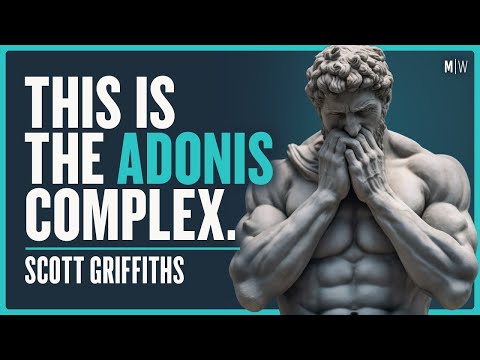
How Modern Media Makes Men Miserable With Their Bodies - Scott Griffiths
Scott Griffiths (guest), Chris Williamson (host)
In this episode of Modern Wisdom, featuring Scott Griffiths and Chris Williamson, How Modern Media Makes Men Miserable With Their Bodies - Scott Griffiths explores modern Media’s Muscular Ideal Is Quietly Breaking Men’s Self-Image Clinical psychologist Scott Griffiths and Chris Williamson explore how increasingly exaggerated male physiques in media and social platforms fuel body dissatisfaction and muscle dysmorphia in men.
Modern Media’s Muscular Ideal Is Quietly Breaking Men’s Self-Image
Clinical psychologist Scott Griffiths and Chris Williamson explore how increasingly exaggerated male physiques in media and social platforms fuel body dissatisfaction and muscle dysmorphia in men.
They define muscle dysmorphia, distinguish it from normal gym enthusiasm, and outline the psychological risk factors and co‑occurring conditions like anxiety and depression.
The conversation covers age of onset, shifting cultural standards for both men and women, the role of social and sexual status, and why the condition is uniquely socially rewarded despite being harmful.
They also examine related anxieties—height, penis size, gay male body norms, and productivity ‘grindset’ culture—framing them as versions of the same fragile, single‑source self‑worth problem.
Key Takeaways
Distinguish passion from pathology using preoccupation and impairment.
If training and dieting dominate your thoughts (preoccupation) and consistently damage relationships, social life, or work (impairment), it suggests muscle dysmorphia rather than just being ‘into the gym’.
Get the full analysis with uListen AI
Test yourself with the ‘miss a week of training’ thought experiment.
Imagining an enforced week off: irritation is normal; intense anxiety, shame, or feeling like the day is ‘wasted’ points toward a problematic dependence on training for self‑worth.
Get the full analysis with uListen AI
Avoid putting all your self‑esteem in one domain.
Basing your value solely on physique, work, or any single pursuit creates a fragile psychology; diversifying sources of meaning (relationships, hobbies, skills) makes you more resilient to setbacks.
Get the full analysis with uListen AI
Recognize that progress can become a ‘tyranny’ if it’s never enough.
When every achieved goal instantly spawns a new, higher target and satisfaction is always deferred to ‘the next version’ of you, that’s a sign the underlying insecurity isn’t being addressed.
Get the full analysis with uListen AI
Be skeptical of media and social feeds as a ‘normal body’ reference.
Modern representations of men (films, action figures, Instagram) are far more muscular and lean than average, making almost everyone look and feel comparatively inadequate if they use them as a benchmark.
Get the full analysis with uListen AI
Understand that women’s appearance preferences are milder than men assume.
Research shows men systematically overestimate how muscular women want them to be (and women underestimate how thin men want them), so many men are chasing a body ideal that isn’t actually required.
Get the full analysis with uListen AI
Watch for ‘ego‑syntonic’ disorders that feel like they’re helping.
Conditions like muscle dysmorphia and some eating disorders can feel beneficial—disciplined, virtuous, admired—making sufferers rationalize clear life costs as acceptable or even necessary.
Get the full analysis with uListen AI
Notable Quotes
“If we diagnosed muscle dysmorphia based on anyone who goes to the gym and is a bit critical of their appearance, we’d all have the disorder.”
— Scott Griffiths
“Any time you put all of your eggs in one basket for self‑esteem, you make yourself super vulnerable. That’s a fragile psychology.”
— Scott Griffiths
“Muscle dysmorphia is one of the very few mental disorders which has positive reinforcement—individually and socially.”
— Chris Williamson
“The underlying problem, insecurity or distortion, isn’t going to go away if you just get your training and diet on lock. That’s not the real issue.”
— Scott Griffiths
“How can you say you’re robust if you need this complex framework of daily activities just to buttress your sense of self?”
— Chris Williamson
Questions Answered in This Episode
How can someone practically start shifting their self‑worth away from appearance without losing their motivation to train and improve?
Clinical psychologist Scott Griffiths and Chris Williamson explore how increasingly exaggerated male physiques in media and social platforms fuel body dissatisfaction and muscle dysmorphia in men.
Get the full analysis with uListen AI
What early warning signs should coaches, partners, or friends look for to spot emerging muscle dysmorphia before it becomes severe?
They define muscle dysmorphia, distinguish it from normal gym enthusiasm, and outline the psychological risk factors and co‑occurring conditions like anxiety and depression.
Get the full analysis with uListen AI
How could social media platforms or fitness influencers realistically change their content to reduce body dissatisfaction while still remaining appealing?
The conversation covers age of onset, shifting cultural standards for both men and women, the role of social and sexual status, and why the condition is uniquely socially rewarded despite being harmful.
Get the full analysis with uListen AI
In therapy, how do you help a client who believes their extreme regimen is ‘working’ for them despite obvious life costs?
They also examine related anxieties—height, penis size, gay male body norms, and productivity ‘grindset’ culture—framing them as versions of the same fragile, single‑source self‑worth problem.
Get the full analysis with uListen AI
What would a healthier cultural standard for male attractiveness look like, and how could we gradually move toward it in mainstream media?
Get the full analysis with uListen AI
Transcript Preview
The representations of male bodies in a variety of media have become more disproportionate relative to the average male. Luke Skywalker, Han Solo from the original Star Wars, the action figurines look like normal regular guys. But then for the re-release, they look jacked. Magazines, TV, you see a similar pattern. Being a young guy growing up and thinking, "Oh, how am I supposed to look? Am I attractive? Am I hot?" And you look for a frame of reference. Let's say you see 100 male bodies in your media diet per week. The 100 that you see today in 2023, you come out on the negative end of those comparisons much more than you did 20, 30 years ago.
(wind blowing) What is muscle dysmorphia?
You can think of it like reverse anorexia. Sometimes it's been called bigrexia or musclerexia. If anorexia is a preoccupation with wanting to be thin and typically being successful at achieving that then muscle dysmorphia is the opposite direction. The preoccupation is wanting to be as muscular, as leanly muscular as possible and ex- obviously extends beyond just being a hobby or a pleasurable pastime. It, it causes real misery and impairment for the folks who have it.
What are the risk factors for this?
Risk factors include things like low self-esteem. Guys that have muscle dysmorphia, they almost always have pretty low self-regard and training, dieting, looking their best is one way to feel better about themselves. Often, it's, uh, one of the few, if not the only ways for them to achieve that. There is often a history of, of bullying. They may have been skinny when they were younger. Maybe they were fat and were teased and want to do something about it. They may have experienced some trauma, whether physical, sexual or similar. Often, they're perfectionists so they wanna do a job, uh, to their absolute best and they want it done right, which means that if they're gonna train, they want the best training regimen. If they're gonna diet, they want their diet to be on lock and they pore over research. They really can't stop. And often some obsessive compulsiveness as well. So folks who have muscle dysmorphia will tell us, "You know, when I, when I do something, I really do it. I go for it and get a little obsessive about it."
What does that tell us about why muscle dysmorphia comes about, that it's born out of... Uh, is it feelings of w- w- weakness, weakness and, and, um, maybe some learned helplessness perhaps in some regards and a few other bit... What, what does it tell us, all of those different risk factors you've just explained there about why muscle dysmorphia comes about?
Well, when your training is on lock and your diet's on point, it gives you a sense of control. It gives you a sense of control and it gives you a sense of achievement. And having, you know, having a feeling of control and, uh, achieving and having success in any pursuit is generally and broadly great. But in muscle dysmorphia, it becomes the singular focus. And generally speaking, when anything becomes a singular focus where it's the, the salve to a, a wound like low self-esteem, it doesn't often work out very favorably for the person affected.
Install uListen to search the full transcript and get AI-powered insights
Get Full TranscriptGet more from every podcast
AI summaries, searchable transcripts, and fact-checking. Free forever.
Add to Chrome