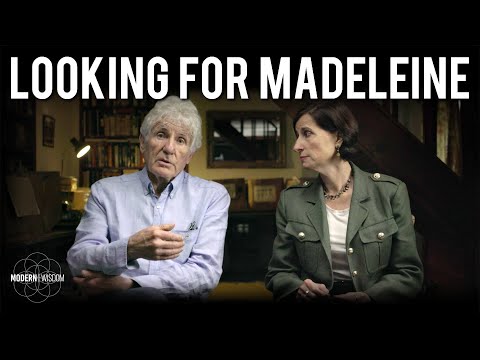
The Disappearance Of Madeleine McCann | Robbyn Swan & Anthony Summers
Chris Williamson (host), Robbyn Swan (guest), Anthony Summers (guest), Robbyn Swan (guest)
In this episode of Modern Wisdom, featuring Chris Williamson and Robbyn Swan, The Disappearance Of Madeleine McCann | Robbyn Swan & Anthony Summers explores inside Madeleine McCann: Bungled Investigation, Media Frenzy, Enduring Uncertainty, Real Pain Investigative journalists and authors Robbyn Swan and Anthony Summers discuss their work on the Madeleine McCann case, emphasizing the absence of hard evidence about what happened to her and the serious early failures in the investigation. They explain how crime-scene mishandling, poor coordination between Portuguese and British police, and cultural/legal differences shaped the inquiry and fueled suspicion toward the parents. The conversation details how sensationalist media coverage, leaks, and misused forensic dog alerts created a feedback loop of wild theories and libelous headlines. They stress that they found no indication the McCanns were involved, highlight plausible abduction scenarios, and reflect on the human cost of conspiracy thinking and public cruelty toward a grieving family.
Inside Madeleine McCann: Bungled Investigation, Media Frenzy, Enduring Uncertainty, Real Pain
Investigative journalists and authors Robbyn Swan and Anthony Summers discuss their work on the Madeleine McCann case, emphasizing the absence of hard evidence about what happened to her and the serious early failures in the investigation. They explain how crime-scene mishandling, poor coordination between Portuguese and British police, and cultural/legal differences shaped the inquiry and fueled suspicion toward the parents. The conversation details how sensationalist media coverage, leaks, and misused forensic dog alerts created a feedback loop of wild theories and libelous headlines. They stress that they found no indication the McCanns were involved, highlight plausible abduction scenarios, and reflect on the human cost of conspiracy thinking and public cruelty toward a grieving family.
Key Takeaways
The investigation began with a fatally compromised crime scene.
Relatives, friends, local police, and search dogs all moved through the apartment during the crucial ‘golden hour,’ destroying or contaminating potential evidence that might have clarified what happened to Madeleine early on.
Get the full analysis with uListen AI
Institutional friction between Portuguese and British police crippled cooperation.
Differing systems (prosecutorial vs evidence-led), resentments over perceived British ‘colonial’ arrogance, and views of Portuguese methods as antiquated led to mistrust, poor information sharing, and missed investigative opportunities.
Get the full analysis with uListen AI
The McCanns’ push for publicity was both rational and double‑edged.
Maximizing exposure of a missing child’s image is standard expert advice and can rescue children, yet the scale of online and media amplification in 2007 also created an uncontrollable avalanche of rumor, speculation, and global scrutiny.
Get the full analysis with uListen AI
Dog alerts and DNA were overinterpreted into a baseless theory of parental guilt.
Cadaver and blood dogs’ alerts were treated as near-conclusive, but subsequent forensic analysis found no identifiable blood and no DNA linking Madeleine or the family to a crime; independent experts called the supposed ‘forensics’ a “whole lot of nothing.”
Get the full analysis with uListen AI
There is still no hard evidence implicating the McCanns in wrongdoing.
After reviewing thousands of documents, interviews, and forensic reports, Swan and Summers state they found not “an iota” suggesting the parents’ involvement; timeline discrepancies were assessed as normal human memory variance under stress.
Get the full analysis with uListen AI
A planned abduction by a repeat intruder is a plausible scenario.
Patterns of prior break-ins involving a man entering holiday apartments with young British girls nearby, suspicious ‘charity collectors’ fixated on small children, and witnesses seeing a man surveilling and testing the McCann apartment area all point toward an organized abductor hypothesis.
Get the full analysis with uListen AI
Conspiracy culture erases compassion for real victims.
The guests argue that conspiracy theories and online trolling ignore the humanity of those involved, turning a family’s enduring trauma into entertainment and vilification, adding an “unforgivable” layer of suffering for the McCanns.
Get the full analysis with uListen AI
Notable Quotes
“You are entitled to your own opinion, but you are not entitled to your own facts.”
— Robbyn Swan
“To all intents and purposes, she completely vanished. There is no evidence.”
— Anthony Summers
“In all the work we've done on this case, we never found an iota of an indication that the McCanns had in any way been guiltily involved in their daughter's disappearance.”
— Anthony Summers
“Publicity does help… The internet is a wonderful and enormous milk carton in that sense. But it can turn around and bite you back.”
— Robbyn Swan
“If, as the evidence would suggest, the McCanns aren't implicated… the extra degree of suffering that the McCanns have been put through is almost unfathomable.”
— Chris Williamson
Questions Answered in This Episode
Given what is now known, what specific investigative steps in the first 24 hours could realistically have changed the outcome of the case?
Investigative journalists and authors Robbyn Swan and Anthony Summers discuss their work on the Madeleine McCann case, emphasizing the absence of hard evidence about what happened to her and the serious early failures in the investigation. ...
Get the full analysis with uListen AI
How should police and families balance the clear benefits of massive publicity with the almost inevitable spread of conspiracy theories and misinformation?
Get the full analysis with uListen AI
What reforms—legal, procedural, or technological—would most help prevent another high-profile missing child case from being similarly derailed by media and online speculation?
Get the full analysis with uListen AI
To what extent should journalists self-limit when reporting leaked, partial, or ambiguous forensic information in emotionally charged cases like this?
Get the full analysis with uListen AI
If a planned abduction by a repeat intruder is the most plausible theory, what does that imply about systemic failures in how earlier incidents with other children were handled?
Get the full analysis with uListen AI
Transcript Preview
(wind blowing) Ladies and gentlemen, welcome back. I am joined by Robin Swan and Anthony Summers. You may recognize them from the most recent Netflix series on The Disappearance of Madeleine McCann. Guys, welcome to the show.
Thank you very much.
Thank you.
So, you are investigative journalists, but you're also married, and you've been working together for about 30 years. Is that right?
That's, I think, what my wife would say. Um-
(laughs)
One of us works.
Right.
... but I've never really, I've never really been fond of that description, investigative journalist.
Okay.
When asked why, um, I suppose I would say, uh, asked to nail it down, am I a bank manager or an engine driver or an investigative journalist, I would go for the third.
(laughs)
Um, but I always think that it's a misnomer in the sense that everyone in this business, i- in the journalist business, should, in theory, try to dig beyond the grass that you can see and find out what's underneath.
I totally get that.
And, and yet that is what we do, um, that, and that's what we've done in our career together.
Yes. So, having a look at your back catalog of books, um, 9/11, Pearl Harbor, Richard Nixon, and Madeleine McCann, there's some, uh, high pressure topics in there. Do you ever find the, uh, difficulty and the emotion and the pressure of writing with quite inflammatory topics ever... do, do, do the lines kind of get crossed with the relationship at all? Does that ever kind of come in or are you able to kind of mediate those pretty effectively?
Uh, as a thoroughly cowed, uh, husband and co-author, I will leave Robin to answer that.
(laughs)
I, I... Ser- on a serious note, always want to interject a serious note here, um, you know, frankly, uh, we're, we're incredibly lucky to be able to do the kind of work we do. You know, what a privilege to, to be able to explore, you know, some of the most important cultural and historical moments of the last century, and try to bring your own little bit of extra information into that, um, to try to write that story well. Sure, there's, there's pressure, um, and, and we don't always agree, but I think the reason we have found that we're able to work together well is that we have... sometimes we have slightly different strengths, but we're both incredibly relentless, uh, when it comes to the digging. And, and, you know, the oth- w- we really are, you know, if one isn't pushing, the other one is. A- and I think so, so we have a real simpatico in that way. But also, I think each of us respects the other's, uh, the other's talent. You know, um, Tony has an extraordinary ability to make the complex simple, uh, you know, e- to, to drive what we call a coach and horses through a, you know, a knotty problem and make it possible for readers to understand something in a really, you know, basic eh- but interesting way. And, and I think, you know, I'm pretty good at, at, you know, getting the big picture of things, and, and, and, you know, delivering, you know, to the, to the project all the nuts and bolts so that we can do that, so that we can have that material and, to, to, to base the story on.
Install uListen to search the full transcript and get AI-powered insights
Get Full TranscriptGet more from every podcast
AI summaries, searchable transcripts, and fact-checking. Free forever.
Add to Chrome