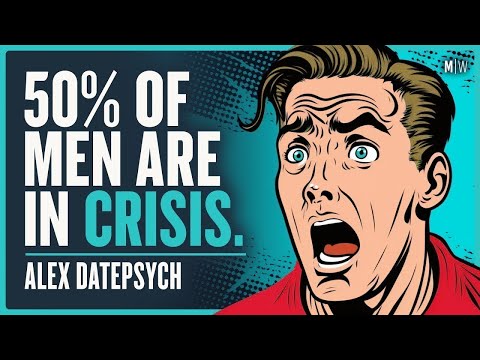
The Painful Truth About Modern Dating Culture - Alex DatePsych
Chris Williamson (host), Alex DatePsych (guest)
In this episode of Modern Wisdom, featuring Chris Williamson and Alex DatePsych, The Painful Truth About Modern Dating Culture - Alex DatePsych explores risk, Rejection, and Reality: The Psychology Reshaping Modern Dating Culture Chris Williamson and psychologist Alex DatePsych unpack how rising risk aversion, distorted beliefs about attraction, and online narratives like the red/black pill are warping modern dating behavior. They discuss why many young men no longer approach women despite high success rates when they do, and how internal locus of control and basic social competence matter more than looks alone. The conversation covers women’s actual preferences (intellect, compatibility, competence, non‑neediness) versus what men, especially incels, think matters (looks, money, status), alongside data on body count, libido gaps, dating apps, age gaps, and marriage/divorce. Overall, they argue the situation is less catastrophic than online discourse suggests, but deeply shaped by misconceptions, cultural taboos, and a mismatch between evolved psychology and modern norms.
Risk, Rejection, and Reality: The Psychology Reshaping Modern Dating Culture
Chris Williamson and psychologist Alex DatePsych unpack how rising risk aversion, distorted beliefs about attraction, and online narratives like the red/black pill are warping modern dating behavior. They discuss why many young men no longer approach women despite high success rates when they do, and how internal locus of control and basic social competence matter more than looks alone. The conversation covers women’s actual preferences (intellect, compatibility, competence, non‑neediness) versus what men, especially incels, think matters (looks, money, status), alongside data on body count, libido gaps, dating apps, age gaps, and marriage/divorce. Overall, they argue the situation is less catastrophic than online discourse suggests, but deeply shaped by misconceptions, cultural taboos, and a mismatch between evolved psychology and modern norms.
Key Takeaways
Approach more: most men don’t, and those who do succeed surprisingly often.
Alex’s data show about 50% of men aged 18–30 didn’t approach a woman in the last year, yet roughly 70% of those who did approach obtained a date, phone number, or romantic connection, indicating huge upside for men willing to face rejection.
Get the full analysis with uListen AI
Cultivate an internal locus of control to improve your dating outcomes.
People who believe they can influence their romantic life (‘I make things happen’) report fewer dating difficulties, while incel communities show a heavily externalized locus of control, which correlates with stagnation and hopelessness.
Get the full analysis with uListen AI
Stop over‑indexing on looks; women heavily value intellect, competence, and connection.
Women in Alex’s surveys report major struggles finding men they’re intellectually attracted to, and large samples show incels vastly overestimate looks and money while underestimating intelligence, kindness, humor, and being interesting and attentive.
Get the full analysis with uListen AI
Avoid neediness and clinginess, especially early on.
Across red‑flag categories, clinginess/neediness emerged as women’s top turn‑off, likely because it signals low status, lack of independence, emotional instability, and a man who has no other romantic options.
Get the full analysis with uListen AI
Competence and moderate fitness beat extreme aesthetics for long‑term appeal.
Signals of mastery (education, career success, sports, creative skill) and a reasonably fit, non‑extreme physique are strongly attractive; women often say they prefer ‘dad bod’ or moderate leanness over stage‑lean bodybuilding bodies, partly due to comfort, jealousy, and infidelity concerns.
Get the full analysis with uListen AI
Recognize the libido gap and differing sexual strategies between men and women.
Robust evidence shows men have higher average libido, greater desire for variety, and more openness to casual sex; women’s sexual fantasies and behaviors are more long‑term oriented, which helps explain mismatched expectations in modern hookup culture.
Get the full analysis with uListen AI
Question extreme online narratives about marriage, divorce, and ‘the black pill.’
Red‑pill claims that marriage is uniformly a bad deal for men ignore large differences by behavior and demographics (infidelity, substance abuse, education level); many divorces are mutually desired, and women initiating divorce doesn’t automatically make them ‘evil’ or solely at fault.
Get the full analysis with uListen AI
Notable Quotes
“As far as the whole PUA thing goes, a lot of it just comes down to approaching women, and it does seem to work.”
— Alex DatePsych
“Most men aren’t out there approaching a hundred women. And that kind of nervousness persists, even if an individual is very, very confident to begin with.”
— Alex DatePsych
“Incels significantly overestimate the importance of physical attractiveness and financial prospects to women, and underestimate the importance of intelligence, kindness, and humor.”
— Chris Williamson (summarizing William Costello’s research)
“It’s better to understand looks as a threshold, like a bar that must be met, rather than something where at increasing levels it just keeps returning exponential benefits.”
— Alex DatePsych
“Most people aren’t extreme red‑pillers or extreme feminists. They want a guy who’s a normal guy, basically.”
— Alex DatePsych
Questions Answered in This Episode
How can risk‑averse or socially anxious men practically implement ‘exposure therapy’ to approaching without burning out or becoming creepy?
Chris Williamson and psychologist Alex DatePsych unpack how rising risk aversion, distorted beliefs about attraction, and online narratives like the red/black pill are warping modern dating behavior. ...
Get the full analysis with uListen AI
What concrete behaviors distinguish ‘intellectual compatibility’ from merely having a high IQ in women’s eyes?
Get the full analysis with uListen AI
Given the libido gap, how should couples realistically negotiate mismatched sexual desire without resentment or shame?
Get the full analysis with uListen AI
How should young men reconcile online black‑pill/red‑pill claims with the more nuanced data Alex presents about looks, status, and success in dating?
Get the full analysis with uListen AI
If serial monogamy is our evolved pattern, what would a healthier cultural script around relationships, breakups, and remarriage actually look like in practice?
Get the full analysis with uListen AI
Transcript Preview
What's going on with risk aversion and men not approaching women?
Sure. So risk aversion refers to a personality trait or disposition where individuals are basically more accepting or more willing to take risks. So high-risk aversion would be individuals who are, uh, less willing to take risks. And a big risk for men, at least a perceived risk, is of course approaching women. So recently, I conducted a survey, and I used a measure of risk aversion. And I asked about approach behavior, basically approaching for dates, approaching on the street, approaching in a bar, talking to someone at work or in class. And yeah, there's an inverse correlation, or I should say, a positive correlation with that risk aversion and willingness to approach, right? That people who are more risk-averse, much less willing to approach, they tend to have more fears as well, as far as the potential consequences of- of approaching a woman, asking for a date.
What did they say were the primary fears that these guys were concerned about?
Sure. So some of the primary fears are basically social rejection and social consequences. There were some differences where individuals higher in risk aversion might fear more legal consequences as well, like, uh, some kind of report to HR or the police or even something like that. But it tends to be mostly kind of a fear of, like, loss of- of reputation.
Yeah. Well, I suppose, you know, we have a basis for this, ancestrally, that if you were rebuffed by one of the women in your tribe, that that probably wouldn't do much for your credibility with the rest of the women in the tribe, and that your mates might take the piss out of you. Uh, so I- I certainly understand from that- that angle. For the women as well that are listening, the all-consuming fear, as a guy, of seeing a girl across the room and looking at her and thinking, "I should go and say hello, because I think that she's nice," is like (laughs) fucking mortal. It's reality bending. It's so strange. It's such a bizarre... And again, I'm sure that there's loads of guys listening that, "I don't know what you're talking about. I can just go up and talk to anybody." Uh, but I think even the average, normal risk-aversion man has this pretty sort of guttural sense of trepidation before they go and do it.
Absolutely, yeah. And yeah, the most confident man, it doesn't matter, they're gonna be a little bit nervous, at least, approaching a woman. And I think that's something in pickup artist communities that they've kind of caught onto as almost kind of an exposure therapy to that, which, you know, exposure therapy, when people have phobias, they're exposed gradually to whatever the stimulus is that reduces that fear. And so maybe they've kind of caught on, like, approach a hundred women, and you will be less afraid. Yeah, that's what it is. But of course, most men aren't out there approaching a hundred women. And that kind of nervousness, it persists, even if an individual is very, very confident to begin with.
Install uListen to search the full transcript and get AI-powered insights
Get Full TranscriptGet more from every podcast
AI summaries, searchable transcripts, and fact-checking. Free forever.
Add to Chrome