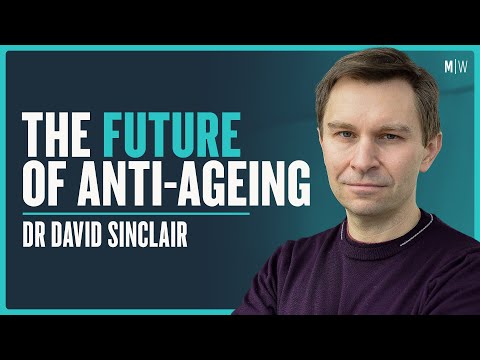
PROFESSOR DAVID SINCLAIR | Can Humans Live For 1000 Years?
Chris Williamson (host), David Sinclair (guest), Narrator
In this episode of Modern Wisdom, featuring Chris Williamson and David Sinclair, PROFESSOR DAVID SINCLAIR | Can Humans Live For 1000 Years? explores harvard geneticist explains how we might pause, reverse human aging David Sinclair, a Harvard professor of genetics, outlines current science on why we age and how longevity research is moving from theory into practical interventions.
Harvard geneticist explains how we might pause, reverse human aging
David Sinclair, a Harvard professor of genetics, outlines current science on why we age and how longevity research is moving from theory into practical interventions.
He explains three core approaches: activating the body’s natural longevity pathways, removing senescent “zombie” cells, and partially reprogramming cells to a more youthful state—already shown to restore vision and reverse cellular age in mice.
Sinclair discusses lifestyle levers available now (fasting, exercise, certain drugs and supplements), the ethics of gene editing and engineered babies, and why he believes aging should be treated as a disease.
He argues that extending healthspan by even 10 years could save trillions globally, reshape economies, and potentially pave the way for humans to live dramatically longer lives, perhaps even centuries.
Key Takeaways
Treat aging as a modifiable process, not an inevitable decline.
Sinclair argues that aging is driven largely by information loss in the epigenome (the “aging clock”), and emerging science shows this clock can be slowed—and in animals, even reset—rather than passively endured.
Get the full analysis with uListen AI
Use intermittent fasting and reduced calorie intake to activate longevity pathways.
Across species, eating less and fasting boost NAD and activate key longevity pathways (sirtuins, AMPK, mTOR), mimicking a “threat” state that makes the body hunker down, repair, and extend healthspan.
Get the full analysis with uListen AI
Prioritize high‑intensity, hormetic exercise over only steady‑state movement.
Short bursts of intense effort (high‑intensity interval training) appear to more strongly engage the body’s defense and repair systems than constant low‑intensity exercise by stressing the system just enough to provoke adaptation.
Get the full analysis with uListen AI
Consider metabolic health (especially glucose and lipids) as central to aging.
Sinclair notes that markers like elevated glucose and lipids heavily influence biological age; maintaining metabolic health through diet, fasting, and potentially drugs like metformin is a key practical longevity strategy.
Get the full analysis with uListen AI
Start longevity habits early in adulthood for the biggest payoff.
Animal data suggest interventions begun soon after full development (mid‑20s in human terms) roughly double the benefits versus starting later in life, because the aging clock is ticking from before birth onward.
Get the full analysis with uListen AI
Expect future therapies that periodically “rejuvenate” the body.
Sinclair describes proof‑of‑concept work where gene therapies plus a controllable trigger (like doxycycline) can reverse aging in specific tissues; in principle, this could lead to periodic whole‑body “reset” treatments.
Get the full analysis with uListen AI
Extending healthspan could be one of the biggest economic levers available.
Adding even 10 healthy, disease‑free years to life on a population level could save tens of trillions of dollars, reduce the burden of chronic disease, and free resources to tackle problems like climate change and poverty.
Get the full analysis with uListen AI
Notable Quotes
“We understand how to slow down aging, maybe even reverse it. It’s no longer an if, it’s just a when.”
— David Sinclair
“We’ve discovered that you can reprogram the body and reset the body’s clock to be young again.”
— David Sinclair
“The longer you live, the longer you get to live.”
— David Sinclair
“If we can solve people’s health and make them more productive for another 10 years, that alone could save trillions of dollars every year.”
— David Sinclair
“Looking backwards doesn’t tell you the future when it comes to technology. Nobody looking at the Wright brothers could’ve predicted the moon landing.”
— David Sinclair
Questions Answered in This Episode
If partial cellular reprogramming works safely in humans, how should society decide who gets access first and on what terms?
David Sinclair, a Harvard professor of genetics, outlines current science on why we age and how longevity research is moving from theory into practical interventions.
Get the full analysis with uListen AI
Where should we draw the ethical line between preventing disease via gene editing and enhancing traits like intelligence, height, or lifespan?
He explains three core approaches: activating the body’s natural longevity pathways, removing senescent “zombie” cells, and partially reprogramming cells to a more youthful state—already shown to restore vision and reverse cellular age in mice.
Get the full analysis with uListen AI
How might pensions, careers, and education need to change if 70 becomes “middle‑aged” and healthspan routinely extends by 10–20 years?
Sinclair discusses lifestyle levers available now (fasting, exercise, certain drugs and supplements), the ethics of gene editing and engineered babies, and why he believes aging should be treated as a disease.
Get the full analysis with uListen AI
What risks or trade‑offs might emerge if we strongly prioritize longevity (e.g., cancer risk, inequality, psychological effects of very long lives)?
He argues that extending healthspan by even 10 years could save trillions globally, reshape economies, and potentially pave the way for humans to live dramatically longer lives, perhaps even centuries.
Get the full analysis with uListen AI
How can non‑scientists critically evaluate longevity products and claims today, given that some tools are promising but the field is still evolving?
Get the full analysis with uListen AI
Transcript Preview
What's happening? I'm coming to you from the beautiful Harvard Medical School in Boston. I arrived last night. I've had the requisite amount of caffeine, and I'm about to go and sit down with David Sinclair, who is a biologist and a professor of genetics here at Harvard Medical School. You may have recognized him from the Joe Rogan podcast he did a couple of months ago. That was interesting and exciting to say the least. Introduced me to a lot of topics that I didn't know about before and I'm super excited to follow up on some of them today. So yeah, stay tuned. Professor David Sinclair of Harvard Medical School. How are you today?
I'm doing really well, Chris.
I'm very, very glad to be here. I'm, uh, off to see your friends at InsideTracker later on. Uh, I'm gonna go straight over there and have a sit down with them and go through my, uh, my results. See what, see what they've got to say.
Oh, really? You've had your blood drawn?
I have indeed, yeah.
Uh-huh. That'll be exciting.
I went to Quest Diagnostics, uh, a week and a bit ago in California, um, and I went through my results with Stacy. If it's not, if she's not called Stacy, I'm gonna be in so much bother. Um, with one of the analysts at InsideTracker, and they took me through all of my stuff earlier on actually, which was super interesting.
So are you, uh, older or younger than your actual age?
I am 31 in real years, and the inside of my body's 36-
Oh, wow. Yeah.
... unfortunately. Um, that is because glucose being out of range-
Mm-hmm.
... weighs very heavily. Um, and the only thing I've got is slightly out of range glucose, and my lipids are a tiny little bit out as well. So I need to eat soluble fiber.
Yeah. You'll, you'll enjoy that. Um... (laughs)
(laughs) Soluble fiber, when I was looking at the list of potential groups of foods, it was just 20 different types of beans.
(laughs)
And I was like, "I have-"
Oh, no.
"... I have no types of beans in my diet." Like, are baked beans, like does that count as a bean? Uh, I-
I'm sure it does. It has the desired effect, I bet.
It does indeed. So the first question I've got for you, what, what do you do here? I know we're in Harvard Medical School. (laughs) I haven't got the first idea about what it is that you do.
Well, so I, I come in every day to my lab. Uh, there's about 30 to 35 people in, in my lab. Um, and I instruct them to discover really cool stuff. And that's basically my job. Uh, and they'll come to me and they'll say, "I've got an idea to discover something." And I'll say, "That sounds good, go do it." Or, "That sounds really boring, don't bother doing it. And by the way, how much is that gonna cost?" And they'll tell me, "It's gonna cost about $2 million."
Install uListen to search the full transcript and get AI-powered insights
Get Full TranscriptGet more from every podcast
AI summaries, searchable transcripts, and fact-checking. Free forever.
Add to Chrome