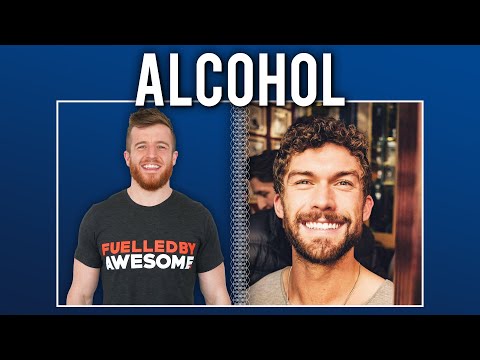
Chris Williamson | Ben Coomber Radio: Alcohol, Friend Or Foe? | Modern Wisdom Podcast 191
Chris Williamson (guest), Ben Coomber (host)
In this episode of Modern Wisdom, featuring Chris Williamson and Ben Coomber, Chris Williamson | Ben Coomber Radio: Alcohol, Friend Or Foe? | Modern Wisdom Podcast 191 explores rethinking Alcohol: Sobriety, Self-Development, and True Personal Freedom Chris Williamson joins Ben Coomber to explore why most people’s drinking is habituated, socially conditioned behavior rather than a conscious choice, and how elective sobriety can be a powerful productivity and self-development tool even for non‑alcoholics.
Rethinking Alcohol: Sobriety, Self-Development, and True Personal Freedom
Chris Williamson joins Ben Coomber to explore why most people’s drinking is habituated, socially conditioned behavior rather than a conscious choice, and how elective sobriety can be a powerful productivity and self-development tool even for non‑alcoholics.
They unpack the stigma around not drinking, the social and identity costs of going sober, and how changing your relationship with alcohol often forces you to reassess your friendships, coping mechanisms, and sense of self.
The conversation broadens into discipline, routines, and the idea that structured self-improvement can ultimately create genuine spontaneity and presence rather than rigid perfectionism.
Throughout, they argue that a focused period of sobriety acts like a “red pill” for seeing your life, habits, and environment clearly—and that confronting the discomfort around this is central to real growth.
Key Takeaways
Most drinking is socially inherited, not consciously chosen.
Williamson argues that many people drink simply because “other people did and then they started too,” and years later are taking a powerful drug regularly without ever truly deciding if it serves them.
Get the full analysis with uListen AI
Sobriety has a branding problem that deters casual drinkers from stopping.
In current culture, not drinking often signals to others that you’re an alcoholic or ‘have a problem,’ which creates social friction and embarrassment for people who simply want to be sober for health or performance reasons.
Get the full analysis with uListen AI
Your tribe can sabotage or support your behavior change.
Because groups enforce shared expectations, friends may mock or resist your decision to stop drinking, especially if your improvement highlights their own bad habits; consciously choosing friends who want the best for you becomes crucial.
Get the full analysis with uListen AI
Use bright-line rules to control or eliminate drinking.
Setting firm, non-negotiable limits (e. ...
Get the full analysis with uListen AI
A period of sobriety can massively boost confidence in change.
Successfully going sober in a world that constantly normalizes alcohol proves to you that difficult behavior change is possible, making other shifts—diet, sleep, exercise, work habits—feel more achievable.
Get the full analysis with uListen AI
Relying on alcohol blocks development of genuine skills and resilience.
If you always drink to relax, socialize, flirt, or sleep, you never fully learn the underlying capabilities (emotional regulation, confidence, communication), so removing alcohol can force you to build real, internal strengths.
Get the full analysis with uListen AI
Long-term, weekend drinking quietly erodes life progress and health.
They highlight the asymmetry where each extra drink gives diminishing enjoyment but exponentially increases hangover and health costs, and note data showing any level of alcohol increases disease risk and reduces healthy life-years.
Get the full analysis with uListen AI
Notable Quotes
“Alcohol is the only drug where if you don’t do it, people assume you have a problem.”
— Chris Williamson
“Most people’s alcohol use is habituated rather than chosen.”
— Chris Williamson
“If you can go sober for six months in a world that drinks, what else can’t you do?”
— Chris Williamson
“If the only way you can bear to be around your friends is by being drunk, then you definitely need better friends.”
— Chris Williamson
“Without vulnerability, we don’t grow.”
— Ben Coomber
Questions Answered in This Episode
If I stopped drinking for six months, how would my relationships, energy, and self-image realistically change—and what about that possibility makes me most uncomfortable?
Chris Williamson joins Ben Coomber to explore why most people’s drinking is habituated, socially conditioned behavior rather than a conscious choice, and how elective sobriety can be a powerful productivity and self-development tool even for non‑alcoholics.
Get the full analysis with uListen AI
To what extent are my drinking habits a genuine choice versus a default response to social pressure, boredom, or stress?
They unpack the stigma around not drinking, the social and identity costs of going sober, and how changing your relationship with alcohol often forces you to reassess your friendships, coping mechanisms, and sense of self.
Get the full analysis with uListen AI
Which friendships or social environments only feel tolerable—or fun—when alcohol is involved, and what does that reveal about their long-term place in my life?
The conversation broadens into discipline, routines, and the idea that structured self-improvement can ultimately create genuine spontaneity and presence rather than rigid perfectionism.
Get the full analysis with uListen AI
What emotional states or skills (relaxation, confidence, intimacy, sleep) do I currently outsource to alcohol that I could instead learn to generate internally?
Throughout, they argue that a focused period of sobriety acts like a “red pill” for seeing your life, habits, and environment clearly—and that confronting the discomfort around this is central to real growth.
Get the full analysis with uListen AI
How might adopting bright-line rules or a temporary ascetic experiment with alcohol reshape my beliefs about discipline, spontaneity, and what I actually enjoy?
Get the full analysis with uListen AI
Transcript Preview
The first problem with people going sober is that alcohol is the only drug where if you don't do it, people assume you have a problem. There is a branding issue with sobriety in that the only people that don't drink are presumed to be closet alcoholics. And I get messages from people who haven't seen the history of my content, and then they'll just come upon a post, and it says, "I'm 10 months sober, I'm 18 months sober, I'm 20 months sober," whatever it might be. "Congratulations so much. I have to say, I loved AA. I thought that the support there was great." And I'm like, "I- I- I feel like an imposter." Like, "Uh, thank you for congratulating me, but being honest, I've never had a problem with substances." "Oh, okay. Well, why? What's the reason?" "Oh, it's just a productivity tool, the same way as people decide to focus on their sleep, or their nutrition, or their training, or whatever it is. I- It's just another tool."
Hey, everyone. Ben Cooper Radio. What is happening? As is the theme with a lot of these podcasts during this lockdown period, we're kind of ignoring it. Like, it's just happening, but just, you know, just pretend it's not there. Let's just- let's just look to move forward. Let's look to improve areas of our lives that we can. Let's look to muse, and we will be doing that today. Uh, there's not many guests that res- returned to the show. There's probably been about six over the years that have returned to the show. But I was watching, uh, Chris. I was watching his Instagram stories the other day, and he was talking about a topic I've been thinking about a- a lot about recently, and it's been covered in the news quite a bit, 'cause obviously people are locked at home. And what's now happening is our str- uh, our kind of habits, our beliefs, our environments, they've kind of compounded. They've intensified 'cause we're at home. And whether that's a positive or a negative thing, it's either become more positive or more negative. And I thought the topic of alcohol and our relationship with it was something that I wanted to go further down the rabbit hole with, and on the first episode of this show with Chris, uh, we talked about it. We only really spent sort of about 10 minutes on it. And having watched, uh, Chris's Instagram story ... No, uh, it was just a post on, uh, Instagram, I think. I was like, "Yes, let's go there. Chris, get back on the show." So, Chris Williamson, welcome back to the show.
Great honor, mate. Doubled up.
Boom, boom.
Two episodes. What can I say?
(laughs)
Yeah, man. Absolute pleasure to be back on, and, uh, looking forwards to talking about something that I spend a lot of time thinking about. So, yeah, let's get into it.
Install uListen to search the full transcript and get AI-powered insights
Get Full TranscriptGet more from every podcast
AI summaries, searchable transcripts, and fact-checking. Free forever.
Add to Chrome