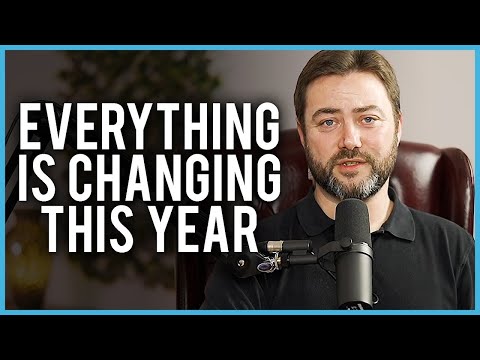
Carl Benjamin - Making Sense Of 2021's Madness | Modern Wisdom Podcast 280
Carl Benjamin (guest), Chris Williamson (host)
In this episode of Modern Wisdom, featuring Carl Benjamin and Chris Williamson, Carl Benjamin - Making Sense Of 2021's Madness | Modern Wisdom Podcast 280 explores carl Benjamin Dissects Censorship, Populism, and Semantic Culture Wars Carl Benjamin (Sargon of Akkad) and Chris Williamson discuss online censorship, deplatforming, and how creators are increasingly forced to build independent platforms like Benjamin’s Lotus Eaters to survive Big Tech’s shifting rules.
Carl Benjamin Dissects Censorship, Populism, and Semantic Culture Wars
Carl Benjamin (Sargon of Akkad) and Chris Williamson discuss online censorship, deplatforming, and how creators are increasingly forced to build independent platforms like Benjamin’s Lotus Eaters to survive Big Tech’s shifting rules.
They argue that contemporary left-wing activism relies heavily on semantic redefinitions (especially around gender and identity) and that this fuels culture wars and undermines shared reality.
The conversation links disparate populist uprisings—Gamergate, WallStreetBets, Trumpism—as expressions of ordinary people pushing back against detached elites in media, tech, and finance.
They close by examining American polarization, the erosion of national pride, figures like Jordan Peterson, AOC, and Trump, and the risks posed when political actors weaponize institutions against their opponents.
Key Takeaways
Creators must build direct relationships and independent infrastructure to survive deplatforming.
Benjamin’s Lotus Eaters model uses subscriptions, off‑YouTube content, and non–Silicon Valley hosting to mitigate arbitrary bans and algorithmic throttling.
Get the full analysis with uListen AI
Semantic redefinitions are a core weapon in today’s culture wars.
He argues that academic left-wing ideologies reframe basic terms (e. ...
Get the full analysis with uListen AI
Populist movements share a common pattern of ‘little people vs. unaccountable elites.’
From Gamergate to WallStreetBets, Benjamin sees ordinary participants challenging institutions that break their own rules to protect power, which in turn intensifies distrust and escalation.
Get the full analysis with uListen AI
Overreliance on censorship and rule‑rigging erodes social trust and stability.
Whether in tech moderation or financial gatekeeping, when elites visibly change rules mid‑game, they destroy decades of accumulated trust and push societies toward more radical conflict.
Get the full analysis with uListen AI
Media misrepresentation is used to delegitimize inconvenient thinkers.
Benjamin cites alleged misreporting about Jordan Peterson’s mental health as an example of legacy media inventing or exaggerating claims to damage a critic’s intellectual credibility.
Get the full analysis with uListen AI
Eroding national pride is a long-term project of contemporary left-wing activism.
He contends that US and UK leftists have consciously framed patriotism as suspect or racist, weakening shared identity and making societies more amenable to radical ideological projects.
Get the full analysis with uListen AI
Weaponizing government and institutions against political opponents threatens the republic.
Benjamin argues that figures like AOC treat Republicans as illegitimate enemies rather than fellow citizens, and that using state and corporate power to persecute one side undermines the Lockean, consensual basis of American democracy.
Get the full analysis with uListen AI
Notable Quotes
“The only gender or race war that I see is being waged by the Left.”
— Carl Benjamin
“If they can deplatform the current sitting president in only a few days, I don't think anyone should take any risks.”
— Carl Benjamin
“Semantic games occupy the realm of the intellectual... unless you take some action, we've traveled zero distance.”
— Carl Benjamin
“If you need armed guards for a private institution, you're doing something that people hate, and you should stop.”
— Carl Benjamin
“People thought that Trump was the river when in fact he was the dam.”
— Chris Williamson (quoting Michael Malice)
Questions Answered in This Episode
How can independent creators realistically future‑proof themselves against coordinated deplatforming by major tech platforms?
Carl Benjamin (Sargon of Akkad) and Chris Williamson discuss online censorship, deplatforming, and how creators are increasingly forced to build independent platforms like Benjamin’s Lotus Eaters to survive Big Tech’s shifting rules.
Get the full analysis with uListen AI
To what extent do semantic battles over words like 'woman' or 'racism' genuinely help marginalized groups versus entrenching polarization?
They argue that contemporary left-wing activism relies heavily on semantic redefinitions (especially around gender and identity) and that this fuels culture wars and undermines shared reality.
Get the full analysis with uListen AI
Are movements like WallStreetBets and Gamergate early signals of a deeper, systemic realignment between elites and the public?
The conversation links disparate populist uprisings—Gamergate, WallStreetBets, Trumpism—as expressions of ordinary people pushing back against detached elites in media, tech, and finance.
Get the full analysis with uListen AI
What mechanisms, if any, could rebuild trust between citizens and institutions after high‑profile episodes of perceived censorship and rule‑bending?
They close by examining American polarization, the erosion of national pride, figures like Jordan Peterson, AOC, and Trump, and the risks posed when political actors weaponize institutions against their opponents.
Get the full analysis with uListen AI
Is there a sustainable way to balance robust content moderation with political neutrality on platforms that now function as public squares?
Get the full analysis with uListen AI
Transcript Preview
I don't agree that there's a race war going on. I don't agree that there's a gender war going on. I don't agree that straight people are waging war against gay people and trying to keep them down. Uh, that's just not my experience of life. But the only gender or race war or, like, sexuality war that I see is being waged by the left, you know? So I think the left have done this quite self-consciously in many ways. (wind blowing)
Man, I've just been on Twitter. Is it possible to browse any trends on there without it being hijacked by K-pop and Bollywood posts?
I, I don't know why you'd ask me. I'm not on Twitter. (laughs)
Yeah. I know. But you use it, right? You look at the trending site.
I have to, yeah.
Yeah.
Um, to be honest with you, I'm always glad when I log into Twitter and it's some K-pop nonsense that's trending-
(laughs)
... instead of Jews, Nazis, or Holocaust 'cause these terms trend on Twitter all the time and it just makes me think, "God, this is an absolute hell site." You know? I, I use like, you know, Twitter alternatives and never do these terms ever trend. And so it's like, right, okay, that's very interesting and very revealing about the mindset of the people who use various platforms, isn't it?
Uh, another year, another studio, another YouTube channel. How's everything going with-
Yes.
... the Lotus Eaters stuff?
Uh, it's going really, really well, uh, really well. Um, everything's up and running. Everything is self-sufficient. Uh, we have lots of subscribers, uh, which essentially means sort of patrons that pay for everything. And we work very hard providing them with premium content, articles from academics, book club reviews that we do, and, uh, and, and the sort of podcast that we can't put on YouTube because we're talking about subjects that are essentially verboten in some ways. Uh, and so it's, it's been a sort of real lease of life as well, to be able to have some freedom to talk about things in a way that the editors at Silicon Valley don't approve.
Man, that's so good. What's the name from?
The name is from the Odyssey. Uh, the, the Island of the Lotus Eaters is the first island that Odysseus and his crew arrive at. And the, the reason I like it, and I've always found it, like, it's always been sat in my mind because in every other island and in every other event that the crew, uh, and Odysseus go th- through, um, there's danger. There's some kind of deep danger that underlies. Either it's a very obvious brutal one, like the men getting eaten by the cyclopses or they get changed into animals by Cersei or whoever. And so there's, there's an ill will, an evil will that underpins all of the other islands. But on the Island of the Lotus Eaters there doesn't appear to be. We only get like a few paragraphs in the Odyssey and so a lot has been extrapolate- uh, extrapolated from that that doesn't really exist in the text, like, you know. But the, the thing it seems to represent in my view is a paradigm shift. And so the, the, the crew he sends out to the island to meet the island, uh, the, the, the islanders, um, they just don't want to return to the ships. They just decide that they like the place they're in and that's where they want to stay. And Odysseus has to get other crewmen to go and drag them back to the ships, which is kind of bad news for them really 'cause everyone dies on Odysseus's journey-
Install uListen to search the full transcript and get AI-powered insights
Get Full TranscriptGet more from every podcast
AI summaries, searchable transcripts, and fact-checking. Free forever.
Add to Chrome