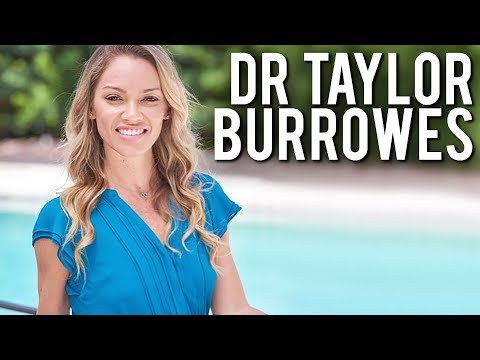
A PhD In Relationship Advice | Dr Taylor Burrowes
Dr Taylor Burrowes (guest), Chris Williamson (host), Narrator
In this episode of Modern Wisdom, featuring Dr Taylor Burrowes and Chris Williamson, A PhD In Relationship Advice | Dr Taylor Burrowes explores build Yourself First: Dr. Taylor Burrows Redefines Modern Relationships Dr. Taylor Burrows, a former marriage and family therapist with 14 years’ clinical experience, explains why most relationship problems start with choosing the wrong partner and neglecting self-development. She argues that compatibility is rare and must be consciously vetted across lifestyle, values, sexual polarity, and long‑term vision rather than relying on chemistry or hope. The conversation explores cohabitation, trust and infidelity, non‑monogamy, the dangers of “one foot out the door” dating, and why vague arrangements like ‘seeing someone’ sabotage commitment. Burrows also dives into female sexuality, arguing that women must heal their relationship with sex and learn to be selectively but fully sexual within trusted, monogamous partnerships.
Build Yourself First: Dr. Taylor Burrows Redefines Modern Relationships
Dr. Taylor Burrows, a former marriage and family therapist with 14 years’ clinical experience, explains why most relationship problems start with choosing the wrong partner and neglecting self-development. She argues that compatibility is rare and must be consciously vetted across lifestyle, values, sexual polarity, and long‑term vision rather than relying on chemistry or hope. The conversation explores cohabitation, trust and infidelity, non‑monogamy, the dangers of “one foot out the door” dating, and why vague arrangements like ‘seeing someone’ sabotage commitment. Burrows also dives into female sexuality, arguing that women must heal their relationship with sex and learn to be selectively but fully sexual within trusted, monogamous partnerships.
Key Takeaways
Develop your ideal self before searching for an ideal partner.
Burrows stresses that attracting a truly compatible partner starts with knowing and stabilizing your own personality, values, and lifestyle—often by your late 20s or 30s—rather than filling an inner void with a relationship.
Get the full analysis with uListen AI
Deliberately vet partners on lifestyle, values, and future vision.
Most couples she saw in therapy had fundamental incompatibilities; she now focuses on helping people ‘vet’ at the dating stage across daily routines, political/moral values, and long‑term goals (e. ...
Get the full analysis with uListen AI
Cultivate strong sexual polarity alongside compatibility.
Sustained attraction requires a clear masculine–feminine energetic dynamic, not just shared interests; when a man is grounded in masculinity and a woman in femininity, that polarity acts like a “life vest” that helps couples weather conflict.
Get the full analysis with uListen AI
Avoid half‑commitments and hidden hedging in early relationships.
Arrangements like ‘seeing someone’ or secretly dating multiple people while acting exclusive create distrust and a mindset of disposability; Burrows urges especially women to give clear exclusivity once they choose to invest instead of hedging their bets.
Get the full analysis with uListen AI
Do the hard work on trust up front; infidelity is rarely cleanly repairable.
Rebuilding after cheating is possible but extremely difficult and requires both partners taking responsibility for underlying dynamics; if only one person is willing to change or the injured partner stays stuck in anger, the relationship usually can’t recover.
Get the full analysis with uListen AI
Female sexuality needs healing, not more promiscuous ‘liberation.’
Burrows differentiates between healthy, intimate sensuality and detached, performative promiscuity; she argues casual sex often mimics trauma patterns of self‑objectification and makes long‑term bonding harder, whereas women should aim to be sexually free with a trusted, committed partner.
Get the full analysis with uListen AI
Men should lead with ethical clarity and positive reinforcement.
She recommends men be sexually confident, live healthily (fitness, hormones, habits), and guide the sexual dynamic through openness, attention, and praising what they like—using subtle external examples rather than harsh criticism to encourage desired changes.
Get the full analysis with uListen AI
Notable Quotes
“You can't really fix something that's fundamentally flawed, especially if it's only one person that's motivated to change.”
— Dr. Taylor Burrows
“First of all, it's not just one person, but there's probably a limited supply of ideal matches for you in the universe.”
— Dr. Taylor Burrows
“Most people just sort of jump first and then figure it out.”
— Dr. Taylor Burrows
“Learning how to be sexual with your partner is the key.”
— Dr. Taylor Burrows
“Why are we even trying to do voluntarily to ourselves what happens to a sexual trauma victim?”
— Dr. Taylor Burrows
Questions Answered in This Episode
How can someone practically ‘vet’ for values and long-term vision without making early dates feel like interrogations?
Dr. ...
Get the full analysis with uListen AI
What are concrete signs that a relationship is fundamentally incompatible versus merely going through a difficult phase?
Get the full analysis with uListen AI
For couples considering non‑monogamy, what psychological risks or patterns should they be most honest with themselves about before experimenting?
Get the full analysis with uListen AI
How can women begin to heal from past sexual experiences that felt objectifying and move toward a more integrated, healthy sensuality?
Get the full analysis with uListen AI
If a partner has cheated but both say they want to rebuild, what would an honest, step‑by‑step recovery process look like in practice?
Get the full analysis with uListen AI
Transcript Preview
People ask me all the time, I talk about finding your, or attracting your ideal partner, really. And that really stems from, from you and you developing your ideal self. People really want that sort of cheat sheet of like, what are the things that you look for to find th- that ideal partner? And first of all, it's not just one person, but there's probably a limited supply of ideal matches for you in the universe. Not everyone is an ideal partner. Not 50% of people are gonna be an ideal partner. So yes, it's gonna be a smaller percentage. And so you have to learn what to look for, and it's based on you developing yourself according to your personality, what fits best for you, the lifestyle that you choose to lead, your values, belief systems. Uh, a- and generally speaking, that fluctuates over your lifespan. But usually, y- you know, in your 30s, maybe late 20s, you will sort of solidify a lot of that. If we actually did more work in the self-development, um, part, uh, then we would probably do a b- a much better job of, of attracting the right type of people to us. (air rushing)
I am joined by Dr. Taylor Burrows today. Ms. Burrows, welcome to the show.
Thank you. Thank you for having me. I'm excited.
I'm very excited to have you on as well. Am I right in thinking that you've got essentially a PhD in relationships?
(laughs) Yeah, you could say that. It's, um, a PhD in marriage, couples, and family therapy. So that almost covers them all. (laughs)
That's a ... You're a doctor of relationships. (laughs)
Yeah. And you know, I, I like to include the relationship with oneself as well, so that's included in there too.
Fantastic.
(laughs)
How is your relationship with yourself today?
It's going very well.
(laughs)
Yesterday, I, uh, I w- I did a really good workout. I'm staying at this beautiful condo and I just had a lovely afternoon, and then I topped it up with like a full home-cooked meal, and then did like a- an evening stroll on South Beach, which I bumped into a lot of characters and it was lots of fun, so I'm doing well. (laughs)
D- did you take yourself out for a date?
(laughs) Yeah, basically.
That sounds like the ultimate date night, but just with yourself. That's actually my perfect evening.
Yeah, I like ... I like to do that quite often actually, so that's the norm in my world. (laughs)
Amazing. Um, so we're just gonna riff on relationships today, I guess. We've had a lot of interesting characters on recently. We did a, a full series, a four-episode series on our advice on relationships, and I've recently had Caleb Jones on who's a non-monogamy advocate talking about his sort of views. Um, I guess to start off, what does 14 years of clinical mental health-
Install uListen to search the full transcript and get AI-powered insights
Get Full TranscriptGet more from every podcast
AI summaries, searchable transcripts, and fact-checking. Free forever.
Add to Chrome