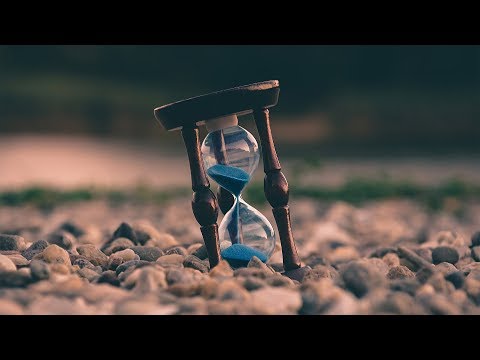
Why Does Time Pass More Quickly As You Get Older? | Laura Vanderkam
Laura Vanderkam (guest), Chris Williamson (host), Narrator
In this episode of Modern Wisdom, featuring Laura Vanderkam and Chris Williamson, Why Does Time Pass More Quickly As You Get Older? | Laura Vanderkam explores make Time Feel Longer: Choices, Memories, And Intentional Living Laura Vanderkam and Chris Williamson explore why time seems to speed up with age and how our choices shape that perception. They argue that time isn’t really lacking; it’s about priorities, intentional planning, and how we fill our hours. Vanderkam explains that our sense of time is tied to how many memorable experiences we create and recall, not the raw number of hours. Through ideas like time tracking, savoring, planning adventures, and respecting our future selves, they outline practical ways to feel less rushed and more fulfilled.
Make Time Feel Longer: Choices, Memories, And Intentional Living
Laura Vanderkam and Chris Williamson explore why time seems to speed up with age and how our choices shape that perception. They argue that time isn’t really lacking; it’s about priorities, intentional planning, and how we fill our hours. Vanderkam explains that our sense of time is tied to how many memorable experiences we create and recall, not the raw number of hours. Through ideas like time tracking, savoring, planning adventures, and respecting our future selves, they outline practical ways to feel less rushed and more fulfilled.
Key Takeaways
Replace “I don’t have time” with “It’s not a priority.”
Consciously swapping this language forces honesty about what actually matters to you. ...
Get the full analysis with uListen AI
Track your time for at least one full week.
Logging your activities in 30‑minute blocks over 168 hours reveals the gap between how you think you spend time and how you actually do. ...
Get the full analysis with uListen AI
Create more novelty and intensity to slow perceived time.
We remember firsts, challenges, travel, and emotionally charged events far more than routine days. ...
Get the full analysis with uListen AI
Include your future and remembering selves in daily choices.
The “present self” seeks comfort and avoidance, but your anticipating and remembering selves benefit from effortful, meaningful activities. ...
Get the full analysis with uListen AI
Design your leisure, especially ordinary evenings and weekends.
People who feel most time‑abundant tend to plan small, intentional activities—concerts, playground trips, dinners with friends—instead of defaulting to TV or mindless scrolling. ...
Get the full analysis with uListen AI
Savor good moments to ‘stretch’ them in memory.
Pausing to notice and articulate that you’re enjoying something—naming what’s great about it, who’s there, how you feel—deepens encoding in memory. ...
Get the full analysis with uListen AI
Align low‑energy time with high‑value, easy activities.
You can’t always summon willpower at 11 p. ...
Get the full analysis with uListen AI
Notable Quotes
“Everything I do is my choice. Rather than say, ‘I don’t have time to do X, Y, or Z,’ I say, ‘I don’t do X, Y, or Z because it’s not a priority.’”
— Laura Vanderkam (quoting an interviewee)
“When we say, ‘Where did the time go?,’ what we’re actually saying is, ‘I don’t remember where the time went,’ and that’s because we haven’t done anything memorable with it.”
— Laura Vanderkam
“We pamper the present like a spoiled child.”
— Laura Vanderkam (quoting philosopher Robert Gręn / paraphrased)
“People say they want more time. What they really want is more memories.”
— Laura Vanderkam
“A life of effortless fun is not memorable, whereas a life of effortful fun is.”
— Laura Vanderkam
Questions Answered in This Episode
If I honestly replaced ‘I don’t have time’ with ‘It’s not a priority,’ which parts of my life would suddenly feel misaligned?
Laura Vanderkam and Chris Williamson explore why time seems to speed up with age and how our choices shape that perception. ...
Get the full analysis with uListen AI
What kinds of small, novel or intense experiences could I realistically add to an ordinary week to make it more memorable?
Get the full analysis with uListen AI
How can I design simple systems so that my low‑energy hours default to reading, connecting, or creating instead of mindless consumption?
Get the full analysis with uListen AI
In what situations does my ‘present self’ most often sabotage my ‘future self,’ and how could I renegotiate that relationship?
Get the full analysis with uListen AI
Looking back 10 years from now, what specific memories would I want from this season of life—and what would I need to start doing this week to create them?
Get the full analysis with uListen AI
Transcript Preview
One of my initial interviews many, many years ago, like, as I was writing my first time management book, I had interviewed somebody about a totally, you know, different thing related to her business at one point and, you know, offhand she mentioned her, like, six children. And I was like, "Oh, well, that's interesting." (laughs)
(laughs)
I was, uh, you know, very new in the parenting journey so I was just like, "Oh my god. How do you do that?" So, I called her back to interview her about that, but she was running a successful small business with many people on the payroll and then also raising her family. And, you know, I had kind of asked her, "Well, like, spill your secrets. Like, uh, the world would love to know." And she said, "You know, everything I do is my choice. And rather than say, 'I don't have time to do X, Y, or Z,'" she'd say, "'I don't do X, Y, or Z because it's not a priority. That I don't have time really means it's not a priority.'" And if you think about it, that is more accurate language. I mean, people will tell you they don't have time to floss. It's not true. They don't wanna floss. You know, using this language reminds us that time is a choice. And so if you just substitute this language every time you find yourself saying, "I don't have time, I don't have time, I'm too busy, I don't have time," just say, "It's not a priority," and, and see how that feels.
(wind blowing) I'm joined by Laura Vanderkam today, and we are talking all things time. Laura, welcome to the show.
Thank you so much for having me.
It's a pleasure to have you on. I've absolutely loved Off the Clock, which is your most recent book, and I've pounded through it over the last couple of weeks, not just because we're about to do this podcast, but also because it was a, a genuinely fantastic read. So congratulations on an amazing book.
Well, thank you so much. I really appreciate that.
Uh, so yeah. W- we're talking about time and time management, so to begin with, why is time such a difficult, uh, task for people to grapple with? Why is it, why is it so important for people to grapple with?
Yeah. Well, there's a couple things going on there. I mean, one of the reasons time is so challenging for people is that it keeps passing, whether you think about how you're spending it or not. Um, so it, it's so easy to spend mindlessly. Um, you know, whether you make a decision about how you spend today or don't make a decision, eventually we are gonna be on the other side of today. Um, so it, it requires you to really think about it in a way that a lot of other choices are, uh, are more automatic to make a conscious choice about. Uh, but the hopeful thing about time, uh, in, in my opinion at least, is that we all have the same amount of it. Uh, so, you know, a life is lived in hours, and so what we do with our lives is gonna be a function of how we spend our hours, and we all have the same number of hours, and we all have 24 hours in a day, 168 hours in a week. And so when you find people who are doing amazing, awesome things in their lives, they may have many other things going for them, I'm not saying that they're not richer, smarter, better looking than the rest of us, but they don't have more time. And so maybe we can look at how they're allocating their hours, and at least that's something that we can pick up on, uh, even if we can't copy all the other things that they're doing.
Install uListen to search the full transcript and get AI-powered insights
Get Full TranscriptGet more from every podcast
AI summaries, searchable transcripts, and fact-checking. Free forever.
Add to Chrome