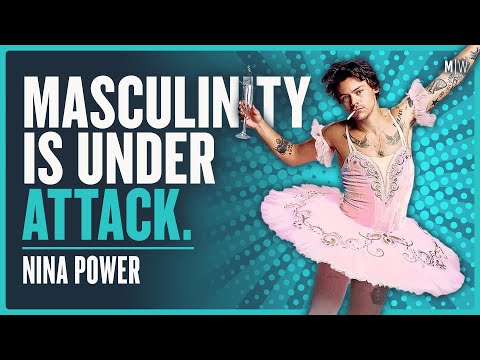
The Crisis Of Modern Masculinity - Nina Power
Nina Power (guest), Chris Williamson (host)
In this episode of Modern Wisdom, featuring Nina Power and Chris Williamson, The Crisis Of Modern Masculinity - Nina Power explores nina Power Dissects Modern Masculinity, Feminism, Sex, and Cancel Culture Nina Power discusses her book on masculinity, arguing that modern culture has pathologized maleness while leaving men without clear roles, responsibilities, or socially valued virtues. She critiques liberal feminism, hookup culture, dating apps, and the post‑sexual-revolution landscape for making genuine intimacy, family formation, and mutual respect between the sexes harder. Power and Williamson explore male suicide, incels, MGTOW, the manosphere, and media-driven purity spirals that frame almost any male-focused movement as ‘far right’ or hateful. Throughout, she calls for revaluing courage, loyalty, responsibility, motherhood, fatherhood, and real-world community as antidotes to atomization, resentment, and fear between men and women.
Nina Power Dissects Modern Masculinity, Feminism, Sex, and Cancel Culture
Nina Power discusses her book on masculinity, arguing that modern culture has pathologized maleness while leaving men without clear roles, responsibilities, or socially valued virtues. She critiques liberal feminism, hookup culture, dating apps, and the post‑sexual-revolution landscape for making genuine intimacy, family formation, and mutual respect between the sexes harder. Power and Williamson explore male suicide, incels, MGTOW, the manosphere, and media-driven purity spirals that frame almost any male-focused movement as ‘far right’ or hateful. Throughout, she calls for revaluing courage, loyalty, responsibility, motherhood, fatherhood, and real-world community as antidotes to atomization, resentment, and fear between men and women.
Key Takeaways
Redefine masculinity around virtue and responsibility, not dominance or withdrawal.
Power argues that historically masculinity was tied to virtues like courage, judgment, loyalty, and caring for others; reclaiming these as aspirational gives men a positive identity beyond either ‘toxic’ aggression or checked-out passivity.
Get the full analysis with uListen AI
Treat male suffering—especially suicide, loneliness, and addiction—as a shared human concern.
With suicide the leading cause of death for UK men under 45 and crises like the opioid epidemic disproportionately affecting men, Power insists women and society at large must see male suffering as their problem too, not something to dismiss via ‘patriarchy’ narratives.
Get the full analysis with uListen AI
Resist dating-app and hookup norms if you want depth, commitment, and family.
They argue that apps and casual sex cultures reward a small minority of men, commodify sex, encourage emotional detachment (“don’t catch feelings”), and make loyalty and real intimacy rarer; those seeking stable partners may be better off meeting people offline in value-aligned environments.
Get the full analysis with uListen AI
Question one-sided feminist scripts that push women into hyper-masculine life strategies.
Power criticizes the cultural ideal of the ‘boss bitch’ who prioritizes career, casual sex, and status at the expense of family and community, noting that this often makes women unhappy and devalues motherhood, caregiving, and relational forms of meaning.
Get the full analysis with uListen AI
Avoid blanket resentment toward the opposite sex; focus on individual responsibility.
Both speakers warn that “all men are trash” or similarly sweeping male resentments toward women are psychologically damaging and politically useless; instead, individuals should examine their own behavior, expectations, and patterns—Peterson-style ‘clean your room’ responsibility.
Get the full analysis with uListen AI
Be wary of media-driven purity spirals and lazy ‘far-right’ labels on male spaces.
Power describes how activist and media ecosystems incentivize ever-stricter ideological policing, treating things like NoFap or male-only gym culture as ‘hate’ or ‘alt-right gateways,’ which shuts down nuance and pushes men further into alienated subcultures.
Get the full analysis with uListen AI
Rebuild offline community, sex-segregated friendship spaces, and family as buffers against atomization.
They suggest more real-world associations—churches, hobbies, local groups, male and female spaces—can reduce fear between the sexes, make it easier to meet partners organically, and serve as resistance to a consumer-tech system that profits from isolation.
Get the full analysis with uListen AI
Notable Quotes
“This idea that all masculinity is bad and men are somehow inherently evil… it’s incredibly stupid.”
— Nina Power
“If what you want is a life and possibly a family, it’s not going to be the fantasy of an alpha. It’s going to be a nice normal man who is stable, kind, and loves you for who you are.”
— Nina Power
“Treating everybody the same in sex erodes the love of individual people. If you start treating everybody the same, you don’t see the unique beauty of individual people.”
— Nina Power
“If you are consistently entering into interactions with women and all of the women have a problem, the problem isn’t the women. The problem is you.”
— Chris Williamson (summarizing Jordan Peterson)
“We live in a culture that encourages both men and women to behave like children and infantile, demanding toddlers for as long as possible. That’s what consumer culture is.”
— Nina Power
Questions Answered in This Episode
How can men practically cultivate the virtues Nina Power highlights—like courage, loyalty, and responsibility—within today’s economic and cultural constraints?
Nina Power discusses her book on masculinity, arguing that modern culture has pathologized maleness while leaving men without clear roles, responsibilities, or socially valued virtues. ...
Get the full analysis with uListen AI
What would a healthier post–sexual-revolution dating culture look like if it aimed at monogamy, mutual care, and realistic expectations instead of maximized choice and detachment?
Get the full analysis with uListen AI
In what concrete ways could feminist and male-focused movements cooperate to address male suicide, violence, and loneliness without slipping into mutual blame?
Get the full analysis with uListen AI
How can individuals intelligently use (or limit) dating apps and social media so these tools don’t erode their capacity for intimacy, vulnerability, and long-term commitment?
Get the full analysis with uListen AI
What role should sex-segregated spaces—male-only and female-only—play in a liberal society, and how can they exist without sliding back into exclusionary or oppressive practices?
Get the full analysis with uListen AI
Transcript Preview
I was just looking at some videos of women who were upset about how they're treated on dates or something, and, by the dating apps. They're sort of outraged that these apps somehow have permitted these men to behave in ways that like are quite caddish. And it's like, you're literally on like a hookup app. What do you expect? (laughs) Like...
Did people try to cancel your book before it was even released?
Yes, they did.
What, what happened there?
Well, I, I won't go into detail. But, uh, there's a small number of very strange people who get their, their kicks from, from doing this. Uh, and we live in this bizarre cancel culture age. And so, yes, I have, I have these people who think that talking about sexual difference is tantamount to somehow being Hitler. Um, and they kind of run around, you know, emailing people and trying to get me canceled. And sometimes when I give a talk, people hire security guards to protect me. And, uh, yeah, I mean, lots of women are in this bizarre position. It's like, I mean, I'm sort of joking about it, but on some level, it's actually deeply horrible. And, you know, (laughs) who are these people? Anyway.
Well, you're a dangerous ... You're a very, very dangerous looking woman.
(laughs) I know. I'm terrifying.
Uh, okay. So, do you think that there's a crisis with masculinity right now?
Well, I think we're always supposed to say that. It's one of these sorts of cliches. Like, masculinity is always in crisis. Like, ever since, you know, I remember reading things sort of 20 years ago, masculinity was in crisis then. And I think in the 1890s, it was in crisis. Um, and so on and so forth. But yeah, I mean, I, I do think there are sort of a, a series of things that have kind of come together to make masculinity and being a man seriously difficult and, uh, a big problem, both for men and for women. And I, I wanted to try and think about ways in which men and women could get along better, and that we could also start to talk again about what it is to be a good man, you know, because this idea that all masculinity is bad and men are somehow, you know, inherently evil, I mean, it's incredibly stupid. It's, it's not true, right? M- most women have very lovely relationships with men, and friends who are men, and brothers and fathers, and there are men in their lives who they really, really love. And, you know, w- don't want to see demonized by this very, very generalizing and stupid rhetoric, um, about men, you know, which we've seen a lot of in the last kind of five, 10 years, I think. So toxic masculinity, um, the idea that all men are sort of somehow got power and that they're all sort of predatory. They're all just kind of, you know, unpleasant, uh, underneath. Um, so yeah, I think there's a crisis in that sense. There's also a kind of bigger crisis in terms of the economy and the types of jobs that people are getting. You know, the economy was deliberately, explicitly, uh, made into this kind of knowledge economy under Thatcher. All of the kind of, um, sort of manual labor and, and industrial jobs which were typically done by men, um, have been eradicated, you know? So there is a kind of crisis in that sense as well. You know, what, what role do men have? You know? And the serious aspect of this would be to do with things like, uh, depression and suicide. You know, like suicide is the leading cause of death for men under 45 in the UK. You know, it's insane. It's like, uh, there's a real problem here, you know, with men not knowing what their role is and not feeling that they've got responsibility and they've got a place, you know? And I think in terms of our collective humanity, we should all care about that, you know? It's, it ... This is a question for all of us. Um, so yeah, there's lots of different ways of looking at, um, a kind of crisis. But yeah, I would say we're definitely in the middle of one and we need to kind of work out together how to sort of resolve, resolve things.
Install uListen to search the full transcript and get AI-powered insights
Get Full TranscriptGet more from every podcast
AI summaries, searchable transcripts, and fact-checking. Free forever.
Add to Chrome