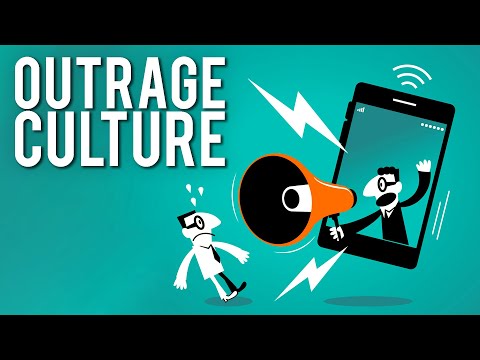
Why Everyone Is Outraged | Ashley 'Dotty' Charles | Modern Wisdom Podcast 204
Ashley 'Dotty' Charles (guest), Chris Williamson (host), Narrator
In this episode of Modern Wisdom, featuring Ashley 'Dotty' Charles and Chris Williamson, Why Everyone Is Outraged | Ashley 'Dotty' Charles | Modern Wisdom Podcast 204 explores outrage As Currency: How Performative Anger Is Diluting Real Change Ashley 'Dotty' Charles and Chris Williamson explore how outrage has become a social currency, especially online, rewarding people for public displays of moral virtue rather than meaningful progress.
Outrage As Currency: How Performative Anger Is Diluting Real Change
Ashley 'Dotty' Charles and Chris Williamson explore how outrage has become a social currency, especially online, rewarding people for public displays of moral virtue rather than meaningful progress.
Charles argues that constant, low-quality outrage devalues legitimate anger that historically drove change, like civil rights and suffragette movements, and instead fuels shallow ‘fauxrage’ and mob justice.
They dissect cancel culture, virtue signaling, tribalism, and the fear of nuance, showing how speed, frictionless communication, and social media algorithms push people towards extreme, binary positions.
The conversation ultimately calls for more selective, purpose-driven outrage, encouraging people to invest emotional energy where it can genuinely move the needle rather than joining every passing pile-on.
Key Takeaways
Treat outrage like an investment, not an impulse.
Charles suggests seeing outrage as emotional currency: before spending it, ask what concrete change or ‘return’ you’re seeking; otherwise you’re just venting at strangers and devaluing outrage overall.
Get the full analysis with uListen AI
Distinguish between genuine outrage and “fauxrage.”
Much online anger is performative, driven by a desire to look virtuous, please a tribe, or chase likes, rather than a real commitment to change; checking your motives helps prevent shallow pile-ons.
Get the full analysis with uListen AI
Not all transgressions deserve the same response.
When minor missteps (e. ...
Get the full analysis with uListen AI
Allow yourself to sit in the “corridor of indecision.”
The fear of appearing apathetic or uninformed pushes people to pick sides instantly; being willing to say “I don’t know yet” and seek more information preserves nuance and reduces knee-jerk outrage.
Get the full analysis with uListen AI
Curate what you consume and when you respond.
You don’t need to join every trending controversy; muting topics, unfollowing outrage amplifiers, and asking whether your perspective adds anything new can dramatically improve your online experience.
Get the full analysis with uListen AI
Accept that people and cultures can change over time.
Judging old shows, tweets, or behaviors solely by today’s standards ignores growth and context; allowing for remorse and evolution is essential if we genuinely believe in progress, not permanent damnation.
Get the full analysis with uListen AI
Focus on roots, not “leaves,” when challenging power.
Charles distinguishes symbolic flare-ups (like a school’s “austerity day” or a bad ad campaign) from the deeper systems they reflect; real impact comes from tackling underlying structures, not just visible irritants.
Get the full analysis with uListen AI
Notable Quotes
“Outrage has become currency.”
— Ashley 'Dotty' Charles
“If we’re loud about everything, how can you cut through the noise when you really need to be heard?”
— Ashley 'Dotty' Charles
“We’re just in this horrible dystopian echo chamber…and it’s a carousel that I wanna get off.”
— Ashley 'Dotty' Charles
“If you stand for everything, you’re going to knacker yourself and never really make any contribution to anything.”
— Ashley 'Dotty' Charles
“We’re raising the bar to levels that we ourselves will at some point fall short of.”
— Ashley 'Dotty' Charles
Questions Answered in This Episode
How can an individual practically decide which issues are worth their limited ‘outrage currency’ and which to consciously ignore?
Ashley 'Dotty' Charles and Chris Williamson explore how outrage has become a social currency, especially online, rewarding people for public displays of moral virtue rather than meaningful progress.
Get the full analysis with uListen AI
Where is the line between holding people accountable and creating a culture of fear that stifles honest conversation and learning?
Charles argues that constant, low-quality outrage devalues legitimate anger that historically drove change, like civil rights and suffragette movements, and instead fuels shallow ‘fauxrage’ and mob justice.
Get the full analysis with uListen AI
What would a healthier online ecosystem look like in terms of outrage, and how much of that depends on platforms versus personal responsibility?
They dissect cancel culture, virtue signaling, tribalism, and the fear of nuance, showing how speed, frictionless communication, and social media algorithms push people towards extreme, binary positions.
Get the full analysis with uListen AI
How should we handle historical media that reflects past prejudices—warnings, removal, education, or something else?
The conversation ultimately calls for more selective, purpose-driven outrage, encouraging people to invest emotional energy where it can genuinely move the needle rather than joining every passing pile-on.
Get the full analysis with uListen AI
In what ways can allies support marginalized groups effectively without slipping into performative outrage or speaking over them?
Get the full analysis with uListen AI
Transcript Preview
Allowing ourselves to exist in that middle ground makes us look as though we're disconnected or we, we don't have an opinion. And sometimes it's all right to say, "I don't know," or, "I think I've got a good idea, but I'm willing to listen to other people before I make my mind up." People hate that. People are so scared of that corridor of indecision that they quickly enter a room, and so we find ourselves just picking a side.
(wind blows) Dodie, how are you?
I'm very well. How are you doing, Chris?
Fantastic. Thank you for being here. Could you have realized before writing a book on outrage just how timely mid-2020 would be for it to be published?
You know what's crazy? For the past nine months, I've been like, "We gotta drop the book now. We've gotta drop the book now. Oh, I wish it was coming out now. Oh, we need to come..." Outrage is a constant carousel. Any time I would have released this book, people would have said, "What are the odds you've dropped it in a..." This is the world we live in. So I think people are hyperaware now, but I think because I've written the book, every couple of weeks, there's been something that has felt really timely. And I've been like, "Oh, they're canceling David Walliams. We need to-
(laughs)
... we need to release the book. Oh, oh, no, no, now it's J.K. Rowling, the book needs to come out." Um, it is, it's just constant. And that, I think that's why the book was needed, because any time would have been timely.
The stock price of outrage is, uh, is constantly on the up, isn't it? It's like Tesla or something at the moment. Why, why did you write a book about outrage a while ago? Like, let's forget this year. Why did you write a book on outrage already?
Yeah, so I started this book two years ago, um, well, two and a half years ago. It took me two years to write it. And I'm somebody who has been one of those voices online. I've had arguments with strangers. I've tried to convince people that I've never met that their thinking is wrong and that their belief system is flawed. I've written an open letter to Piers Morgan. I've been that person that I now can't stand, right? I've had pointless arguments. I've been outraged about trivial things. And I kind of reached breaking point, I'd say, and I sort of had an epiphany, and I think when people read this book, they'll each have their epiphany moment. Uh, for me, it was January 2018, and there was outrage about a H&M hoodie, uh, which had been placed on a Black boy, and it said, "Coolest monkey in the jungle." Now, of course, you can look at that through a, a critical lens and say, "What the... This is completely tone-deaf. It's racist." For me, though, it warranted a conversation about who the hell works at H&M and why did nobody flag that this could offend people? I don't think the intention was to offend people. I think it was more symptomatic of their employment structure and how flawed it must be if there's nobody from the stage of idea conception to it making it onto the H&M website, if nobody in that (laughs) conveyor belt of decision-making says, "Oh, maybe we don't put the monkey hoodie on the Black kid."
Install uListen to search the full transcript and get AI-powered insights
Get Full TranscriptGet more from every podcast
AI summaries, searchable transcripts, and fact-checking. Free forever.
Add to Chrome