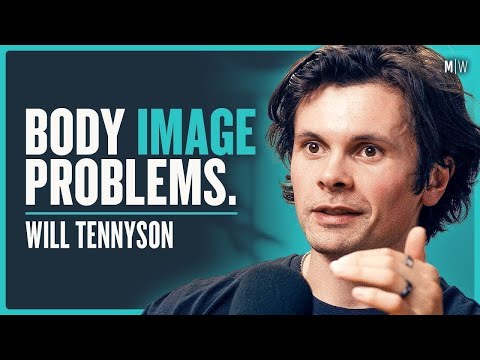
The Dark Side of Fitness: “I Starved Myself Until I Fainted" - Will Tennyson (4K)
Chris Williamson (host), Will Tennyson (guest), Narrator
In this episode of Modern Wisdom, featuring Chris Williamson and Will Tennyson, The Dark Side of Fitness: “I Starved Myself Until I Fainted" - Will Tennyson (4K) explores from Fat Kid To Fitness Star: Will Tennyson’s Dark Journey Will Tennyson discusses his history with obesity, disordered eating, and body image, including a formative experience wearing a realistic 600‑pound obese suit to better understand the stigma and difficulty of extreme obesity.
From Fat Kid To Fitness Star: Will Tennyson’s Dark Journey
Will Tennyson discusses his history with obesity, disordered eating, and body image, including a formative experience wearing a realistic 600‑pound obese suit to better understand the stigma and difficulty of extreme obesity.
He and Chris Williamson explore the genetic, psychological, and social complexities behind weight gain and loss, countering the simplistic “eat less, move more” narrative while sharing practical strategies for diet adherence, activity, and sustainable fat loss.
The conversation widens into male body image, steroid culture, and the rise of body dysmorphia among young men, with Will candidly describing his near‑miss with steroids, his past starvation diet that led to fainting, and the pressures of social media and YouTube success.
They also cover aging, mental health, imposter syndrome, workaholism in content creation, and the importance of play, emotional openness, and making content for your younger, lonely self who needed guidance and escape.
Key Takeaways
Obesity is far more complex than ‘put the fork down.’
Will’s obese-suit experiment and interview with a 575‑pound man show how social stigma, shame, emotional pain, and comfort‑seeking routines interact with genetics and biology, making change much harder than simple willpower clichés suggest.
Get the full analysis with uListen AI
Social perception powerfully shapes self‑image and behavior.
Both Will and the man he interviewed described feeling like public spectacles, which led them to avoid social situations; how others look at you can directly distort how you see yourself, reinforcing isolation and unhealthy habits.
Get the full analysis with uListen AI
Rapid, praise‑driven weight loss can spiral into disordered eating.
Will lost over 100 pounds in under a year by starving himself to the point of fainting, driven by constant external validation; once he stopped doing it for himself and started performing weight loss for others, his behavior became dangerous.
Get the full analysis with uListen AI
Structuring diet around your weakest times boosts adherence.
Will’s ‘macro fasting’ front‑loads protein and holds back carbs and fats until night, so he can enjoy larger, more satisfying evening meals when cravings are strongest while still staying within calorie targets.
Get the full analysis with uListen AI
Walking and simple movement are underrated for long‑term leanness.
Will averages about 12,500 steps a day and considers step‑counting a non‑negotiable backbone of his routine, showing how consistent low‑intensity activity can quietly underpin fat loss and maintenance.
Get the full analysis with uListen AI
Steroids carry hidden long‑term costs beyond short‑term gains.
He describes peers who used drugs like Anavar, later suffered serious health issues or depression, and quit the gym entirely because training naturally felt unrewarding after enhanced gains—underscoring that the ‘easy’ route can permanently damage motivation and health.
Get the full analysis with uListen AI
Success without inner work can magnify imposter syndrome and burnout.
Will admits to severe imposter syndrome, tying his worth to dangerous challenge videos and even filming immediately after his dog’s death; only later, with his wife’s influence, did he start prioritizing mental health over relentless output.
Get the full analysis with uListen AI
Notable Quotes
“I started off joking like I always do, but by the end I wanted to rip the suit off. It took me back, which makes me emotional.”
— Will Tennyson
“It’s much deeper than ‘you’re fat, stop eating, go to the gym.’ There’s a lot more that’s involved in the situation.”
— Will Tennyson
“My weight loss started healthy, but then I tried to prove it to other people. I wasn’t doing it for myself anymore and I lost sight of my journey.”
— Will Tennyson
“The lonely chapter is when you’ve become too different for your old friends, but you’re not yet different enough to have your new friends.”
— Chris Williamson
“I can never appreciate anything that I’ve done. I feel like I don’t deserve it and that it’s going to get taken away from me.”
— Will Tennyson
Questions Answered in This Episode
How can fitness creators talk about fat loss responsibly without triggering or glamorizing disordered eating in vulnerable viewers?
Will Tennyson discusses his history with obesity, disordered eating, and body image, including a formative experience wearing a realistic 600‑pound obese suit to better understand the stigma and difficulty of extreme obesity.
Get the full analysis with uListen AI
What practical steps can someone with intense body shame take to begin going to the gym despite feeling constantly watched or judged?
He and Chris Williamson explore the genetic, psychological, and social complexities behind weight gain and loss, countering the simplistic “eat less, move more” narrative while sharing practical strategies for diet adherence, activity, and sustainable fat loss.
Get the full analysis with uListen AI
How should we balance empathy for extreme obesity with the need to promote personal responsibility and behavioral change?
The conversation widens into male body image, steroid culture, and the rise of body dysmorphia among young men, with Will candidly describing his near‑miss with steroids, his past starvation diet that led to fainting, and the pressures of social media and YouTube success.
Get the full analysis with uListen AI
Given the rise in male body dysmorphia, what alternative definitions of ‘masculine success’ should young men be encouraged to pursue?
They also cover aging, mental health, imposter syndrome, workaholism in content creation, and the importance of play, emotional openness, and making content for your younger, lonely self who needed guidance and escape.
Get the full analysis with uListen AI
What are effective ways for high-achieving people to decouple their self-worth from productivity so they don’t repeat Will’s pattern of working through grief and burnout?
Get the full analysis with uListen AI
Transcript Preview
You became fat for a day. What was that like?
It was a lot more like... A trip to the past than I expected it to be, actually.
Because you were fat for more than a day as well-
Yeah.
... previously.
I mean, I mean, obviously not to the extent that I was, but the biggest issue that I, I had growing up as a kid, and I kind of still deal with today, is just like people's perceptions of you, how you think other people see you, and feeling like you're always being watched with everything that you do. And I'm, I'm k- I've been getting better at that, you know, as, as time goes on. But when I was filming that video, I just... Even though I wasn't, that wasn't me, like, it, it scared me.
Could you explain what you did?
Yeah. So, I, I found this, um, company that, like, they make o- obese suits for these medical companies, for like nurses, doctors, to actually put them on and like to actually understand how to maneuver obese people, like on like a, on a bed, off a bed, you know, just to fully understand just like the transportation techniques. So I found that, and um, you know, I wanted to experience, you know, just what it was like, not even at the weight, because it wasn't an actual weighted thing, but just more like that circumference and just how hard it is to, you know, get into a car and, or just to do anything. And um, I don't know-
How, how heavy was the size that you were? Like, what would it be the equivalent of?
600 pounds. Yeah. So I've done a fat suit video before and it was just like the belly and I looked pregnant, but this was like I went full out, got my face done, and um, I couldn't even fit in my tr- my truck. Got an UberXL, like you walk into the gym, everyone's looking at you, either like laughing, smiling, or they just, they just don't even want to make eye contact with you. And then you just feel like you're this, this spectacle. No one, like no one's afraid to point at you, laugh, and it was very... like it, it... you, you can notice my, my emotions very much so just completely... like I, I start off joking, like I always do in my videos-
Yup, yup.
... like make it lighthearted and... Lighthearted but with like n- not, nothing crazy. But then as the video goes, I start to actually like get affected by it. I didn't even notice it until I actually watched the footage back and I'm like... I really wanted to get it off. Like I felt like I was like... I wanted to like rip it off by the end 'cause it, it's very much so like... it took me back, which makes me emotional.
Install uListen to search the full transcript and get AI-powered insights
Get Full TranscriptGet more from every podcast
AI summaries, searchable transcripts, and fact-checking. Free forever.
Add to Chrome