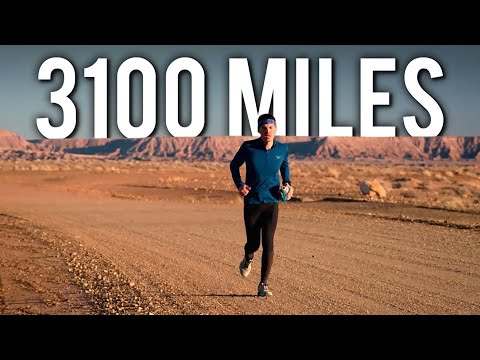
The Longest Race On Earth | Sanjay Rawal | Modern Wisdom Podcast 116
Sanjay Rawal (guest), Chris Williamson (host)
In this episode of Modern Wisdom, featuring Sanjay Rawal and Chris Williamson, The Longest Race On Earth | Sanjay Rawal | Modern Wisdom Podcast 116 explores how Extreme Running Becomes Spiritual Practice In The Longest Race Filmmaker and runner Sanjay Rawal discusses his documentary "3100: Run and Become," centered on a 3,100‑mile race around a single New York City block, the world’s longest certified footrace.
How Extreme Running Becomes Spiritual Practice In The Longest Race
Filmmaker and runner Sanjay Rawal discusses his documentary "3100: Run and Become," centered on a 3,100‑mile race around a single New York City block, the world’s longest certified footrace.
He and host Chris Williamson explore running as an ancient spiritual practice rather than mere fitness or performance, drawing on examples from the San Bushmen, Navajo runners, Japanese marathon monks, and elite athletes like Eliud Kipchoge.
They examine how intention, meditation, and detaching from the analytical mind allow athletes to transform pain into joy and experience running as prayer, self‑transcendence, and a path to the divine.
The conversation also covers the brutal logistics and physiology of the 3,100‑mile race, gender differences in ultrarunning, and how unconventional, playful race formats reconnect modern endurance sports with their deeper human roots.
Key Takeaways
Intention transforms running from exercise into a spiritual practice.
When approached as a path to self‑transformation and connection with something higher, running can mirror meditation—shifting from chasing times and VO2 max to cultivating faith, joy, and inner growth.
Get the full analysis with uListen AI
Human beings are evolutionarily suited to slow, sustained endurance.
From the San Bushmen’s persistence hunts to ultramarathons, our bipedal gait and uncoupled breathing allow long efforts where the goal is not speed but sustained, almost meditative movement.
Get the full analysis with uListen AI
Flow in extreme endurance requires ‘running dumb’—quieting the thinking mind.
Elite runners and traditional cultures alike emphasize softening mental chatter so the ‘spiritual heart’ and body can work unimpeded, turning performance into a state of relaxed, focused flow.
Get the full analysis with uListen AI
Pain can be reinterpreted as joy through mindset and attention.
By removing fear, focusing on breath and heart, and seeing exertion as sacred—“find joy through exertion”—athletes can experience intense sensations as ecstatic or meaningful rather than purely negative.
Get the full analysis with uListen AI
The 3,100‑mile race is more a temple of self‑transcendence than a contest of speed.
With 18‑hour days, 10,000–14,000 calories, brutal heat, and months of recovery, success depends less on raw physiology and more on humility, joy, consistency, and the willingness to surrender to the process.
Get the full analysis with uListen AI
Women’s ultradistance potential is still unfolding and may narrow the performance gap.
Although top times are currently male, completion rates in the 3,100‑mile race are higher for women, and elite female ultrarunners increasingly rival or beat male peers in long, attritional events.
Get the full analysis with uListen AI
Re‑introducing play, ritual, and environment can make running more meaningful.
From Navajo ideas of running as celebration and prayer to game‑like indigenous races and modern Backyard Ultras, embedding story and interaction into running can help people reconnect with it beyond metrics.
Get the full analysis with uListen AI
Notable Quotes
“From the very, very beginning, running and human spirituality went hand‑in‑hand. So in that sense, running was the first religion of humanity.”
— Sanjay Rawal
“If you want to run well, you have to run dumb. You have to be totally soft between your ears. If you think, you’re screwed.”
— Sanjay Rawal (quoting Kenyan runners)
“Find joy through exertion.”
— Rex Taliamtewa, Hopi elder (as recounted by Sanjay Rawal)
“Problems in life shouldn’t diminish your potential for achieving happiness.”
— Sanjay Rawal (on the mindset of elite ultrarunner Asprihanal Aalto)
“Everyone on that course believes in their heart and in their feet that no human being is limited.”
— Sanjay Rawal
Questions Answered in This Episode
How might reframing your own workouts as ‘prayer’ or ‘celebration of life’ change your relationship to training and discomfort?
Filmmaker and runner Sanjay Rawal discusses his documentary "3100: Run and Become," centered on a 3,100‑mile race around a single New York City block, the world’s longest certified footrace.
Get the full analysis with uListen AI
What practical steps could a recreational runner take to cultivate the ‘quiet mind, active heart’ state Sanjay describes?
He and host Chris Williamson explore running as an ancient spiritual practice rather than mere fitness or performance, drawing on examples from the San Bushmen, Navajo runners, Japanese marathon monks, and elite athletes like Eliud Kipchoge.
Get the full analysis with uListen AI
Where is the line between transformative self‑transcendence and self‑destructive extremity in events like the 3,100‑mile race?
They examine how intention, meditation, and detaching from the analytical mind allow athletes to transform pain into joy and experience running as prayer, self‑transcendence, and a path to the divine.
Get the full analysis with uListen AI
Why do you think modern sport stripped out so much of the spiritual and ritual dimension that traditional running cultures retain?
The conversation also covers the brutal logistics and physiology of the 3,100‑mile race, gender differences in ultrarunning, and how unconventional, playful race formats reconnect modern endurance sports with their deeper human roots.
Get the full analysis with uListen AI
How could race organizers or coaches design events and training that emphasize joy, play, and inner growth as much as performance metrics?
Get the full analysis with uListen AI
Transcript Preview
... but I made a movie. I make a lot of movies, but my, my most recent one was called 3100: Run and Become. It's out on Amazon. It's gonna be out o- on Amazon Prime in the UK in a couple of weeks. Um, it's about the world's longest running race. I, I would say that my expertise has just been gleaned by spending a lot of time with people who don't just look at running as performance or r- look at running as fitness, but look at running the way that humanity did thousands of years ago, that running is, in fact, a pathway to self-transformation, to self-realization, and if you believe in something higher, uh, to, to the divine.
(wind blowing) I am joined by Sanjay Raul. Sanjay, welcome to the show.
Chris, it's great to be on your show. Thanks for having me.
Absolute pleasure to have you on. Uh, uh, b- before we get started, even for the listeners at home, behind Sanjay, in wherever he's filming-
(laughs)
... is a series of, like, mannequins, slightly sullen, sad-looking mannequins and a really epic ... Is that a painting of some falconry? Like, where are you? What's, what's that, what's that backdrop?
I'm in my edit studio in New York City, and I have a garden right outside. And, uh, a friend of mine made a series of sculptures, uh, which aren't finished yet. And they were all sitting in my backyard, but the weather has turned here and I had to bring them all inside.
(knocks on wood)
So, I don't know if people are familiar with the Terracotta Warriors of, uh, Xi'an. Uh, a farmer discovered in his field thousands of clay statues, all pointed in the right direction. Um, I kind of feel like that's where I'm sitting right now. I've got these replica statues of-
Yeah.
... of the Indian meditation teacher, Sri Chinmoy, meditating. And, uh, it feels like I'm in a temple. (laughs)
It's pretty epic. It's a pretty cool-
It's pretty cool.
... backd- as backdrops go, man, that's, that's not bad. So, for the listeners who don't know who you are, how would you, how would you describe yourself? And, and give us a bit of background to you.
So number one, if there is a listener who knows who I am, oh my God, I wanna meet them.
(laughs)
I'm, I'm, I'm nobody. I'm, I'm a jack of all trades, master of none. Uh, but I made a movie. I make a lot of movies, but my, my most recent one was called 3100: Run and Become. It's out on Amazon. It's gonna be out o- on Amazon Prime in the UK in a couple of weeks. Um, it's about the world's longest running race. I, I would say that my expertise has just been gleaned by spending a lot of time with people who don't just look at running as performance or r- look at running as fitness, but look at running the way that humanity did thousands of years ago, that running is, in fact, a pathway to self-transformation, to self-realization, and if you believe in something higher, uh, to, to the divine.
Install uListen to search the full transcript and get AI-powered insights
Get Full TranscriptGet more from every podcast
AI summaries, searchable transcripts, and fact-checking. Free forever.
Add to Chrome