Harry Potter Is Being Banned. Why? - Megan Phelps-Roper
Megan Phelps-Roper (guest), Chris Williamson (host)
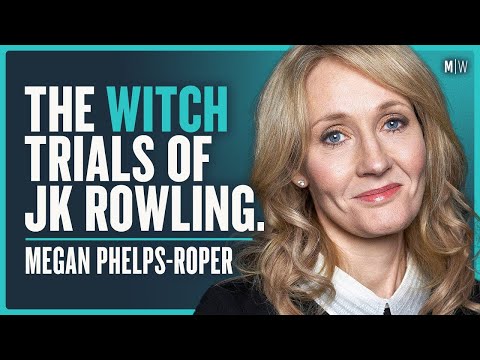
In this episode of Modern Wisdom, featuring Megan Phelps-Roper and Chris Williamson, Harry Potter Is Being Banned. Why? - Megan Phelps-Roper explores j.K. Rowling, Harry Potter, and the Culture War Over Gender Megan Phelps-Roper discusses her podcast series "The Witch Trials of J.K. Rowling," exploring why Harry Potter became a banned-book lightning rod and how Rowling’s gender-critical views ignited today’s culture war. She traces earlier Christian objections to witchcraft in the 1990s to current activist campaigns portraying Rowling as either persecuted or persecutor. A major focus is how social media, especially Tumblr, Twitter, and 4chan, radicalized discourse, rewarding moral grandstanding, witch-hunt dynamics, and punishing nuance. Phelps-Roper argues for civil, good-faith engagement across divides—drawing on her own exit from Westboro Baptist Church—while outlining the high stakes and real harms felt by both women concerned about sex-based rights and trans people facing marginalization and medical uncertainty.
J.K. Rowling, Harry Potter, and the Culture War Over Gender
Megan Phelps-Roper discusses her podcast series "The Witch Trials of J.K. Rowling," exploring why Harry Potter became a banned-book lightning rod and how Rowling’s gender-critical views ignited today’s culture war. She traces earlier Christian objections to witchcraft in the 1990s to current activist campaigns portraying Rowling as either persecuted or persecutor. A major focus is how social media, especially Tumblr, Twitter, and 4chan, radicalized discourse, rewarding moral grandstanding, witch-hunt dynamics, and punishing nuance. Phelps-Roper argues for civil, good-faith engagement across divides—drawing on her own exit from Westboro Baptist Church—while outlining the high stakes and real harms felt by both women concerned about sex-based rights and trans people facing marginalization and medical uncertainty.
Key Takeaways
Harry Potter’s censorship history mirrors today’s ideological battles.
Initially attacked by some Christians as occult propaganda, Harry Potter later became a target of progressive activists because of Rowling’s views, illustrating how the same cultural object can be condemned by different factions across eras.
Get the full analysis with uListen AI
The Rowling controversy centers on language and reality, not confusion about biology.
Both sides understand that females get pregnant; the real fight is over whether language, law, and public norms should be reshaped to affirm gender identity, and whether that alters our ability to describe sex-based reality.
Get the full analysis with uListen AI
Social media architecture amplifies extremism and suppresses moderates.
Norms incubated on Tumblr (identity play, call‑out culture) and 4chan (anti-sensitivity trolling) migrated to Twitter, creating a recursive antagonistic loop where only the most ardent voices engage and moderates opt out to avoid punishment.
Get the full analysis with uListen AI
Civil, generous conversation can shift even deeply entrenched beliefs.
Phelps-Roper’s departure from Westboro came through outsiders who treated her humanely while rigorously engaging her ideas, convincing her that persuasion, not deplatforming, is the most effective path to lasting change in pluralistic societies.
Get the full analysis with uListen AI
Trans rights debates involve genuine, unresolved medical and ethical questions.
Clinicians across the spectrum agree evidence on youth transition is limited and very recent, while European health systems are already tightening protocols, underscoring that concerns about puberty blockers and long-term outcomes are not baseless.
Get the full analysis with uListen AI
LGB and trans interests sometimes collide rather than align.
Some gay and lesbian people experience pressure to include trans people in their dating preferences, describing elements of homophobia from parts of the trans rights movement, complicating the idea that trans rights are a simple continuation of gay rights.
Get the full analysis with uListen AI
Moral crusades often blind participants to their own excesses.
Both anti-Rowling activists and her defenders see themselves as the righteous side, but the drive to display virtue by denouncing others—online witch-hunt culture—can lead to cruelty, misrepresentation, and strategic backfiring.
Get the full analysis with uListen AI
Notable Quotes
“The language of public life has lost the character of generosity.”
— Marilynne Robinson (quoted by Megan Phelps-Roper)
“Reserving judgments is a matter of infinite hope.”
— F. Scott Fitzgerald, The Great Gatsby (quoted by Megan Phelps-Roper)
“You’re trashing people, but you feel like you’re crusading.”
— Natalie Wynn (ContraPoints), quoted by Megan Phelps-Roper
“I do not walk around my house thinking about my legacy… I care about now. I care about the living.”
— J.K. Rowling (as reported by Megan Phelps-Roper)
“If you’re only talking to people who already agree with you, there will be no progress.”
— Megan Phelps-Roper
Questions Answered in This Episode
How can platforms practically redesign incentives to reward generosity and accuracy instead of outrage and moral grandstanding?
Megan Phelps-Roper discusses her podcast series "The Witch Trials of J. ...
Get the full analysis with uListen AI
Where should societies draw the line between respectful language accommodation and preserving precise terms for sex-based legal protections?
Get the full analysis with uListen AI
What kinds of longitudinal research and safeguards are needed before medical systems can responsibly standardize youth gender transition protocols?
Get the full analysis with uListen AI
How can LGB and trans advocates navigate situations where their interests or definitions of identity directly conflict?
Get the full analysis with uListen AI
In what concrete ways could media and influencers model the kind of civil, good‑faith engagement that helped Phelps-Roper leave Westboro?
Get the full analysis with uListen AI
Transcript Preview
Generally, it is the Republicans who are saying, "Men cannot get pregnant," and then you have somebody, generally a Democrat, saying, "Men can definitely get pregnant." Nobody in this conversation, nobody is confused that it is females who are getting pregnant. But the battle is over the language, what we are willing to say, whether we're willing to make these changes and make these accommodations for this very small minority of people. And for some people, it feels like so much is at stake on both sides. (wind blows)
Harry Potter is one of the most banned books of the 21st century. Why?
Well, um, I mean, for a lot of people, it was l- it was originally Christians. Um, there was a certain ... And not all Christians. But there was a certain kind of, uh, of Christian who, who believed that they were losing the culture in the '90s. Um, and I think, I think Harry Potter was ... It became, like, it was the biggest target. Um, but there were many things. If you go, if you look back, we, we examine this in our show. Um, you look back, there is Sabrina the Teenage Witch and The Craft and, uh, Charmed, and just many, many, um, different examples of witchcraft in the culture. And, and so Harry Potter became a huge target because, because a lot of people really loved it.
How many bannings has there been in the last couple of years? Has there been any movement to try and get Harry Potter itself re-banned?
There's been some. It's not a lot. It's definitely ... I mean, that, I think it was, it was a product of that moment in, in time. Um, so it's, it's definitely not been, um, I, I don't think a, the same kind of ... A, a target in the same way that it was in the '90s, for sure.
What got you interested in the J.K. Rowling story?
Well, if you ... I mean, you can't, you can't have watched what happened in the summer of 2020. I mean, that, for me, that was really the ... Um, you know, she tweeted in the summer of 2020, June of 2020, and there was this massive backlash. And I think to a lot of people who hadn't been really following the conversation surrounding sex and gender, the, the nature of that backlash, the, the heated nature of it, um, it seemed almost incomprehensible. So for me, it was, it was ... I was coming from a place of, of ignorance and curiosity, um, and just really wanting to understand what was going on. And the more I started to look into it, the more, I mean, the more it seemed like the nature ... The fact that the conversation was happening largely on social media was not serving anyone. Um, it was, it definitely seemed to me to be enflaming, um, enflaming that conversation, to say the least. Um, and so I ended up writing this letter to J.K. Rowling to try to find a better way of having that conversation and really just, again, to understand what exactly was going on, what the nature of the controversy was, and why it seemed like everyone involved felt both embattled, um, and, and just like s- like so much was at stake.
Install uListen to search the full transcript and get AI-powered insights
Get Full TranscriptGet more from every podcast
AI summaries, searchable transcripts, and fact-checking. Free forever.
Add to Chrome