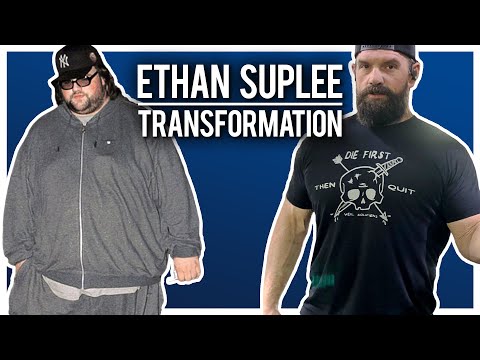
ETHAN SUPLEE | What It's Like To Lose 300lbs & Adele's Transformation | Modern Wisdom Podcast 184
Chris Williamson (host), Ethan Suplee (guest), Narrator
In this episode of Modern Wisdom, featuring Chris Williamson and Ethan Suplee, ETHAN SUPLEE | What It's Like To Lose 300lbs & Adele's Transformation | Modern Wisdom Podcast 184 explores ethan Suplee Reveals Radical Journey From 536lbs To 13% Body Fat Actor Ethan Suplee details his decades-long transformation from a 536-pound, food-addicted teenager to a disciplined, muscular 260-pound adult sitting around 13% body fat. He explains how early restrictive diets created secretive binge habits, and how love, acting work, and health fears pushed him toward real change.
Ethan Suplee Reveals Radical Journey From 536lbs To 13% Body Fat
Actor Ethan Suplee details his decades-long transformation from a 536-pound, food-addicted teenager to a disciplined, muscular 260-pound adult sitting around 13% body fat. He explains how early restrictive diets created secretive binge habits, and how love, acting work, and health fears pushed him toward real change.
The conversation moves through liquid diets, cycling, keto, high-protein macro tracking, and strength training, highlighting what worked, what failed, and why he abandoned nutrition ‘ideologies’ in favor of energy balance and data (DEXA scans, calorie counting).
Ethan and Chris also dissect the backlash to Adele’s weight loss, contrasting public reactions to male versus female transformations, and arguing for body autonomy, confidence without shame, and honesty about the health risks of obesity.
Throughout, Ethan emphasizes personal responsibility, avoiding dogmatic diet cults, and the mindset of daily self-improvement symbolized by his “kill your clone” philosophy.
Key Takeaways
Extreme starting points can justify extreme interventions, but not forever.
At 536lbs, Ethan found a medically supervised liquid diet useful to quickly remove the most dangerous excess weight and simplify choices. ...
Get the full analysis with uListen AI
Track what you eat and focus on energy balance, not food dogma.
Ethan ultimately settled on low fat, high protein, moderate carbs with strict calorie and macro tracking (using tools like MyFitnessPal). ...
Get the full analysis with uListen AI
Prioritize high protein to preserve muscle during large, long cuts.
DEXA scans showed that on long-term keto he was losing 30–40% of his weight loss as lean tissue. ...
Get the full analysis with uListen AI
Avoid turning diets into belief systems or moral identities.
Ethan warns against becoming ‘religious’ about keto, gluten-free, lectins, carnivore, or any single villain food. ...
Get the full analysis with uListen AI
Separate shame from change; confidence sustains long-term progress.
He believes lasting transformation doesn’t come from hating your body but from feeling worthwhile and capable. ...
Get the full analysis with uListen AI
Match your diet phase to your life demands and performance needs.
For heavy filming days and long hours, Ethan aims for maintenance calories and brings his own food to set rather than trying to run a hard deficit and compromising performance. ...
Get the full analysis with uListen AI
Your body, your choice—health facts don’t justify policing others.
While acknowledging obesity as a clear all-cause mortality risk, Ethan insists that individuals must be free to live as they choose—whether that means staying overweight, losing weight like Adele, or doing neither—and that projecting our own insecurities onto others’ transformations is misguided.
Get the full analysis with uListen AI
Notable Quotes
“Every day you meet the clone of yourself from 24 hours in the past, and you have to fight to the death. If you've improved yourself by 1/1000 of a percent that day, you will kill your clone.”
— Ethan Suplee
“I went from 200 pounds to just about 400 pounds in the gym lifting weights every day. I've put on a shitload of muscle in those years of lifting weights and eating everything in sight.”
— Ethan Suplee
“At the end of the day, the only thing that we're bothered about is the results… avoid the church of gluten-free or the church of keto or the church of carnivore and focus instead on energy balance.”
— Chris Williamson
“I'm so happy that I'm really pleased with my body right now… I work my ass off and have been for 20 years on having a body I'm happy with, and I'm like just finally going, 'Check me out.'”
— Ethan Suplee
“How can you be anything but stoked for this girl? She’s a girl who had a goal, who made her goal… The fact that anybody can tie psychological bullshit onto her and say that she's harming people, I think is ridiculous.”
— Ethan Suplee on Adele
Questions Answered in This Episode
If someone has over 100 pounds to lose, how should they decide between an extreme initial approach (like a liquid diet) and a slower, more moderate calorie deficit?
Actor Ethan Suplee details his decades-long transformation from a 536-pound, food-addicted teenager to a disciplined, muscular 260-pound adult sitting around 13% body fat. ...
Get the full analysis with uListen AI
How can people identify when their chosen diet has quietly turned into an ideology that’s actually holding back their progress or making them fearful of certain foods?
The conversation moves through liquid diets, cycling, keto, high-protein macro tracking, and strength training, highlighting what worked, what failed, and why he abandoned nutrition ‘ideologies’ in favor of energy balance and data (DEXA scans, calorie counting).
Get the full analysis with uListen AI
What practical steps can someone take to protect muscle mass during a long cut if they don’t have access to DEXA scans and professional coaching?
Ethan and Chris also dissect the backlash to Adele’s weight loss, contrasting public reactions to male versus female transformations, and arguing for body autonomy, confidence without shame, and honesty about the health risks of obesity.
Get the full analysis with uListen AI
In what ways does public reaction to Adele’s weight loss reveal deeper societal conflicts between body positivity, health realism, and envy or insecurity?
Throughout, Ethan emphasizes personal responsibility, avoiding dogmatic diet cults, and the mindset of daily self-improvement symbolized by his “kill your clone” philosophy.
Get the full analysis with uListen AI
How can someone cultivate Ethan’s 'kill your clone' mindset of tiny daily improvement if they currently feel overwhelmed, ashamed, or stuck in long-term bad habits?
Get the full analysis with uListen AI
Transcript Preview
So you were, um, 200 pounds at ten years old, right?
Yeah. By 2000, that was 536 pounds. So I don't see why anything you say about my feelings about myself-
(laughs)
... should be able to alter my feelings about myself, but we've gotten into this space where the group can dictate how people view themselves, and not only that, the group must dictate how people view themselves.
What's your T-shirt say?
Uh, it says, "I killed my clone today."
What's that a reference to?
Um, there's a- there is a, uh, martial arts guy, I- I- I did a television show called Chance with, uh, a fellow countryman of yours, Hugh Laurie, and I played this character where I was like, um, basically my first official badass character. And the- the character was based on a real guy who is actually a military and martial arts instructor. He teaches like the elite military dudes how to fight with knives, like that's his job. And so in playing, in- in meeting him and spending time with him, I trained with him a bunch, and he had this whole philosophy about kill your clone. So every day you meet the clone of yourself from 24 hours in the past, and you have to fight to the death. And if you've improved yourself by 1/1000 of a percent that day, you will kill your clone. So the point is to kill your clone every day. So this shirt is, uh, saying that today I- I did that, I killed my clone.
That's so sick, man. I'm gassed.
(laughs) It hurt. It hurt
It hurt for today's episode, dude. I've just finished training. I nearly did this podcast without shorts on. I keep on nearly forgetting to put shorts on but I put shorts on, we're here, I've got shorts on. Um, is- what's that guy's name? What's the...
Tom Kier. Tom Kier is the real-life guy that I p- he's- the character that I played was based on Tom Kier. Um, if you ever saw a movie called The Hunted with Tommy Lee Jones and Benicio Del Toro, it's about special forces guys who are good with knives. He like created all of that knife work. He's a, he's a true badass dude.
Fuck, yeah. So is it like Krav Maga type stuff or even more...
I think it's even s- a step in- in the more hardcore from Krav Maga.
When you get more hardcore than Israeli military.
You're hard- yeah, you're gnarly.
That is some serious-
Yeah.
... serious shit. So do you think that's the pivot now for your acting direction, the sort of big, badass, kinda gruff in- it's- it's always in the action film, it's the dude that's got two 50-cal machine guns in each hand, you know, the belts of- of ammunition. Do you reckon that's kinda the pivot direction?
Install uListen to search the full transcript and get AI-powered insights
Get Full TranscriptGet more from every podcast
AI summaries, searchable transcripts, and fact-checking. Free forever.
Add to Chrome