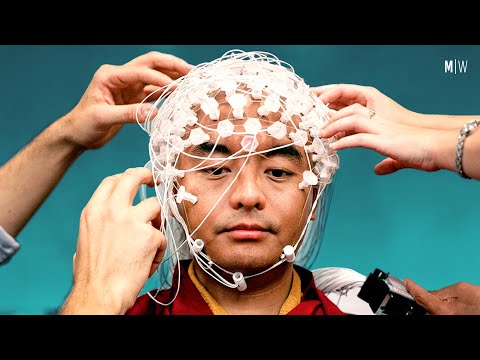
The Neuroscience Of Meditation - Steven Laureys | Modern Wisdom Podcast 318
Steven Laureys (guest), Chris Williamson (host)
In this episode of Modern Wisdom, featuring Steven Laureys and Chris Williamson, The Neuroscience Of Meditation - Steven Laureys | Modern Wisdom Podcast 318 explores neuroscientist Reveals How Meditation Reshapes the Brain and Self Neurologist and consciousness researcher Steven Laureys discusses how a once‑skeptical clinician became an advocate for meditation after a personal crisis and exposure to expert meditators like Matthieu Ricard.
Neuroscientist Reveals How Meditation Reshapes the Brain and Self
Neurologist and consciousness researcher Steven Laureys discusses how a once‑skeptical clinician became an advocate for meditation after a personal crisis and exposure to expert meditators like Matthieu Ricard.
He explains the neuroscience of consciousness and meditation, showing how practices change brain networks related to attention, emotion, and self-awareness through neuroplasticity, even in as little as eight weeks.
Laureys argues that we neglect emotional education, making a case for meditation and related skills to be structurally integrated into schools, medicine, and high‑stress professions.
Throughout, he stresses both the power and the limits of current brain science, framing meditation as mental training that improves well‑being, resilience, and how we experience reality, without pretending it explains consciousness fully.
Key Takeaways
Meditation measurably changes brain structure and connectivity.
Imaging studies in long-term meditators show increased gray matter and stronger white-matter connections in regions linked to attention and emotional control (e. ...
Get the full analysis with uListen AI
Attention training is the core ‘exercise’ of meditation.
Most practices involve repeatedly noticing when attention drifts (to thoughts or emotions) and gently bringing it back to an object (breath, mantra, sensations), strengthening attention networks much like lifting weights strengthens muscles.
Get the full analysis with uListen AI
How you experience reality matters more than reality itself.
Drawing on patients with severe trauma and philosophical ideas (Stoicism, Viktor Frankl), Laureys emphasizes that while events are often uncontrollable, we can train our minds to relate differently to them, shifting our inner experience and resilience.
Get the full analysis with uListen AI
Emotional and mental skills should be taught structurally, like physical education.
Laureys argues that education systems prepare students for academic and physical performance but give almost no tools for understanding emotions, consciousness, or mental hygiene, despite rising anxiety, depression, and burnout.
Get the full analysis with uListen AI
Meditation is highly personal; there is no one ‘best’ method or length.
Optimal style and duration depend on individual needs and context—formal 20-minute sits, body scans, compassion practices, mantra, open monitoring, or brief “micro-pauses” during the day can all be effective; the key is consistency and fit, not perfection.
Get the full analysis with uListen AI
Our current science of consciousness is still radically incomplete.
Despite sophisticated brain scans and decades of research, Laureys stresses that we cannot yet explain how subjective experience arises from physical brain tissue, and advocates intellectual humility and curiosity rather than claims of having ‘solved’ consciousness.
Get the full analysis with uListen AI
Everyday life offers countless built‑in opportunities to meditate.
Informal practices—focusing on breathing between patients, noticing bodily sensations while standing in line, or attending to sounds and sights on a walk—can cultivate presence and calm even for those who feel too busy for traditional sessions.
Get the full analysis with uListen AI
Notable Quotes
“We don't understand how from something material, an object like this, something immaterial, thoughts, perceptions, emotions, arise.”
— Steven Laureys
“Meditation to me is about training your mind, it's mental gymnastics.”
— Steven Laureys
“You don't have to control your thoughts. You just have to stop letting them control you.”
— Steven Laureys (quoting the line he opens his book with)
“It's an interesting thing to think about, that we are thrust into the world as adults... and we are given essentially zero tools by the formal education system to be able to deal with that.”
— Chris Williamson
“The only thing you need to start meditating is your own curiosity and motivation.”
— Steven Laureys
Questions Answered in This Episode
If meditation can reshape attention and emotional networks, how might early, school-based training change the trajectory of mental health across a lifetime?
Neurologist and consciousness researcher Steven Laureys discusses how a once‑skeptical clinician became an advocate for meditation after a personal crisis and exposure to expert meditators like Matthieu Ricard.
Get the full analysis with uListen AI
What ethical or philosophical questions arise when we use brain imaging to correlate ‘happiness’ or spiritual states with neural patterns?
He explains the neuroscience of consciousness and meditation, showing how practices change brain networks related to attention, emotion, and self-awareness through neuroplasticity, even in as little as eight weeks.
Get the full analysis with uListen AI
How should clinicians and patients balance medication and meditation when treating conditions like anxiety, depression, or burnout?
Laureys argues that we neglect emotional education, making a case for meditation and related skills to be structurally integrated into schools, medicine, and high‑stress professions.
Get the full analysis with uListen AI
Given that consciousness remains largely unexplained, how far can neuroscience really go in validating or interpreting experiences like deep meditation, near-death experiences, or coma narratives?
Throughout, he stresses both the power and the limits of current brain science, framing meditation as mental training that improves well‑being, resilience, and how we experience reality, without pretending it explains consciousness fully.
Get the full analysis with uListen AI
For someone who has struggled to maintain a meditation practice, what practical criteria should they use to experiment with and choose a method that truly fits their life and temperament?
Get the full analysis with uListen AI
Transcript Preview
Sometimes I, I hear from colleagues, like, "We've got it all explained." And, and nothing is, is further from the truth. We don't understand how from something material, an object like this, something immaterial, thoughts, perceptions, emotions, arise.
(wind blowing) Why are you studying something as fluffy as meditation as a neuroscientist?
(laughs) It's a very good first question. Actually, I never, ever thought I would be giving a podcast interview like this one on a subject that I considered indeed as fluffy, esoteric, whatever, um, definitely not evidence-based. Uh, remember a journalist, uh, as a medical doctor, uh, specializing in the study of consciousness and the damaged brain, I did my PhD thesis, and that was in 2010. Uh, shortly after, a journalist asked me, "Well, what do you think, uh, about mindfulness?" And I remember at the time, that's the scientist in me checking quickly, well, what's been published? And I wasn't convinced. So I, I, I really, um ... a lot has happened since then, uh, and here I am now as a neurologist, uh, prescribing, uh, meditation in my consultation as a scientist studying, um, what's happening in, in the mind of, of, uh, these guys who are experts in meditation. Also personally, I think I, I enjoyed the benefits, even if definitely I'm not a, a Zen master at all.
Why? Why? What's drawn you to this interest?
Well, uh, as, as is often the case, I think, and I also see it in, in, in the patients, uh, I see in the outpatient clinic, it was a personal crisis. So, um, we ... the details are in the book, but very shortly, uh, 2012, um, I suddenly was, uh, dad alone with the three young kids. Um, and not feeling well, uh, feeling anxious about how I would deal with that, feeling also guilty, how could this happen, you know? You have this little voice in your head, probably sounds familiar. And so, of course, you can't change the past and you're worrying about the future, and, uh, then other things are, uh, happening. I was smoking a lot, I was drinking. The psychiatrist prescribed me sleeping pills, antidepressants. And it was, it was clear that this wasn't the inspiring dad I wanted to be. So I started doing yoga. Um, but then it was, um, meeting a Buddhist monk in Paris where I gave a TEDx 2013 about my area of expertise, which is, uh, the damaged brain and changes in consciousness. And Matthieu Ricard, um, translator of the Dalai Lama, talked about his area of expertise, meditation, compassion. And I still don't know why, but, uh, very quickly, uh, we, we got along well. And he said, well ... obviously, I, I, I, he felt I, I wasn't, uh, well, and said, "Come with me. I'm, I'm going on this retreat." And, uh, that was the first retreat organized by Mind and Life Europe, a beautiful, um, German monastery. And that was for me a new world. Um, and so I said to him, "Well, you come to my lab in Belgium, Liège, as a guinea pig." And, and so it happened. And, and yeah, a new area of research, uh, started.
Install uListen to search the full transcript and get AI-powered insights
Get Full TranscriptGet more from every podcast
AI summaries, searchable transcripts, and fact-checking. Free forever.
Add to Chrome