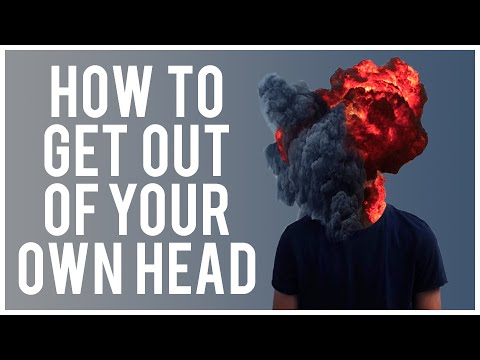
How To Get Out Of Your Own Head | Mark Walsh | Modern Wisdom Podcast 230
Mark Walsh (guest), Chris Williamson (host), Narrator
In this episode of Modern Wisdom, featuring Mark Walsh and Chris Williamson, How To Get Out Of Your Own Head | Mark Walsh | Modern Wisdom Podcast 230 explores from Hyper-Cerebral Living To Embodied Wisdom: Mark Walsh’s Blueprint Mark Walsh argues that modern self-development is overly cerebral and disconnected from the body, and that real change requires ‘embodiment’—learning through the body, not just the mind.
From Hyper-Cerebral Living To Embodied Wisdom: Mark Walsh’s Blueprint
Mark Walsh argues that modern self-development is overly cerebral and disconnected from the body, and that real change requires ‘embodiment’—learning through the body, not just the mind.
He defines embodiment as recognizing the body as part of who we are, developing body–mind skills through practice, and gaining ‘embodiment intelligence’ in self-awareness, self-regulation, relationships, and influence.
Walsh contrasts knowing-about with knowing-how and knowing-to-be, stressing that books and ideas must be matched with embodied practice to turn temporary states into lasting traits.
The conversation ends with practical techniques, suggestions for movement practices, and an introduction to The Embodiment Conference as a large-scale resource for learning these skills.
Key Takeaways
Differentiate knowing about from knowing how and knowing to be.
Intellectual knowledge (books, podcasts, theory) is not the same as embodied competence; skills like kissing, driving, leading, or loving must be practiced in the body to become real.
Get the full analysis with uListen AI
Use the ‘awareness → range → choice’ model to change behavior.
First notice your default patterns (state and trait), then expand your behavioral range (develop alternative ways of standing, moving, responding), and finally choose consciously which way of being suits the situation.
Get the full analysis with uListen AI
Train state shifts through simple physical cues instead of just thinking differently.
Techniques like grounding your feet, softening your jaw, opening peripheral vision, or altering your breath can rapidly reduce fight-or-flight and shift you from anger, stress, or fatigue into a more resourceful state.
Get the full analysis with uListen AI
Turn temporary states into traits by building consistent embodied practice.
Workshops, psychedelics, or a single yoga class can create short-term feelings, but long-term character change requires regular practices—martial arts, dance, yoga, meditation, etc. ...
Get the full analysis with uListen AI
Ensure your practice actually transfers into real life.
If you are calm only on the mat but reactive in traffic or at work, you need to deliberately bridge the gap—for example, using ‘micro-poses’, intentional breathing, or phone reminders to bring yoga or martial-arts qualities into everyday situations.
Get the full analysis with uListen AI
Develop relational embodiment: empathy and influence through the body.
Your posture, tone, and presence communicate warmth and power before words do; cultivating embodied empathy (sensing others’ states) and congruent presence is crucial for leadership, attraction, and trust.
Get the full analysis with uListen AI
Take somatic responsibility instead of blaming circumstances.
Rather than saying “he made me angry,” recognize “I did anger in my body when he said X,” which balances awareness of external conditions with ownership of your embodied reactions and opens a path to change.
Get the full analysis with uListen AI
Notable Quotes
“All the books in the world won’t solve your problems… unless you develop a practice, you’re not changing.”
— Mark Walsh
“Do you want to have some conscious embodiment or do you just wanna have the same old bloody unconscious embodiment that your dad had and his dad before him?”
— Mark Walsh
“We believe that more knowledge is the answer as opposed to increasing our compliance to the knowledge that we already have.”
— Chris Williamson
“No one made you angry. You made you angry… I did anger in my body when he said X.”
— Mark Walsh
“Man should be well-danced and well-fought as well as well-read.”
— Mark Walsh
Questions Answered in This Episode
How can someone who is highly cerebral begin to notice their own ‘trait’ embodiment patterns that currently feel invisible?
Mark Walsh argues that modern self-development is overly cerebral and disconnected from the body, and that real change requires ‘embodiment’—learning through the body, not just the mind.
Get the full analysis with uListen AI
What criteria should you use to choose an embodied practice (yoga, martial arts, dance, etc.) that genuinely counterbalances your existing neuroses rather than reinforces them?
He defines embodiment as recognizing the body as part of who we are, developing body–mind skills through practice, and gaining ‘embodiment intelligence’ in self-awareness, self-regulation, relationships, and influence.
Get the full analysis with uListen AI
How can organizations and schools integrate embodiment into education so that students develop wisdom and character, not just information and test scores?
Walsh contrasts knowing-about with knowing-how and knowing-to-be, stressing that books and ideas must be matched with embodied practice to turn temporary states into lasting traits.
Get the full analysis with uListen AI
In what ways might modern technology and remote work be amplifying disembodiment, and what embodied habits realistically fit into a screen-heavy day?
The conversation ends with practical techniques, suggestions for movement practices, and an introduction to The Embodiment Conference as a large-scale resource for learning these skills.
Get the full analysis with uListen AI
How can you tell whether a teacher or leader’s embodiment (their ‘felt sense’) is trustworthy, beyond their credentials or intellectual arguments?
Get the full analysis with uListen AI
Transcript Preview
So do you want to have some conscious embodiment or do you just want to have the same old bloody unconscious embodiment that your dad had and his dad before him, and that your culture gave you, and you're supposed to have as a working-class British bloke, or whatever the hell you are out there? Like, like, that's, you can just be completely unconscious with that, or you can say, "You know what? I choose something different." And I'm a believer of any embodied practice. If people want to do yoga or dance or martial arts, different people like different things, great. Get in your body. Start to feel again. Stop thinking that wanking over porn and reading books is gonna cut it. Like, get into a dojo, go do yoga, do something that you get into your body again and reclaim that humanity.
(wind blowing) What does embodiment actually mean?
Get asked that every single interview. There's different answers. One, you know your body is a part of you. It's not just like a pen or something. It's a part of who you are as a person, your body. The subjective view of the body. So the body as an aspect of our being, as an aspect of who we are as people. There's a reason if people lose an arm, they get more upset than if they lose a pen, 'cause it's part of them. Um, another term for embodiment would be the umbrella, the umbrella term for all the body-mind arts. So I've done martial arts, yoga, meditation, conscious dance, body therapy, improv, body work. All these things have something in common. They relate to the body, uh, for awareness and the body is part of who we are. Um, so even though they look very different, they have this thing in common, so we need a sort of terminology for that. You could say body-mind arts, you could say somatic arts. Embodiment is the word I tend to use. Uh, so that would be another definition. Third definition could be a form of intelligence and we could drill down into exactly what the skill sets are within that. So how's that for an opener?
Nice, man. I like it, considering embodiment to me is a, a d- if you ask me to define it, I wouldn't really understand. Maybe I embody the role of a parent, I embody the role of a podcaster. You know? Um, but so it's crossing the barrier between the mental and the physical whilst remaining in the body?
Yeah. So the common sense usage is actually quite close to the technical usage. We say, you know, such-and-such, uh, embodies leadership. We understand that there's only so much you can learn from a book. If someone said to you, you know, "I've read, Chris, I've read a lot of books on kissing. I'm an amazing lover."
(laughs)
Or, you know, "I've looked at a lot of websites on how to drive a car. Do you wanna lift to Newcastle?" You might say, "Well, hang on. That's one way of knowing. That's knowing about something," right? So, uh, if you're listening to some of your podcasts to prep for this, it tends to be the Western philosophical tradition is to think about or to know about or to learn about. And that's useful. Like, it's useful for me to know the capital of France is Paris, but that's quite different from the embodied knowledge of Paris. It's quite different from, you know, having your coffee in Paris and there's a certain kind of light that comes up in the morning, and being aware of that, or the French way of being, God forbid. Uh, or, um, you know, that, that manner of Frenchness. So this is a different kind of, of knowledge and requires a different kind of learning. So you know, I'm, at school I read every book in the library. When I was in sixth form, s- high school for American listeners, I literally speed-read every book in that library, and yet I was suicidal, drug-addicted, miserable, failing at my first intimate relationships, and everyone was telling me I was really clever. They said, "You've got a high IQ, you know, you're a very clever guy." And I said, "If I'm so clever, why am I so miserable? What has education f- how has education failed me?"
Install uListen to search the full transcript and get AI-powered insights
Get Full TranscriptGet more from every podcast
AI summaries, searchable transcripts, and fact-checking. Free forever.
Add to Chrome