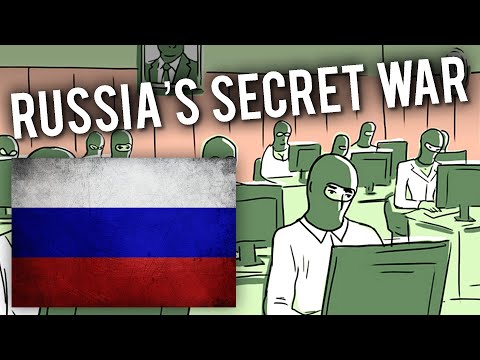
Russian Election Meddling & Fake News | Nina Jancowicz | Modern Wisdom Podcast 210
Nina Jancowicz (guest), Chris Williamson (host)
In this episode of Modern Wisdom, featuring Nina Jancowicz and Chris Williamson, Russian Election Meddling & Fake News | Nina Jancowicz | Modern Wisdom Podcast 210 explores russia’s Digital Playbook: How Troll Farms Undermine Western Democracy Online Nina Jancowicz explains how Russia’s Internet Research Agency (IRA) and other state actors weaponize social media to exploit existing societal divisions in democracies like the US and UK.
Russia’s Digital Playbook: How Troll Farms Undermine Western Democracy Online
Nina Jancowicz explains how Russia’s Internet Research Agency (IRA) and other state actors weaponize social media to exploit existing societal divisions in democracies like the US and UK.
Rather than relying on obviously fake stories, modern disinformation focuses on emotional manipulation, community-building, and amplifying genuine domestic voices and grievances—often pushing both sides of divisive issues.
She argues that foreign and domestic disinformation are inseparable threats to democracy, and that Western governments have largely failed to impose real costs on Russia or to strengthen their own information ecosystems.
Jancowicz calls for a whole-of-government response that includes education, media literacy, public-interest journalism, and smarter regulation of tech platforms and political influence online.
Key Takeaways
Modern disinformation is built on emotional truth, not obvious fakery.
Most effective campaigns rarely invent wild falsehoods; instead, they amplify real grievances, cultural issues, and identity conflicts to provoke anger, fear, and disengagement from politics.
Get the full analysis with uListen AI
Russia exploits existing societal fissures by backing both sides of divisive issues.
The IRA has supported pro-Trump and anti-Trump, racist and anti-racist, pro-Leave and pro-Remain narratives; the goal is maximum polarization and confusion, not one clean ideological victory.
Get the full analysis with uListen AI
Foreign and domestic disinformation are mutually reinforcing threats.
You cannot counter Russian or Chinese interference while tolerating or rewarding the same manipulative tactics at home; political actors using the ‘Russian playbook’ on their own citizens erode democratic norms from within.
Get the full analysis with uListen AI
Authentic local voices are key conduits for foreign influence.
Russia often funds or amplifies real activists, protest organizers, fringe outlets, and community pages (sometimes without their knowledge), laundering its narratives through trusted, native messengers.
Get the full analysis with uListen AI
Platforms’ microtargeting tools make information operations highly efficient.
IRA operatives A/B-test content like advertisers: they throw ‘spaghetti at the wall’ with meme ads, pet photos, cultural posts, build communities over months, then gradually pivot to petitions, protests, and political asks.
Get the full analysis with uListen AI
Russia’s strategic objective is weakening democracies to secure Putin’s power.
By making Western systems appear chaotic and dysfunctional, Putin both boosts Russia’s relative status abroad and uses the contrast domestically to justify authoritarian ‘order’ over democratic instability.
Get the full analysis with uListen AI
Democratic resilience requires systemic, not just tactical, responses.
Fact-checking and account takedowns (‘whack-a-troll’) are insufficient; governments must invest in media literacy, civics, independent journalism, and cross-government coordination to rebuild trust and critical capacity.
Get the full analysis with uListen AI
Notable Quotes
“Disinformation’s currency is emotion. Russia doesn’t have to make things up; it just has to weaponize what’s already there.”
— Nina Jancowicz
“It’s not about a specific worldview; it’s about pulling at the fabric of society on the sides so that it rips down the middle.”
— Ryan Clayton (as quoted by Nina Jancowicz)
“You can’t fight Russian disinformation if you’re not addressing domestic disinformation as well.”
— Nina Jancowicz
“We seem to think we can fact-check and whack-a-troll our way out of a crisis of truth and trust. We can’t.”
— Nina Jancowicz
“There’s nothing I want more than great relations with Russia—probably under a different leader.”
— Nina Jancowicz
Questions Answered in This Episode
How can individuals practically distinguish between legitimate grassroots activism and movements that are being quietly amplified or steered by foreign actors?
Nina Jancowicz explains how Russia’s Internet Research Agency (IRA) and other state actors weaponize social media to exploit existing societal divisions in democracies like the US and UK.
Get the full analysis with uListen AI
What kinds of regulations on social media and political advertising could meaningfully reduce disinformation without eroding free speech protections?
Rather than relying on obviously fake stories, modern disinformation focuses on emotional manipulation, community-building, and amplifying genuine domestic voices and grievances—often pushing both sides of divisive issues.
Get the full analysis with uListen AI
If disinformation works by exploiting real grievances, what concrete domestic reforms (e.g., around race, inequality, policing) would most reduce our vulnerability?
She argues that foreign and domestic disinformation are inseparable threats to democracy, and that Western governments have largely failed to impose real costs on Russia or to strengthen their own information ecosystems.
Get the full analysis with uListen AI
How should democracies balance confronting Russia’s and China’s information operations with avoiding a new era of paranoia and censorship at home?
Jancowicz calls for a whole-of-government response that includes education, media literacy, public-interest journalism, and smarter regulation of tech platforms and political influence online.
Get the full analysis with uListen AI
What would a genuinely ‘whole-of-government’ disinformation strategy look like in practice over the next decade, and who should be accountable for leading it?
Get the full analysis with uListen AI
Transcript Preview
There are nations that are interfering. Russia is one of them. It uses a variety of tactics to do this, including this internet research agency, which is this, you know, infamous troll farm that exists in St. Petersburg, Russia. Um, and basically their job is to influence the discourse of a, a bunch of countries. Um, two main targets have been, of course, the United States and Ukraine. And as a result, you know, they are manipulating our discourse using the loopholes in the fabric of the internet and social media and exploiting our very openness and democracy, which is, I think, it's one of our weaknesses. It's a, it's both our strength and our weakness. The fact that we are open and transparent means that they can get in the discourse, and as a result, we are seeing our own societal fissures turned on their heads and manipulated in order to drive us against one another and decrease engagement in the democratic process.
(wind blowing) I'm joined by Nina Jankowicz. Nina, welcome to the show.
Thanks so much for having me, Chris.
Pleasure to have you on. Is Russia listening to this podcast?
Oh, wow. Probably. (laughs)
Oh, fuck.
(laughs)
(laughs)
You know, I sent a couple copies of my book to, to friends and journalists in Moscow, and they never arrived. So, I, I only assume that they're at least listening to some of the podcast appearances I've made.
No way. Bloody hell. So, where do we start? Let's, let's lay the land for people who don't know the, what the IRA... or think that the IRA is, like, the terrorist cell in, in Ireland. Uh-
Yeah, I get that a lot.
Yeah, I know. "What do you mean the IRA? Are they getting involved? They, they were quite militant. I didn't think they would get involved in internet troll."
(laughs)
So, like, that's... Bot farms and Russia, like, what- what's going on at the moment?
Sure. Uh, well, at the moment, nothing is very different from, from what it was in 2016. Uh, there are nations that are interfering. Russia is one of them. It uses a variety of tactics to do this, including, uh, this internet research agency, which is this, you know, infamous troll farm that exists in St. Petersburg, Russia. It's headed up by an oligarch, Prigozhin is his last name, who, uh, also owns some catering companies, and he also does, like, uh, fake army people for hire that he sent to the Central African Republic and a bunch of other places. But he's known as Putin's chef because of his catering businesses. And he also set up this troll farm, uh, where they have couple hundred people working. And we know this thanks to great reporting from, uh, from Russians and, and folks who were whistleblowers at the IRA. Um, and basically their job is to influence the discourse of a, a bunch of countries. Um, two main targets have been, of course, the United States and Ukraine, especially after the illegal annexation of the Crimean Peninsula in 2014. And Ukraine was kind of the IRA's laboratory. That's where they tested a lot of the tactics, and at the same time were trying them out. Here in the United States, uh, we know that they bought $100,000 worth of Facebook ads in 2016. Uh, that kind of was able to slip under the rug, but, um, you know, we've gotten a little bit wiser, I hope. At least the social media firms are, are looking for that sort of manipulation. But Russia doesn't stop, right? Uh, we've given them no real cost. We've imposed no cost, uh, to make them really disengage from this activity. And certainly, the UK hasn't either. The Russia report just came out last week and, and we learned that the UK government has kind of dropped the ball on this issue. Um, and as a result, you know, bad actors, be they Russia, or China, or Iran, or Venezuela, they are manipulating our discourse using the loopholes in the fabric of the internet and social media and exploiting our very openness and democracy, which kind of is, I think, you know, it's one of our weaknesses. It's a, it's both our strength and our weakness. The fact that we are open and transparent, um, means that they can get in the discourse. The fact that we have, you know, the First Amendment here in the United States and we want to value freedom of speech and of expression, we're very hesitant to touch any of that kind of pernicious, uh, spurious content that might be online. And as a result, um, we are seeing our own societal fissures turned on their heads and, and manipulated in order to drive us against one another and decrease engagement in the democratic process. And we're only 98 days away from an election right now here in the States.
Install uListen to search the full transcript and get AI-powered insights
Get Full TranscriptGet more from every podcast
AI summaries, searchable transcripts, and fact-checking. Free forever.
Add to Chrome