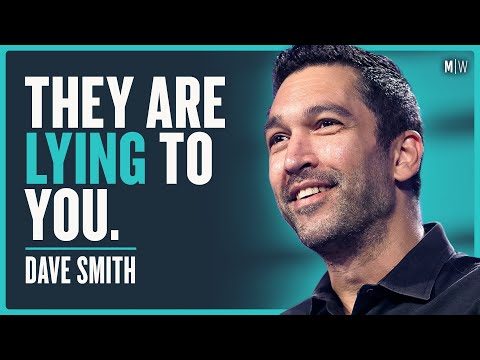
Why Does Mainstream Media Suck So Much? - Dave Smith
Chris Williamson (host), Dave Smith (guest), Narrator
In this episode of Modern Wisdom, featuring Chris Williamson and Dave Smith, Why Does Mainstream Media Suck So Much? - Dave Smith explores dave Smith Explains Why Legacy Media Lost Credibility And Power Dave Smith argues that corporate media in the US and wider West effectively functions as state-aligned propaganda whose primary role is to protect powerful interests rather than inform citizens. He says what’s changed recently isn’t that they lie, but that the lies have become blatantly stupid and impossible to sustain in an era where audiences can easily fact-check them via independent media. Chris Williamson and Smith compare legacy outlets with long-form podcasts, Substacks, and other internet shows, contending that deeper, more authentic conversations now live outside traditional networks and that trust has shifted accordingly. They also explore why fringe or populist figures gain traction (media and institutional failure), the fragmentation of social media, and what it would really take for political outsiders like Trump or libertarians to “drain the swamp.”
Dave Smith Explains Why Legacy Media Lost Credibility And Power
Dave Smith argues that corporate media in the US and wider West effectively functions as state-aligned propaganda whose primary role is to protect powerful interests rather than inform citizens. He says what’s changed recently isn’t that they lie, but that the lies have become blatantly stupid and impossible to sustain in an era where audiences can easily fact-check them via independent media. Chris Williamson and Smith compare legacy outlets with long-form podcasts, Substacks, and other internet shows, contending that deeper, more authentic conversations now live outside traditional networks and that trust has shifted accordingly. They also explore why fringe or populist figures gain traction (media and institutional failure), the fragmentation of social media, and what it would really take for political outsiders like Trump or libertarians to “drain the swamp.”
Key Takeaways
Legacy media lost trust by repeatedly backing power and getting major stories wrong.
From Vietnam to Iraq, Russiagate, COVID, and the economy, Smith argues corporate outlets almost always err on the side of the CIA and political elites, so their failures look less like honest mistakes and more like a structural incentive to protect power.
Get the full analysis with uListen AI
Propaganda now looks stupid because audiences can instantly compare it to raw footage.
He points to viral clips (e. ...
Get the full analysis with uListen AI
Independent media wins because it’s more intelligent, authentic, and uncensored.
Long-form shows like Rogan’s or serious online discussions (e. ...
Get the full analysis with uListen AI
Attacking alternative voices without offering better options only deepens their appeal.
Whether it’s Joe Rogan on geopolitics or Andrew Tate as a male role model, critics often say “not him” but fail to propose credible alternatives; that vacuum, combined with institutional failure, pushes audiences toward controversial figures.
Get the full analysis with uListen AI
Woke moral policing chills honest inquiry and removes valuable heterodox thinkers.
Smith argues that a culture where one misstep defines your entire character discourages exploration, punishes provocative but valuable thinkers, and makes people live in fear that a single sentence could be weaponized against them.
Get the full analysis with uListen AI
The core of Washington corruption is government size and forced wealth extraction.
From a libertarian view, a $7 trillion state funded by taxation, money printing, and borrowing inevitably breeds a class of political cronies; any real “drain the swamp” effort must involve drastic cuts and structural reform, not just better rhetoric.
Get the full analysis with uListen AI
Governing and reforming the system is far harder than criticizing it from the outside.
They note Trump’s first term showed how entrenched interests, media narratives (e. ...
Get the full analysis with uListen AI
Notable Quotes
“I view the corporate media apparatus in most Western countries as essentially state propaganda. They might as well be state media.”
— Dave Smith
“The best clicks that the mainstream media now get are commenting on what independent media is doing.”
— Chris Williamson
“It is a damning indictment of our media landscape that we have to turn to you and Rogan for accurate analysis and insight.”
— Chris Williamson
“If the institutions had done a better job, none of this would exist. Joe Rogan doesn’t have anything like the resources CNN has, and yet he’s lapped them several times over.”
— Dave Smith
“There’s a line you can cross of being so corrupt and so evil that you essentially lose the right to exist. I think the corporate media is well beyond that point.”
— Dave Smith
Questions Answered in This Episode
If legacy media is too far gone to reform, what concrete institutional model should replace it, and how would it avoid the same capture by power?
Dave Smith argues that corporate media in the US and wider West effectively functions as state-aligned propaganda whose primary role is to protect powerful interests rather than inform citizens. ...
Get the full analysis with uListen AI
How can independent media scale up “boring but essential” coverage (local issues, weather, regulatory detail) without becoming corporatized or click-driven like the outlets it criticizes?
Get the full analysis with uListen AI
What would a credible, positive alternative to figures like Andrew Tate for young men actually look like, and who is realistically positioned to fill that role?
Get the full analysis with uListen AI
If debates and major political events move onto independent platforms, how should standards of fairness, fact-checking, and accountability be set and enforced, if at all?
Get the full analysis with uListen AI
Given the splintering of social platforms into ideological echo chambers, is there any realistic way to restore a shared public square where opposing sides actually engage?
Get the full analysis with uListen AI
Transcript Preview
Busy few weeks for you.
(laughs) Yeah, it has been. I'm tired.
Yeah. What do you make of the media's performance this year? What's your assessment of them?
Um... Man, it's like, I, the- the answer's obvious, but I'm trying to find the words to (laughs) to really g- I mean, it's- it's not... You know, I- I view the- the corporate media apparatus in, not just the United States of America, but in- in most Western countries, as essentially state pr- propaganda. They might as well be state media. There's essentially no difference there. Their job is to cover for powerful people and to spin the narrative that those powerful people wish for the plebs to believe. So, I think that's always been true. Like, that's not... Th- there's nothing drastically different in- in this, uh, last year, as opposed to, you know, 50 years ago or something like that. And if you look at the way, you know, the media lied the United States into Vietnam or something like that, or... You know, this is always what they've been in the business of doing. What's striking to me about the last year is how profoundly stupid the propaganda has become, and kind of their inability to adjust to the new facts on the ground. So, you- you know, something like... J- just- just for one example that, which I guess I care about 'cause he's a good- a friend of mine, but... So, Tony Hinchcliffe, when he speaks at the- at the Nazi rally in Madison Square Garden. If you are at all plugged into, like, social media or this world of internet shows that we're a part of, you just kinda know, this- this video has gone viral. I mean, there's, you know, you... Th- the video of Tony doing his insult comic routine is, you'll see one clip on Twitter that's got three million, another has seven million, another has 600,000, another has th- Now, CNN at the same time is getting, like, 200,000 views on their- their daytime show. And this show is telling you that a speaker made a comment at a Trump rally, but everyone who's seen that is also seeing the actual thing. Like, they can literally see that you're lying to m- So, like, you gotta step it up here, guys. You gotta adjust. And they just didn't adjust. They... And- and the lies... It's not, it's not that they're lying. That's nothing new. But the lies like, "Joe Biden is sharp as a tack," and, "Kamala Harris is a phenomenon of joy." And, you know, like, they're, they were just so blatant that it w- You know, it's like, well, of course n- nobody's gonna be fooled by this, or next to nobody. So, I think the best thing that's come of- of this election and- and the fallout since is that even the corporate media has finally had to admit that they're not the mainstream anymore. And that, to me, has been really fascinating watching them. They're like, "Well, I guess the real action is over here with Joe Rogan and with all these internet shows and not with us," which- which has been true for a while. You could just look at the numbers. It's- it- it has been true for... But to see them finally have to grapple with that has... That has been glorious.
Install uListen to search the full transcript and get AI-powered insights
Get Full TranscriptGet more from every podcast
AI summaries, searchable transcripts, and fact-checking. Free forever.
Add to Chrome