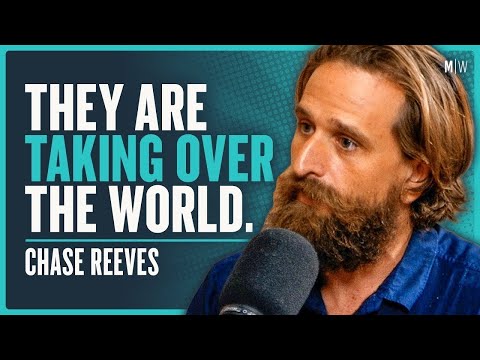
The Spirituality Of White Feral Girl Privilege - Chase Reeves
Chris Williamson (host), Chase Reeves (guest), Narrator
In this episode of Modern Wisdom, featuring Chris Williamson and Chase Reeves, The Spirituality Of White Feral Girl Privilege - Chase Reeves explores spirituality, Sex, Status Games: Navigating Modern Life’s Empty Scripts Chris Williamson and Chase Reeves explore how idolizing heroes, chasing achievement, and following cultural scripts around sex and success often mask deeper feelings of inadequacy and disconnection.
Spirituality, Sex, Status Games: Navigating Modern Life’s Empty Scripts
Chris Williamson and Chase Reeves explore how idolizing heroes, chasing achievement, and following cultural scripts around sex and success often mask deeper feelings of inadequacy and disconnection.
They contrast long‑term committed relationships with modern hookup culture, arguing that perceived “freedom” often conceals pressure, loneliness, and a lack of meaning.
The conversation critiques contemporary status games—meritocracy, intersectionality, and viral trends like “hot girl summer” and “feral girl summer”—as shallow frameworks that distract from building a genuinely good, grounded life.
Throughout, they return to themes of responsibility, authentic inauthenticity, spiritual depth, and the difficulty of pursuing excellence without being driven solely by internal wounds or societal expectations.
Key Takeaways
Stop deifying your heroes; learn from both their gifts and their flaws.
Recognizing that figures like Alan Watts or Ram Dass had addictions, messy sexuality, or banal deaths prevents unhealthy self-comparison and lets you integrate their wisdom without copying their dysfunction.
Get the full analysis with uListen
Casual sex often delivers anticipation and then an existential crash, not fulfillment.
Williamson argues that modern hookup culture looks glamorous from the outside, but in practice the ‘post‑nut clarity’ and emotional hollowness outweigh the brief thrill, especially compared to deep, long-term partnership.
Get the full analysis with uListen
Freedom without depth can become its own form of bondage.
Perpetual optionality—endless dating, endless career pivots, endless identity experiments—can keep people from going deep in relationships, work, or place, leaving them anxious, unmoored, and perpetually chasing novelty.
Get the full analysis with uListen
Meritocracy and success culture often produce rich outcomes and poor lives.
Using examples like Tiger Woods, they suggest many high performers are driven by fear of inadequacy; the world may call their outcomes ‘success,’ even as that same drive corrodes happiness, health, and relationships.
Get the full analysis with uListen
Victimhood and purity spirals in identity politics are unsatisfying status games.
Ideas like ‘white gay privilege’ and ever-finer hierarchies of oppression show how intersectionality can turn into a circular firing squad, where people compete to be most aggrieved instead of building anything constructive.
Get the full analysis with uListen
Authenticity starts with being honest about your inauthenticity.
Reeves’ line—“the only authenticity is authenticity about your inauthenticity”—captures the idea that real presence comes from admitting your personas, people‑pleasing, and fear of rejection, rather than pretending they’re not there.
Get the full analysis with uListen
Simple, durable principles beat complex life plans and ideological noise.
Both men favor values like responsibility, craftsmanship, and deep relationships over five‑year plans or online culture‑war battles, arguing that chopping wood, carrying water, and ‘lifting weights, eating protein’–style basics are what actually move life forward.
Get the full analysis with uListen
Notable Quotes
“Accept that all of your heroes are full of shit. Your heroes aren't gods. They're just regular people who probably got good at one thing by neglecting literally everything else.”
— Jason Pargin (quoted by Chris Williamson)
“We put people on pedestals… they just provide this screen for me to constantly criticize myself in order to get better or something.”
— Chase Reeves
“The vast majority of people that are in their 30s or 40s that look at the current world of Insta, Tinder dating… would get eaten a-fucking-live if they entered the modern dating market.”
— Chris Williamson
“How much freedom is there in going on a night out and feeling like you are not worthy or you're somehow less if you go home alone?”
— Chris Williamson
“The only authenticity is authenticity about your inauthenticity.”
— Chase Reeves
Questions Answered in This Episode
How can someone practically balance the drive for excellence with the desire for a rich home and inner life, without relying on fear or inadequacy as fuel?
Chris Williamson and Chase Reeves explore how idolizing heroes, chasing achievement, and following cultural scripts around sex and success often mask deeper feelings of inadequacy and disconnection.
Get the full analysis with uListen AI
If hookup culture is often hollow, what concrete steps can young people take to build deeper, more meaningful romantic connections in a highly ‘liberated’ dating market?
They contrast long‑term committed relationships with modern hookup culture, arguing that perceived “freedom” often conceals pressure, loneliness, and a lack of meaning.
Get the full analysis with uListen AI
In your own life, where do you see yourself playing status games—whether meritocratic, sexual, or ideological—and what would it look like to step out of them?
The conversation critiques contemporary status games—meritocracy, intersectionality, and viral trends like “hot girl summer” and “feral girl summer”—as shallow frameworks that distract from building a genuinely good, grounded life.
Get the full analysis with uListen AI
How do you distinguish between healthy responsibility and taking on too much blame or ownership for things that aren’t actually yours to carry?
Throughout, they return to themes of responsibility, authentic inauthenticity, spiritual depth, and the difficulty of pursuing excellence without being driven solely by internal wounds or societal expectations.
Get the full analysis with uListen AI
Given the critique of identity-based purity spirals, what alternative frameworks could help people pursue justice and belonging without turning everything into an oppression competition?
Get the full analysis with uListen AI
Transcript Preview
The vast majority of people that are in their 30s or 40s that look at the current world of Insta, Tinder dating-
Mm-hmm.
... and sort of free and easy sex that's become decoupled from making babies or relationships would get eaten a fucking live if they entered the modern dating market.
Mm-hmm.
Chase Reeves, welcome to the show.
Odalay.
How are you doing?
Good, man. How are you?
Very well. I saw a quote the other day from, uh, Jason Pargin, who said, "Accept that all of your heroes are full of shit. Your heroes aren't gods. They're just regular people who probably got good at one thing by neglecting literally everything else."
Mm.
What do you think of that?
Yes. (laughs) I think yes. Uh, I think, uh, it puts me in mind of, there's a singer-songwriter named Ryan Adams, who I loved for a long time, and I had several opportunities to go see him, but ne- uh, always choosing not to, for exactly that reason. Like, I didn't wa- I wanted to continue enjoying his music the way that I had, and I just felt like it was gonna change it.
Why?
Because I've had that experience a lot, where you, you realize the humanity of your heroes, and it's an important, it's an important thing to learn if you're in the world, like, making stuff. I s- fancy myself someone's future hero, I think. (laughs) At least my sons. (laughs) My daughters, maybe. But experiencing the humanity of people that you have idolized in some way can, l- l- like, I, it's just happened a lot. It's happened a lot. It's been a big part of, like, you know, modern wisdom. It's been in part, big part of, like, coming to... terms with how life ends up really working. That point about them neglecting all the other parts of their life, it's like, Alan Watts, huge fan of Alan Watts, right? Well, if you've learned more about how his days ended, it's like, "Oh, wow, that contextualizes Alan Watts a little bit."
How did, does his day end?
He kinda, he basically, he, he died of, like, alcohol consumption, and there's, it's, it's not fully, uh, there's still some, you can find s- on- online some writings from some of his friends going like, "I mean, here's the deal, guys." Alan Watts, you can hear him in, several times going, "I just like drinking," you know? "I just," (laughs) "I just like it." Um, and that was kind of a part of his spirituality in some ways. Not the drinking, but just like the being into what you're into. But he had some speaking gigs booked. There was stuff that he was looking forward to doing in life, but he expired, right? And you just think, and my buddy Jay always brings that up to me about, 'cause he knows I like Alan Watts or something, and it's that, I, I'm a follower of spiritual teachers. Oftentimes, like a Ram Dass has meant a lot to me and stuff, and, uh, I love that Ram Dass will say something like my brother calls me, "Rammed ass." You know? (laughs) I love the humanity there. And you also get to hear stories of Ram Dass is a very sexually active guy through his life, you know? We put people on pedestals. We project onto them what I, uh, like kind of, I'm projecting onto them based on where I feel like my i- inequity is, or something like that, where my detriments are.
Install uListen to search the full transcript and get AI-powered insights
Get Full TranscriptGet more from every podcast
AI summaries, searchable transcripts, and fact-checking. Free forever.
Add to Chrome