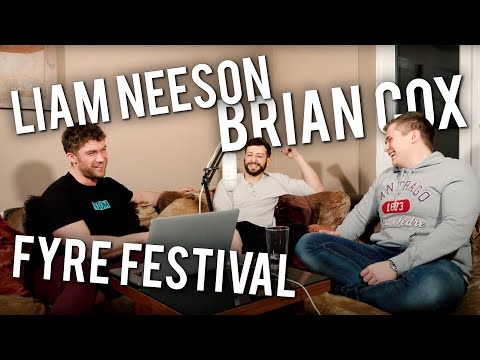
Liam Neeson, Fyre Festival & Brian Cox | Catch Up 101
Chris Williamson (host), Jonny (guest), Yusef (guest), Narrator, Narrator, Narrator
In this episode of Modern Wisdom, featuring Chris Williamson and Jonny, Liam Neeson, Fyre Festival & Brian Cox | Catch Up 101 explores comedy, calamity, and cognition: tech, scams, racism, and bears Chris Williamson, Johnny, and Yusuf sit down for an unstructured catch‑up that jumps between personal stories, tech preferences, documentaries, and big ethical questions. They cover Johnny’s appearance on the UK game show *Pointless*, meditation retreats, car accidents, and why they’re evangelical about Apple products and AirPods.
Comedy, calamity, and cognition: tech, scams, racism, and bears
Chris Williamson, Johnny, and Yusuf sit down for an unstructured catch‑up that jumps between personal stories, tech preferences, documentaries, and big ethical questions. They cover Johnny’s appearance on the UK game show *Pointless*, meditation retreats, car accidents, and why they’re evangelical about Apple products and AirPods.
The conversation then pivots into analysis of the Fyre Festival fiasco, the psychology of its founder Billy McFarland, and how success bias shapes public judgment. They also dissect Liam Neeson’s controversial confession about past racist revenge thoughts, using it to explore tribalism, cancel culture, and whether we should punish people for thoughts they later regret.
Along the way they discuss Netflix crime documentaries, insane true‑crime plots, self‑driving car ethics, placebo effects, and the looming terror of bears, sharks, and existential risks. The tone is comedic and meandering, but it repeatedly circles back to themes of human fallibility, asymmetric risk, and how tech and media shape modern behavior.
Key Takeaways
Brilliant marketing cannot compensate for broken operations.
Fyre Festival’s viral orange tiles, supermodel shoots, and hype machine worked spectacularly—but the lack of infrastructure, logistics, and basic planning (water, toilets, shelters) guaranteed collapse. ...
Get the full analysis with uListen AI
We judge outcomes more harshly than intentions or processes.
The hosts argue that if Fyre Festival had, by luck, just about worked, Billy McFarland might now be lionized as a visionary rather than imprisoned. ...
Get the full analysis with uListen AI
Asymmetric risk should guide everyday behavior.
They use examples like texting while driving and relying on a single alarm clock: small potential upside (convenience) versus huge possible downside (fatal crash, life-changing mistake). ...
Get the full analysis with uListen AI
Thoughts, even dark ones, aren’t the same as actions.
Discussing Liam Neeson’s admission of racist revenge fantasies decades ago, they distinguish between feeling vengeful, briefly acting on that feeling (walking with a weapon) and actually attacking someone. ...
Get the full analysis with uListen AI
Tribalism often masquerades as racism or moral certainty.
In Neeson’s story, the target was framed more as an avatar of a ‘group’ that hurt his friend than an individual. ...
Get the full analysis with uListen AI
Tech ecosystems can radically change productivity and friction.
They praise the Apple ecosystem (MacBook, iPhone, AirPods, Alfred app) for seamless integration and tiny time-savers, contrasting it with clunky corporate PCs. ...
Get the full analysis with uListen AI
Placebo and expectation can produce real physiological effects.
Yusuf notes that people can develop tangible signs (like rashes) when they believe they’ve been exposed to allergens, and benefits from ‘fake’ supplements can still occur even after someone knows they’re placebo. ...
Get the full analysis with uListen AI
Notable Quotes
“As soon as you feel that impact, it’s not like, ‘Ah, my neck.’ It’s just all of the admin flashes before your eyes.”
— Yusuf
“If the stars had aligned and Fyre had worked, we’d be hailing him as a genius—his virtue wouldn’t have changed at all.”
— Chris (paraphrasing the group’s view on Billy McFarland)
“If you want people in the world to be able to learn from others’ mistakes, you’re not going to get much more perfect than this as a learning opportunity.”
— Chris, on Liam Neeson’s confession
“It’s the reverse of compounding interest: a number of small compounding bad decisions and before you know it you’re strung up by your nipples in Russia somewhere.”
— Johnny
“Use a PC for three minutes and it’ll answer the question of why I bought a MacBook.”
— Yusuf
Questions Answered in This Episode
How should we distinguish between morally dangerous thoughts and morally blameworthy actions, especially when people voluntarily admit and reflect on past impulses?
Chris Williamson, Johnny, and Yusuf sit down for an unstructured catch‑up that jumps between personal stories, tech preferences, documentaries, and big ethical questions. ...
Get the full analysis with uListen AI
Is it ethical or smart for creators to personally front large sums (like Daniel Sloss with Netflix specials) in the hope of platform pickup, or does that normalize unsustainable risk-taking?
The conversation then pivots into analysis of the Fyre Festival fiasco, the psychology of its founder Billy McFarland, and how success bias shapes public judgment. ...
Get the full analysis with uListen AI
What practical framework could an ordinary person use to identify and avoid asymmetric risks in daily life beyond obvious examples like texting while driving?
Along the way they discuss Netflix crime documentaries, insane true‑crime plots, self‑driving car ethics, placebo effects, and the looming terror of bears, sharks, and existential risks. ...
Get the full analysis with uListen AI
Does true-crime and disaster documentary culture (Fyre, Ted Bundy, Abducted in Plain Sight) meaningfully educate viewers about human psychology, or just desensitize and entertain?
Get the full analysis with uListen AI
Are closed tech ecosystems like Apple’s genuinely better for users in the long run, or do they simply trade friction for lock-in and higher dependence on a single vendor?
Get the full analysis with uListen AI
Transcript Preview
Yeah. We went to a meditation retreat, didn't we?
It was amazing, but it was really difficult. For anyone who is considering doing a meditation retreat, it's really fucking hard.
(laughs)
Why did you buy a MacBook rather than a PC?
Anyone, use a PC for three minutes and it'll answer that question.
So-
So I've been rear-ended twice in the last month.
In a car.
In a car.
We should clarify that.
In a car.
Yeah.
You know what it is? As soon as you feel that impact, the sense is, it's not like, "Ah, my neck." It's, it's just all of the admin flashes before your eyes.
(laughs)
(laughs)
All of the like, "Oh my God-
Like a bright light.
... the paperwork. Oh."
And fuss with planes.
This is why you shouldn't be allowed on a plane unless you've got an iPhone. And everything would be much simpler, because the people who've made bad decisions would be confined to the, where they live.
You've finally got onto the life hack of getting your hair cut at home, haven't you?
Yeah, I have.
Before the hairdresser went round to his, she texted me to say, "Hang on a second, I'm about to go round to this person's house that I've never met before. I probably should think about my own safety. Is he, is he a weirdo?" And I'm like... (laughs)
(laughs) Ladies and gentlemen, look who's joined me again. Johnny and Yusuf from propanefitness.com. It's been a long while, welcome back.
Welcome.
Thank you. Welcome to us. Welcome to you, sir.
(laughs)
(laughs)
So, today we're doing a catch-up episode. No agenda, no topics in hand other than just what's been going on in our lives recently. So what's been going on in your life recently, Jonathan? What have you been doing? Why do you... I almost went throwing the TV at him.
Jonathan's a famous hot potato.
Oh.
There you go.
Oh, see, I have been on TV.
Today.
Love Island.
On iPlayer.
Love Island 2019.
(laughs) Christ. Love Island, yeah. Yeah.
I bet you couldn't think of anything worse than going to Love Island. Do you not allow that at home?
There are some worse things.
Ads manager is, he's having the offing minutes.
(laughs) You wouldn't be able to do your Facebook ads?
(laughs)
So why were you on TV?
God. So I was basically put on TV-
(laughs)
... by someone who wanted to go on Pointless but didn't have a partner.
(laughs)
So if you, if you don't watch Pointless, it's a, it's aired, I think it's six days a week in the UK. Have you ever seen Pointless?
No.
You've probably seen the bit-
Install uListen to search the full transcript and get AI-powered insights
Get Full TranscriptGet more from every podcast
AI summaries, searchable transcripts, and fact-checking. Free forever.
Add to Chrome