What It Really Takes to Build a $3 Billion Business
Marina Mogilko (host), Gaurav Munjal (guest), Roman Saini (guest), Marina Mogilko (host)
In this episode of Silicon Valley Girl, featuring Marina Mogilko and Gaurav Munjal, What It Really Takes to Build a $3 Billion Business explores unacademy founders on scaling YouTube education into a $3B edtech powerhouse Unacademy began as a YouTube education channel in 2010, built by founders who were content creators first and later became platform and product builders.
Unacademy founders on scaling YouTube education into a $3B edtech powerhouse
Unacademy began as a YouTube education channel in 2010, built by founders who were content creators first and later became platform and product builders.
They scaled by democratizing educator content creation, then shifting toward test prep and eventually operating a large educator ecosystem (hundreds to ~1,000 educators at peak) plus a major YouTube top-of-funnel machine.
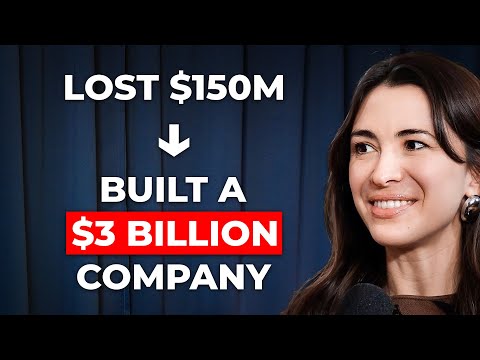
Post-COVID, demand shifted back to offline learning, triggering a painful period of heavy losses (up to $150M/year), layoffs, and founder mental-health strain—followed by a push toward operational efficiency and near break-even performance.
The founders are now pursuing a second growth engine with AirLearn, an AI-enhanced Duolingo competitor that reached multi-million ARR quickly with no paid marketing, leveraging product-led growth and creator-led distribution (TikTok/UGC).
Key Takeaways
Start as content, but build toward a platform or product.
Unacademy used YouTube as a stepping stone, then shifted to owning the learning experience via an app/platform—because long-term value accrues to product + distribution, not just a channel.
Get the full analysis with uListen AI
Tooling can unlock supply: “TikTok for education” created creator scale.
They reduced the friction of making Khan Academy–style lessons (recording/editing/tablet stack), which helped recruit educators who otherwise wouldn’t create content.
Get the full analysis with uListen AI
Education creator businesses require a continuous talent pipeline.
As educators get popular, they become expensive and/or get poached; the founders emphasize a “creator academy” model—constantly developing new teacher talent to sustain growth.
Get the full analysis with uListen AI
Post-market shocks (like COVID reversals) test business-model durability.
Online edtech demand dropped materially after COVID, forcing an offline expansion; the founders frame this as a brutal but educational period that reshaped how they run the company.
Get the full analysis with uListen AI
Competing with incumbents can be rational when execution is your edge.
AirLearn was built explicitly as a Duolingo alternative by fixing perceived weaknesses (too gamified, insufficient grammar/structure), showing a “known market + better product” strategy.
Get the full analysis with uListen AI
Zero paid marketing can work—if retention and distribution loops are strong.
AirLearn focused on product quality/retention first, then leveraged UGC/creator distribution (large TikTok view volume) plus targeted influencers and K-factor optimization.
Get the full analysis with uListen AI
AI will disrupt “personalized attention” categories more than celebrity-teacher categories.
They believe test prep depends on trust, coaching, and credibility (a ‘tournament’), so AI is more supplemental there, while language learning/homework help can be heavily AI-tutored.
Get the full analysis with uListen AI
Notable Quotes
““Men usually don't talk about it… I was having a panic attack once a month.””
— Gaurav Munjal
““We were losing 150 million a year.””
— Gaurav Munjal
““We just need a big win also again. Maybe we should build a Duolingo competitor, and it just worked.””
— Gaurav Munjal
““You should not think that you are the only one who can do it.””
— Roman Saini
““Test prep is not technically education… it’s a competition, it’s a tournament.””
— Gaurav Munjal
Questions Answered in This Episode
On the original thesis: What specifically made you believe “unbundling of YouTube” would happen for education, and what parts of that thesis turned out wrong?
Unacademy began as a YouTube education channel in 2010, built by founders who were content creators first and later became platform and product builders.
Get the full analysis with uListen AI
On the pivot: What were the clearest signals post-COVID that forced offline expansion—and what did you try first that didn’t work?
They scaled by democratizing educator content creation, then shifting toward test prep and eventually operating a large educator ecosystem (hundreds to ~1,000 educators at peak) plus a major YouTube top-of-funnel machine.
Get the full analysis with uListen AI
On AirLearn’s product: Which exact “pedagogy tweaks” drove the strongest retention gains versus Duolingo (e.g., grammar sequencing, speaking loops, correction style)?
Post-COVID, demand shifted back to offline learning, triggering a painful period of heavy losses (up to $150M/year), layoffs, and founder mental-health strain—followed by a push toward operational efficiency and near break-even performance.
Get the full analysis with uListen AI
On growth: How is the TikTok/UGC engine structured—what incentives, content guidelines, and QA processes prevent low-quality or misleading content?
The founders are now pursuing a second growth engine with AirLearn, an AI-enhanced Duolingo competitor that reached multi-million ARR quickly with no paid marketing, leveraging product-led growth and creator-led distribution (TikTok/UGC).
Get the full analysis with uListen AI
On unit economics: For Unacademy’s offline centers, what are the core metrics (payback period, utilization, CAC) that determine whether a new center gets opened?
Get the full analysis with uListen AI
Transcript Preview
started as a YouTube channel, and now the largest educational company in India-
Yeah
... valued at around $3 billion.
We had, like, 1,000 educators creating.
Are you replacing some teachers with AI?
You should not think that you are the only one who can do it.
You're preparing for your IPO, right?
Yeah.
And you're still losing money.
Men usually don't talk about it, but the 50% of whatever crying has happened, happened in bad days. I was having a panic attack once a month.
That was quite terrible.
Uh, we were losing 150 million a year.
Have you ever had this conversation, like, "Let's just, you know, shut down the company, it's not working?"
You know, we just need a big win also again. Maybe we should build a Duolingo competitor, and it just worked.
Hello, everyone. Welcome to Silicon Valley Girl. I have two most amazing guests today. I've been trying to get you on this podcast because what you've built is just amazing. Started as a YouTube channel, and now the largest educational company in India, valued at around $3 billion.
Yeah.
All right, let's talk about this. Can you walk me through this journey of like, "Hey, I'm gonna start this YouTube channel," to actually building a company on top of it?
So, uh, thanks for inviting us to the podcast. I think I was in college, and Roman and I went to tuition together. It's coaching for examinations.
Mm.
In India, test prep is a big market. So we used to go, uh, to this coaching center together, and then I went to Mumbai, and he went to Delhi. And then I think it was the third year of college where Khan Academy was super big. I was always tweaking around stuff. I started coding when I was 12. I was blogging when I was 17. So my parents, uh, got a $200 cheque from Google AdSense when I was 17, so they thought I'm doing some fraud or something like that. [laughing] So I think, uh, i- it's been an interesting journey where, uh, we have been content creators first, and then product people. And, uh, third year of college, launched a channel called Unacademy. This is back in 2010. Started creating content, et cetera, and then went on to do other stuff. I started a company that I sold when I was 23. Uh, but the channel was always growing, and at some point, Roman, who was a medical doctor, and he was the one good in academics. I used to just somehow pass my subjects. So he started creating content, and those got millions of views, and then we decided that we'll create Unacademy, which is like a YouTube for education. And, and we had seen Twitch was recently acquired by Amazon. So the thesis was that there is unbundling of, uh, YouTube happening, um, and if Twitch can be so valuable... And that's how Unacademy started.
So you thought it's gonna be like a separate platform just for educational content, not like a test prep, uh-
Install uListen to search the full transcript and get AI-powered insights
Get Full TranscriptGet more from every podcast
AI summaries, searchable transcripts, and fact-checking. Free forever.
Add to Chrome