The best AI founders in the world are moving here
Jared Friedman (host), Harj Taggar (host), Garry Tan (host), Diana Hu (host)
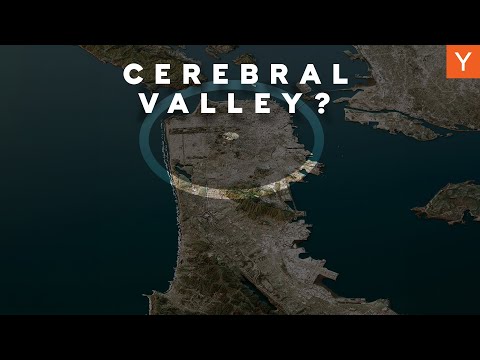
In this episode of Y Combinator, featuring Jared Friedman and Harj Taggar, The best AI founders in the world are moving here explores san Francisco’s AI ‘Cerebral Valley’ Sparks a New Tech Boom Loop The episode traces San Francisco’s evolution from post–dot-com ghost town to Web 2.0 hub, its COVID-era decline, and its rapid AI-driven resurgence. The hosts argue that the city’s true advantage is cultural and social: intense density of ambitious builders, long-term thinkers, and a norm of celebrating startup risk-taking. They describe how AI companies like OpenAI and Anthropic have re-centered the global tech scene in specific SF neighborhoods now dubbed “Cerebral Valley,” especially around Dogpatch and Mission Bay. Despite ongoing urban problems, they see powerful network effects drawing the world’s best AI founders back, positioning SF to become the best city globally for misfit builders and deep technologists.
San Francisco’s AI ‘Cerebral Valley’ Sparks a New Tech Boom Loop
The episode traces San Francisco’s evolution from post–dot-com ghost town to Web 2.0 hub, its COVID-era decline, and its rapid AI-driven resurgence. The hosts argue that the city’s true advantage is cultural and social: intense density of ambitious builders, long-term thinkers, and a norm of celebrating startup risk-taking. They describe how AI companies like OpenAI and Anthropic have re-centered the global tech scene in specific SF neighborhoods now dubbed “Cerebral Valley,” especially around Dogpatch and Mission Bay. Despite ongoing urban problems, they see powerful network effects drawing the world’s best AI founders back, positioning SF to become the best city globally for misfit builders and deep technologists.
Key Takeaways
Proximity to other serious builders meaningfully increases startup success odds.
Living and working near other ambitious founders (like early YC clusters in the ‘Y-Scraper’) creates constant learning, serendipitous introductions, and motivation that are hard to replicate in isolation or non-tech cultures.
Get the full analysis with uListen AI
Cultural fit matters more than pure access to capital or talent.
The hosts argue that SF’s main advantage isn’t just investors or employees, but a culture that celebrates working obsessively on hard problems rather than judging founders for non-traditional careers or lack of short-term status.
Get the full analysis with uListen AI
Ambition is contagious in environments where building big things is normal.
Founders who arrive with modest goals often expand their ambitions when surrounded by peers pursuing world-changing ideas and treating decade-long journeys as normal and desirable.
Get the full analysis with uListen AI
AI has re-concentrated global innovation back into San Francisco.
Despite talk of a “distributed” post-COVID future, most leading AI labs and startups (OpenAI, Anthropic, Scale AI, etc. ...
Get the full analysis with uListen AI
In modern SF, neighborhood choice is now strategically critical.
Post-COVID divergence means some areas (Dogpatch, Mission Bay, Noe, Bernal, Glen Park, Mission Dolores) are safe, vibrant hubs for AI founders, while others (parts of SoMa, Tenderloin, Civic Center) can be demotivating or unsafe.
Get the full analysis with uListen AI
Founders should deliberately “manufacture luck” by clustering tightly.
From bumping into legendary investors on the street to co-founder matches and company mergers, dense founder clusters around YC and Cerebral Valley create frequent, high-value chance encounters that materially affect outcomes.
Get the full analysis with uListen AI
SF has the ingredients to become a hyper-inclusive, abundant tech metropolis.
If AI and other tech successes feedback into better housing, schools, arts, and safety, the hosts believe SF can evolve into a ‘San Fransokyo’-style city where misfits and nerds from everywhere can thrive and build for billions.
Get the full analysis with uListen AI
Notable Quotes
“San Francisco’s the place in the world where you can manufacture luck.”
— Harj (paraphrased host; speaker in transcript)
“For people who are builders, it’s actually important to be around other people who are like that.”
— Harj
“I actually think the biggest factor is that people become the average of the people who they surround themselves with.”
— Garry
“In order to work on AI pre-ChatGPT, you had to be sort of like a counterculture misfit.”
— Diana
“We have all the building blocks to make San Francisco into the best city in the world… give us your misfits, give us your nerds, give us your autists.”
— Garry
Questions Answered in This Episode
How sustainable is San Francisco’s AI-led boom if remote work and distributed teams continue to grow?
The episode traces San Francisco’s evolution from post–dot-com ghost town to Web 2. ...
Get the full analysis with uListen AI
What concrete policies or actions are needed to ensure SF’s tech wealth actually improves housing, safety, and public services?
Get the full analysis with uListen AI
Could another city realistically recreate SF’s founder culture and network effects, or is this path-dependent and unique?
Get the full analysis with uListen AI
How can early-stage founders outside the Bay Area approximate the benefits of Cerebral Valley without relocating?
Get the full analysis with uListen AI
What are the risks of concentrating so much AI power and talent in one geographic region, socially and geopolitically?
Get the full analysis with uListen AI
Transcript Preview
Why was San Francisco so definitively the center of the tech industry? Why did it all like agglomerate here?
San Francisco's the place in the world where you can manufacture luck.
Within a month of us moving in there, they launched Twitter. I was like, "I-..."
Wow.
"This place is like incredible." (laughs)
Everywhere here are people starting companies, really ambitious companies.
And then COVID hit.
In the last year s- some things have happened that have turned things around.
They feel the energy.
I actually think the biggest factor is that.
They have all the building blocks to make San Francisco into the best city in the world. Welcome back to another episode of The Light Cone. Today we're talking about San Francisco. It was dead, but now like Lazarus, it is back. And not only that, we've got a new thing to talk about, which is Cerebral Valley. People from all around the world are coming to move to San Francisco to just a few neighborhoods, we're in one of them in the Dog Patch, to build the future, to build the future of AI. Why is that? What's going on?
I think it's worth just charting the course of San Francisco over the last few years as a starting point.
So when we all got to San Francisco in 2006, D- San Francisco was coming out of its own doom loop, like doom loop 1.0.
(laughs) The dot-com bubble.
From, from the dot-com crash. In the late '90s, San Francisco was f- full to the brim again, and then the dot-com bubble burst. And when we got there, it kind of felt like a ghost town, like al- there was a lot of vacancy. Rents, rents had crashed. Um, and then what brought San Francisco out of the doom loop was the Web 2.0 boom. All these YC companies like Stripe and Airbnb and Dropbox moved to San Francisco, and they started hiring employees who moved into apartments, and like the tech economy just like dragged San Francisco back out of, out of, out of the doom loop.
Uh, this is like very specific point of like the Silicon Valley geography. I, I remember like when we were moving here in 2007, there was a real negative connotation about choosing to base your company in San Francisco instead of like-
Palo Alto.
Yeah. Palo Alto-
(laughs)
Mountain View, San Jose, even like anything south, and it, and it linked to the dot-com era where the perception, the belief was that during the dot-com era, all of the opportunists had come to and like moved into San Francisco because they wanted to like live in a cool city and have like cool things to do instead of like working. And it was a real conventional wisdom that post that era, if you were serious about starting a company, you'd choose to be based in like the peninsula. And if you chose to be in San Francisco, you were like actively choosing to not be serious about your company. It was a real neg- like investors really paid attention to this.
Install uListen to search the full transcript and get AI-powered insights
Get Full TranscriptGet more from every podcast
AI summaries, searchable transcripts, and fact-checking. Free forever.
Add to Chrome