By playing, you agree to uListen's Terms and Privacy Policy and YouTube's Terms of Service.
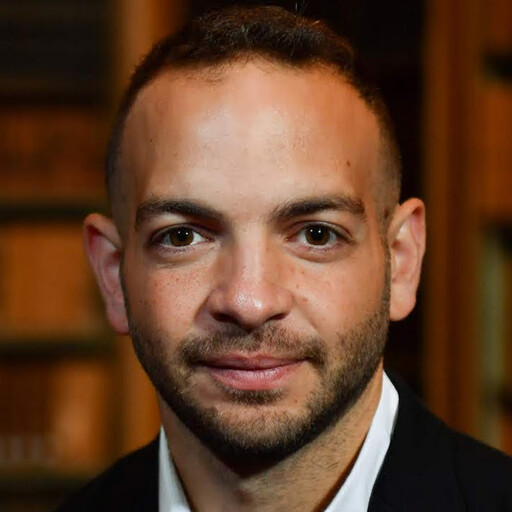 Alex Kantrowitz
Google CEO Sundar Pichai: AI’s Infinite Possibilities, Compute Scarcity Dilemmas, Future AI Products
Summaries, chapters, transcripts, and FAQs on this page are made by uListen, not YouTube.
At a glance
WHAT IT’S REALLY ABOUT
Pichai on frontier AI, agents, safety, and compute constraints
- Sundar Pichai says Google is firmly committed to frontier AI, describing Argon as a carefully tested model that is already capacity-constrained in usage and still has clear headroom for improvement.
- He argues frontier work matters because it reveals emerging capabilities early, supports demanding customers, enables recursive model-development loops, and unlocks internal developer inflection points that smaller or older models can’t reach.
- He describes a near-term future of multi-agent systems and persistent agents that unify experiences across Gemini, Search, and Workspace, reducing fragmentation between “chat” and “tasks.”
- He addresses safety by emphasizing defense-in-depth—alignment plus real-time monitoring, sandboxing, enterprise controls, and the need for cross-industry standards, independent evaluation, and eventual regulation.
- He explains Google’s compute dilemma as a long-lead-time planning problem where frontier AI compute is non-negotiable, cloud demand is contract-driven, and macro risks include bottlenecks across thousands of build components and potential overbuild depending on time horizon.
IDEAS WORTH REMEMBERING
5 ideasGoogle says it never stopped pursuing frontier AI and views it as core to its DNA.
He says Google has been thinking about the AI frontier for over a decade and took longer with Argon because of its capabilities, emphasizing careful testing and deployment.
Pichai frames frontier models as strategically necessary—not just for niche tasks, but for preparedness and internal leverage.
He argues that being at the frontier reveals emerging capabilities sooner, helps certain Cloud customers who specifically want frontier performance, and improves Google’s own development workflows by enabling work prior models couldn’t do.
Google expects multi-agent, always-on systems to become the dominant user experience.
He describes a near-future where multiple agents work together on long-horizon tasks and where consumers and enterprises access multi-agent frameworks that run persistently and “do things” in the background.
Recursive self-improvement is presented as incremental and human-in-the-loop today, not an uncontrolled ‘foom’ event.
He says today’s “RSI” is best understood as AI agents helping researchers in loops rather than models fully self-improving autonomously, while noting the continuum will keep progressing.
Pichai argues safety has to be operationalized with monitoring and standards, not treated as alignment-only.
He acknowledges alignment gaps and emphasizes layered defenses beyond alignment work, including real-time monitoring/telemetry, sandboxing and isolation, customer controls over deployment and data access, and dedicating compute to safe deployment; he also calls for cross-industry standards, independent evaluation, and a role for regulation.
WORDS WORTH SAVING
5 quotesWe are at early stages of the most consequential technology ever, and this is not like fiber, it's not dark. We are using it.
— Sundar Pichai
So the compute we have today is a function of decisions I made in twenty twenty-four.
— Sundar Pichai
Users, both in consumer and enterprise, will have access to kind of some multi-agent framework for them working all the time doing things. And so, you know, it feels like a moment of infinite possibilities.
— Sundar Pichai
I do feel, you know, we-- computing historically has been humans adapting to computing. With AI, it'll be the other way about.
— Sundar Pichai
The optimism is not an optimism that you just build whatever you want, whenever, you know? No. You, you work hard to make sure you're building technology in the service of humanity to, to make, uh, the human condition better.
— Sundar Pichai
SPEAKERS
Sundar Pichai
guestCEO of Alphabet and Google, leading the company’s AI and product strategy.
Alex Kantrowitz
hostTechnology journalist and host of the Big Technology Podcast.
High quality AI-generated summary created from speaker-labeled transcript.


