By playing, you agree to uListen's Terms and Privacy Policy and YouTube's Terms of Service.
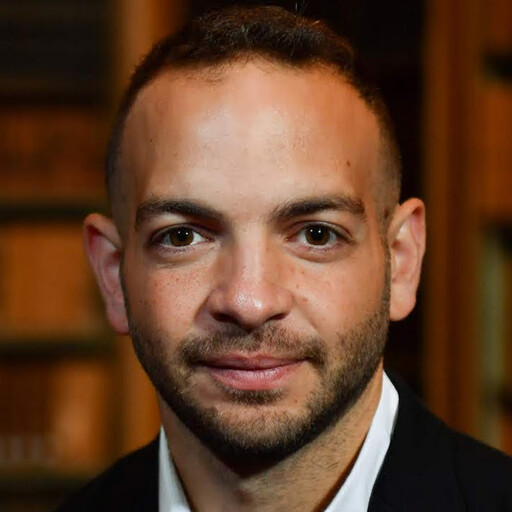 Alex Kantrowitz
Google DeepMind CEO Demis Hassabis: The Path To AGI, Deceptive AIs, Building a Virtual Cell
Summaries, chapters, transcripts, and FAQs on this page are made by uListen, not YouTube.
At a glance
WHAT IT’S REALLY ABOUT
Demis Hassabis on AGI timelines, agentic world models, and scientific AI
- Demis Hassabis says AGI—defined as human-level breadth and consistency across cognitive tasks—is likely still “three to five years away at least,” and he cautions against hype-driven declarations of near-term AGI.
- He argues that scaling foundation models continues to deliver gains, but AGI will also require additional components such as planning, search, memory, and more accurate world models to act reliably in the real world.
- He explains that math and games highlight both progress and brittleness in current systems, and that verifiability in formal domains makes them easier to improve than messy real-world tasks.
- He warns that deception in AI systems is a critical risk because it can invalidate evaluations, and he emphasizes the need for early deception testing and secure sandbox environments for agentic systems.
- He describes major scientific ambitions beyond AlphaFold, including a five-year push toward a “virtual cell” simulator, AI-based genomics for assessing mutations and complex disease interactions, and AI-driven materials discovery with a focus on testing material properties at scale.
IDEAS WORTH REMEMBERING
5 ideasAGI requires robust, broad competence—not isolated superhuman skills.
He defines AGI as a system that can exhibit the full range of human cognitive capabilities consistently, not just excel at select benchmarks while failing in basic ways.
Today’s models are powerful but brittle, and key cognitive components are still missing.
He points to missing attributes in current models: stronger reasoning, hierarchical planning, long-term memory, and more consistent behavior across tasks without fragile prompting.
Move-37-style originality likely needs agentic search on top of foundation models.
Using AlphaGo as an analogy, he says that a model alone can be decent, but world-class performance and originality require a search/planning layer that explores beyond what the model “knows.”
Verification is a bottleneck for general reasoning outside formal domains.
He argues math/coding/games are special because correctness is verifiable, while real-world tasks are messy and harder to check—limiting self-improvement without better grounding and evaluation.
World models plus action data are essential, but error compounding makes planning hard.
He describes building world models from large-scale data (including video) and improving them with active interaction (robots, realistic simulation), while noting planning breaks when small model errors compound over long horizons.
WORDS WORTH SAVING
5 quotesI think, um, you know, I, I would say probably, like, three to five years away at least.
— Demis Hassabis
I think part of that is, you know, there's a lot of pe- uh, people that need to do fundraising, a lot of startups and other things, and so I think we're going to have quite a few sort of fairly outlandish and, and, and slightly, uh, exaggerated claims.
— Demis Hassabis
The model itself is not enough to be an AGI. You need, uh, uh, this other capability for it to, to act in the world and solve problems for you.
— Demis Hassabis
I'm very worried about, uh, I think deception specifically is one of the, one of those core traits you really don't want in a system.
— Demis Hassabis
A virtual cell project is about building a simulation, an AI simulation of a full working cell.
— Demis Hassabis
SPEAKERS
Alex Kantrowitz
hostTechnology journalist and host of the Big Technology Podcast.
Demis Hassabis
guestCEO of Google DeepMind and AI researcher focused on artificial general intelligence and scientific discovery systems.
High quality AI-generated summary created from speaker-labeled transcript.


