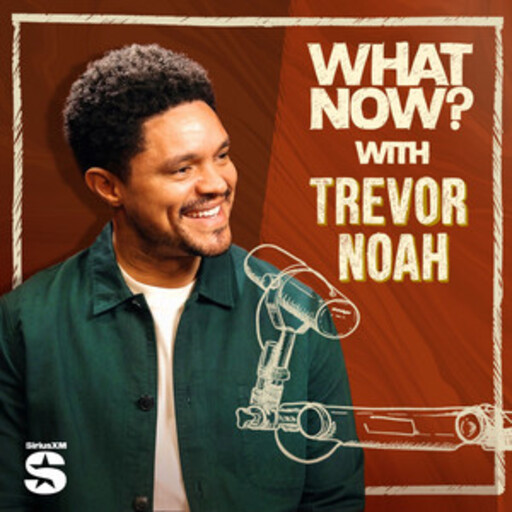
 What Now? With Trevor Noah
NYC SESSIONS: Elon’s Flying Cars and Sneaking Into Titanic ft. Devin Delliquanti
CHAPTERS
- 0:02 – 2:10
Cold open: Is Thanos a villain or just “morally complicated”?
The episode drops straight into the core argument: whether Thanos is truly the bad guy or simply the only character willing to do what others won’t. Trevor pushes a provocative framing—Thanos didn’t “kill,” he “disappeared” people—kicking off the episode’s recurring theme of semantics vs. consequences.
- •Thanos as ‘bad guy’ vs. Avengers as hypocritical heroes
- •Wordplay debate: killing vs. disappearing
- •Moral responsibility vs. outcome (“the effect is the same”)
- •Trevor’s contrarian defense as a setup for later deep dive
- 2:10 – 9:39
Messing with guests: inventing fake traditions (and why people go along)
Trevor proposes a social prank: pretending your family has a solemn tradition and watching a guest awkwardly comply. Devin shares a real-life version—being unexpectedly pulled into the Pledge of Allegiance at Thanksgiving—showing how social pressure can override logic.
- •How to manufacture a ‘tradition’ to throw off first-time guests
- •Why most people comply rather than challenge group behavior
- •Devin’s Thanksgiving Pledge of Allegiance story
- •Rules-of-the-room anxiety: what do you do when you don’t know the script?
- 9:39 – 14:37
‘Sadiversary’ + the Pledge: how rituals get invented and edited over time
The conversation shifts from awkward rituals to national ones, questioning why English uses “anniversary” for tragedies. They coin “sadiversary,” then connect it to how official texts evolve—like “under God” being added to the Pledge during the Cold War.
- •Why ‘anniversary’ feels wrong for tragic commemorations
- •Coining and spreading “sadiversary” as a cultural hack
- •Pledge of Allegiance logistics: do you need a flag present?
- •Historical add-on: “under God” as Cold War messaging
- 14:37 – 33:50
Tesla rocket-car hype vs. tech demo reality (and why we still need showmen)
Trevor and Devin dissect flashy tech reveals—especially Tesla—through the lens of misleading demos and overpromises. They compare Elon Musk’s spectacle to Apple’s early Siri hype, then land on a nuanced view: society needs both dream-selling showmen and skeptical brakes.
- •Why big-stage demos often don’t match consumer reality
- •Tesla’s ‘impossible’ specs and road-safety absurdities
- •Skepticism about Musk’s track record (Hyperloop, etc.)
- •The “snake oil vs. innovation” balance; Steve Jobs as example
- 33:50 – 38:24
Hamilton, backlash cycles, and Trevor’s ‘musical’ way of thinking
A detour into pop culture becomes a broader point about how audiences turn on popular phenomena. Trevor describes how rhythm and musical structure shape his memory, his comedy instincts, and even how he studied—turning exam material into rap recordings.
- •Hamilton as beloved art that later becomes ‘too popular’ to like
- •Why rhyming and rhythm make information stick
- •Trevor’s cassette-era study method: rapping school material
- •Teaching and recall: kids aren’t ‘dumb,’ they’re taught poorly
- 38:24 – 50:00
Near-death in transit: plane crash survival, lightning strikes, and fear logic
After the ad break, Devin recounts his parents surviving a deadly plane crash in Spain, plus his dad’s earlier lightning-strike incident. The group explores how trauma changes risk perception and why certain transport modes (planes, boats, motorcycles) feel uniquely terrifying.
- •Detailed retelling of the Spain crash and escape decisions
- •Aftermath: passports, bureaucracy, and getting home by ship
- •Lightning-strike ‘warning’ and Final Destination-style jokes
- •Why people swear off planes/boats/motorcycles but not cars
- 50:00 – 1:04:06
Ship steering wheels, ‘pirate logic,’ and why humans misjudge risk
A practical question—how do ships steer?—turns into a comedy bit about outdated mental models (pirate helms vs. modern controls). They connect it back to psychology: people blame car crashes on drivers but treat plane crashes as proof the whole system is unsafe.
- •Control vs. helplessness as the root of ‘this is dangerous’ beliefs
- •Helm/ship wheel confusion and the ‘shrimp restaurant’ aesthetic
- •Instant judgment: “What were they doing?” in car crashes
- •Public misunderstanding of aviation and mechanical vs. human error
- 1:04:06 – 1:10:51
Should porn require plot? The ‘Only Plot’ debate about context and consumption
Trevor argues that modern porn’s instant accessibility strips sex of context and humanity, proposing (half-seriously) mandatory storylines. Eugene counters with the reality of quick consumption and mocks the idea of turning porn into fine dining.
- •Porn as ‘fast food’: convenience vs. mental effects
- •Mandatory storyline as a mechanism to slow consumption
- •Eugene’s practical rebuttal: speed, secrecy, and real behavior
- •Comedy escalation: government oversight, AI scripts, “Only Plot”
- 1:10:51 – 1:24:50
Theme park skip passes ruined the fun (and what it reveals about dopamine)
Trevor tells a story about finally buying a skip-the-line pass and discovering it made the whole day worse—physically and emotionally. They connect it to modern “skip-to-the-reward” culture, especially in kids’ games and endless stimulation loops.
- •Why waiting can be part of what makes rewards satisfying
- •Skip-pass experience: more rides, less joy, more nausea
- •Parenting lens: dopamine loops in Mario Kart vs. story-driven games
- •The value of pacing, downtime, and anticipation in entertainment
- 1:24:50 – 1:29:28
The Avengers as Democrats: heroic branding, internal squabbles, no prevention
Trevor frames the Avengers as an allegory for the Democratic establishment: they like fighting villains but resist structural prevention and decisive sacrifice. They cite repeated moments where heroes refuse hard choices, then act too late or for revenge.
- •Heroes with power who don’t ‘do the thing’ until it’s too late
- •Examples: Vision/Wanda, Time Stone debates, Chris Pratt’s deviation
- •Critique of ‘looking good’ vs. acting effectively
- •Parallel to politics: prevention, sacrifice, and bureaucratic paralysis
- 1:29:28 – 1:46:18
Full debate: ‘Thanos was right’ (and why restoring the old world is the real failure)
The conversation returns to the opening provocation and expands into a full moral and strategic argument. Trevor defends Thanos as the only character with a coherent vision, while Devin critiques Thanos’s laziness and needless cruelty given the Stones’ power to solve scarcity without mass death.
- •Perspective bias: villains framed ugly + story told from heroes’ view
- •Avengers’ hypocrisy: private tech hoarding, destruction without rebuilding
- •Why ‘snap back to how it was’ is unimaginative and traumatically disruptive
- •Devin’s central critique: Thanos could have used omnipotence to create abundance
- 1:46:18 – 1:46:54
Outro: wrapping the chaos and inviting audience participation
Trevor ends by thanking viewers and encouraging sharing, commenting, and guest suggestions. The tone matches the episode’s style—playful, direct, and built around ongoing conversation with the audience.
- •Call to share the episode (even if you didn’t like it)
- •Invitation to engage in comments and suggest guests/topics
- •Reinforcing the show’s community-driven format


