By playing, you agree to uListen's Terms and Privacy Policy and YouTube's Terms of Service.
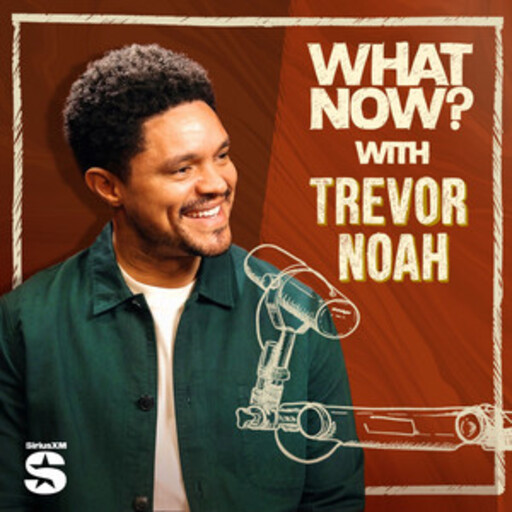 What Now? With Trevor Noah
Rachel Yehuda: Is Trauma a Disorder or a Survival Skill?
 Summaries, chapters, transcripts, and FAQs on this page are made by uListen, not YouTube.
Great conversations run long. Their best ideas don't have to.
uListen is free on iPhone, iPad, Android, Chrome, and Claude.
See howEpisode Details
EPISODE INFO
- Released
- January 22, 2026
- Duration
- 1h 34m
- Channel
- What Now? With Trevor Noah
- Watch on YouTube
- ▶ Open ↗
EPISODE DESCRIPTION
In this episode, Trevor and Eugene unpack intergenerational trauma with psychiatrist Rachel Yehuda. Turns out, trauma is inherited, passed down through generations, but don’t fear! The three turn the heavy science of PTSD into a profound conversation about meaning-making and we learn that where trauma can be passed-down, so can resilience. SurveyMonkey takes the fear out of asking—and the doubt out of deciding. If you haven't already.... Subscribe to the channel here: http://bit.ly/SubscribeTrevorNoah Or follow the podcast on your other favorite platforms... SiriusXM - Apple Podcasts - https://bit.ly/WhatNowOnApplePodcasts Spotify - https://bit.ly/WhatNowOnSpotify 0:00 - Trauma as Biology, Not Just Psychology 0:51 - The Historic Debate on Fear Responses 1:37 - Podcast Introduction and Understanding Trauma 2:39 - Dr. Yehuda’s Specialization in PTSD and Trauma Effects 3:22 - Why Some People Develop PTSD and Intergenerational Impacts 4:06 - The Relationship Between Trauma and Resilience 5:25 - Breaking Down Post-Traumatic Stress Disorder (PTSD) 6:27 - Debating PTSD as a Disorder 7:25 - Defining Trauma: Acute vs. Chronic Experiences 8:16 - Trauma from War, Holocaust, and Combat Veterans 10:13 - Normal Reactions to Trauma and Recovery Expectations 11:03 - When Trauma Responses Persist Beyond the Acute Phase 12:09 - Revolutionary Ideas on Trauma’s Biological Impact 13:20 - The Interplay of Body and Mind in Fear Responses 14:18 - The Amygdala’s Role in PTSD 15:33 - Remaining in Survival Mode After Trauma 16:59 - The World’s Role in Healing and Safety 17:44 - Misconceptions About “Big” vs. “Small” Traumas 19:07 - Trauma as Subjective and Eye of the Beholder 20:36 - Trauma as Various Forms of “Death” 21:53 - Unpacking Layers of Trauma in Therapy 23:57 - Shared Trauma and Memory in Communities 25:31 - Trauma’s Impact on Ecosystems and Societies 27:41 - Biology Validating Trauma Experiences 28:51 - Healing Through Helping Others and Veterans’ Stories 30:15 - The Importance of Shared Trauma Experiences 32:13 - Misunderstandings About Cortisol and Stress 33:19 - Discovering Low Cortisol in PTSD Patients 34:31 - Cortisol’s Functions in Stress and Recovery 36:14 - Analogies for Cortisol: Firemen and Inflammation 38:43 - Recalibration of the Stress System in Trauma 40:26 - Trauma as Common, But PTSD Not Inevitable 44:47 - Modern Environments and Repeated Traumas 46:03 - Desensitization to Violence in Society 48:39 - Prioritizing Societies with Less Trauma 50:35 - Intergenerational Trauma and 9/11 Study 52:43 - Historical Examples: Dutch Hunger Winter 54:26 - Trimester Effects in Prenatal Trauma Exposure 56:45 - How Intergenerational Trauma Shows Up 58:20 - Explaining Epigenetics and Gene Regulation 1:00:55 - Animal Studies on Inherited Fear Sensitivities 1:02:13 - Inheriting Biases, Not Direct Trauma Memories 1:03:41 - Biology’s Adaptability and Healing Environments 1:04:27 - Trauma as Adaptation, Not Good or Bad 1:05:50 - Legacies of Perpetrators and Sensitivities 1:09:11 - Trauma Beyond Individual Events 1:10:32 - Collective vs. Individual Trauma Effects 1:12:23 - Community’s Role in Trauma Survival 1:13:39 - Early Interventions Like Hydrocortisone 1:17:23 - Shifting Views to Psychedelic-Assisted Therapy 1:19:14 - Resistance to Psychedelics in Medicine 1:23:23 - Labor-Intensive Nature of Psychedelic Therapy 1:26:43 - Scalability and Future of Psychedelic Treatments 1:28:20 - Personal Ayahuasca Experiences and Healing 1:30:24 - Rapid Changes in Mental Health Approaches 1:31:29 - Stories of Suffering and Inherited Resilience 1:33:56 - Compassion, Meaning-Making, and Final Thoughts 1:35:10 - Closing Remarks and Thanks
SPEAKERS
Trevor Noah
hostComedian and podcast host of “What Now? With Trevor Noah.”
Dr. Rachel Yehuda
guestNeuroscientist and trauma/PTSD researcher known for work on stress biology and intergenerational trauma.
Eugene
hostCo-host/regular contributor on “What Now? With Trevor Noah.”
EPISODE SUMMARY
In this episode of What Now? With Trevor Noah, featuring Trevor Noah and Dr. Rachel Yehuda, Rachel Yehuda: Is Trauma a Disorder or a Survival Skill? explores Trauma as adaptive biology shaped by community, genes, and healing PTSD is debated as a “disorder” versus a normal, adaptive survival response that fails to switch off when safety isn’t restored.
RELATED EPISODES


